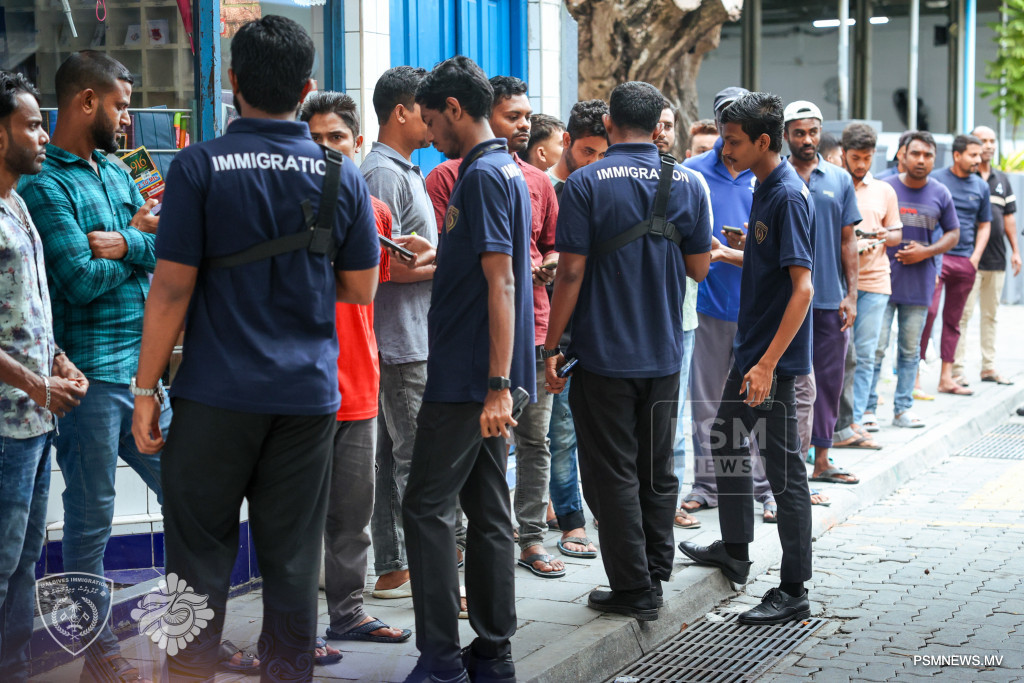
Government Mandates Bank Accounts for Foreign Workers to Secure Wage Rights
The Ministry of Homeland Security, Labour and Technology has directed all employers in the Maldives to open bank accounts for their foreign employees, marking a decisive move to regulate the expatriate workforce and safeguard labor rights.
Following amendments to employment regulations enacted on August 25, all salaries and allowances must now be deposited directly into personal accounts held in the employee's name. These accounts must be registered with or authorized by the Maldives Monetary Authority (MMA), the nation's central bank.
This transition establishes a digital trail that will serve as the sole legal evidence of wage payment. Should a salary dispute arise and be investigated by the Labour Relations Authority (LRA), the government will only recognize payment if the transaction is recorded as a deposit into an MMA-authorized personal account. This removes the ambiguity of cash payments and provides workers with verifiable proof of earnings.
While the Employment Act previously required bank deposits, enforcement and associated fines were suspended in the past. The government acknowledged that undocumented workers previously faced significant systemic barriers when attempting to open accounts. Furthermore, the banking mandate serves as a critical tool for the state to collect remittance taxes on funds sent abroad by expatriates.
Beyond legal compliance, the move addresses chronic currency instability affecting the expatriate market. Currently, workers are paid in a mix of US dollars (USD) and Maldivian Rufiyaa (MVR), often leaving them vulnerable to the black market. Those paid in local currency frequently face inflated exchange rates when attempting to purchase USD to support families in their home countries.
By formalizing the payment process, the government aims to eliminate these predatory exchange practices and ensure that foreign workers receive their full contractual entitlements without interference. This initiative is part of a broader strategic effort to regularize the labor market and integrate the foreign workforce into the formal financial system.