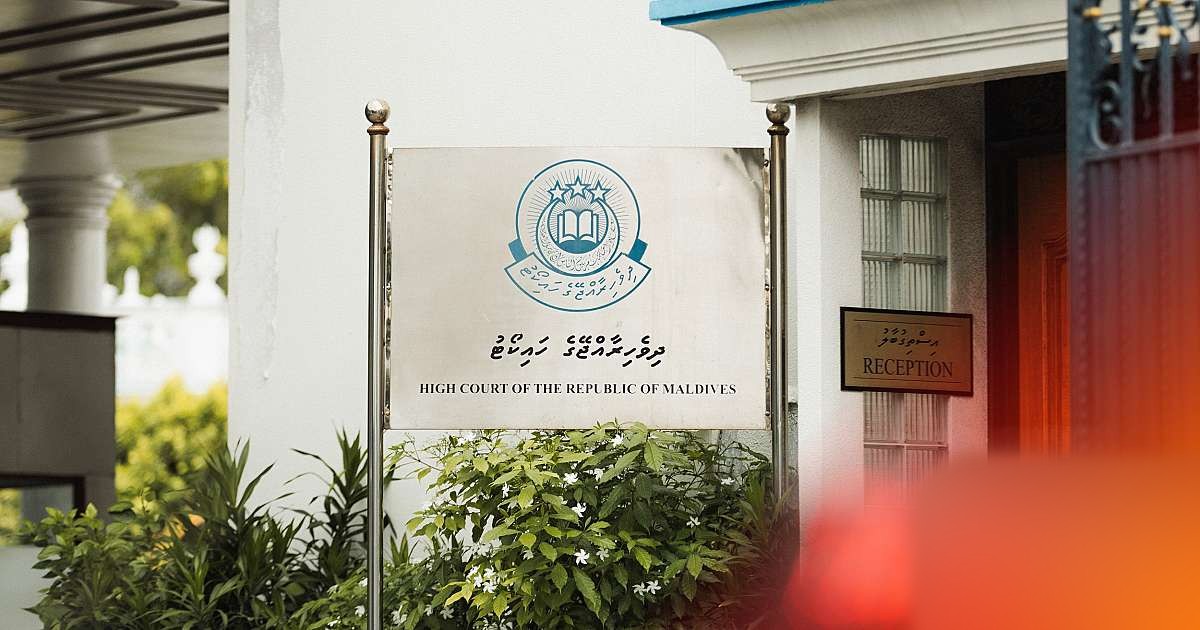
Government to Add Four More Judges to High Court, Raising Suspicion of Political Motive
The government is moving to add four more judges to the High Court bench, a step that is likely to be viewed with suspicion in the Maldives, where changes to the benches of the two higher courts are often seen as having political reasons behind them.
While adding judges to a court is in itself a good thing, especially at a time when courts across the country are backlogged with unresolved cases, the Maldives has a history of political motives behind changes to judicial benches, particularly those of the Supreme Court and the High Court.
During the past year, the cases of five out of the 11 judges of the High Court were taken up at once by the Judicial Service Commission (JSC). Among them, two judges are no longer on the bench: Judge Mohamed Niyaz, who was then the longest-serving judge at the High Court, has retired, and Mohamed Faisal has resigned from the position of High Court judge. The judges now hearing cases are Hussain Mazid, Fathimath Farheeza and Dheebanaz Fahmy.
Out of the 11 judges currently on the High Court, apart from three judges, the rest were appointed to the High Court during the previous government. The remaining three judges are those appointed during this presidential term. By adding four more judges, the number of judges appointed to the High Court during this presidential term will reach seven, and out of the remaining eight judges, the number needed to be separated can be reduced by one.
Former Kendhoo constituency MP Ali Hussain, who has studied how the composition of the JSC and the way governments seek control of the judiciary through the JSC, believes there is no administrative necessity of the magnitude that would require adding four judges to the High Court, and that there is also no space to keep the judges. He believes some political purpose lies behind the move.
According to Ali, what is being sought is to increase the number of judges so that rulings are issued the way the government wants, instead of once again separating the High Court judges who are not under the government's influence, and to give MPs aligned with the ruling PNC good jobs with high salaries. Many constitutional cases of interest to the government and the People's Majlis, where the government has a super majority, are being submitted to the Supreme Court and the High Court, and efforts will be made to decide those cases the way the government wants.
This mirrors the past: during President Yameen's government, High Court branches were created in the atolls in order to send judges who did not obey the government to the islands, with the government saying at the time that it was done to expedite cases and stop the backlog, while the real aim was political.