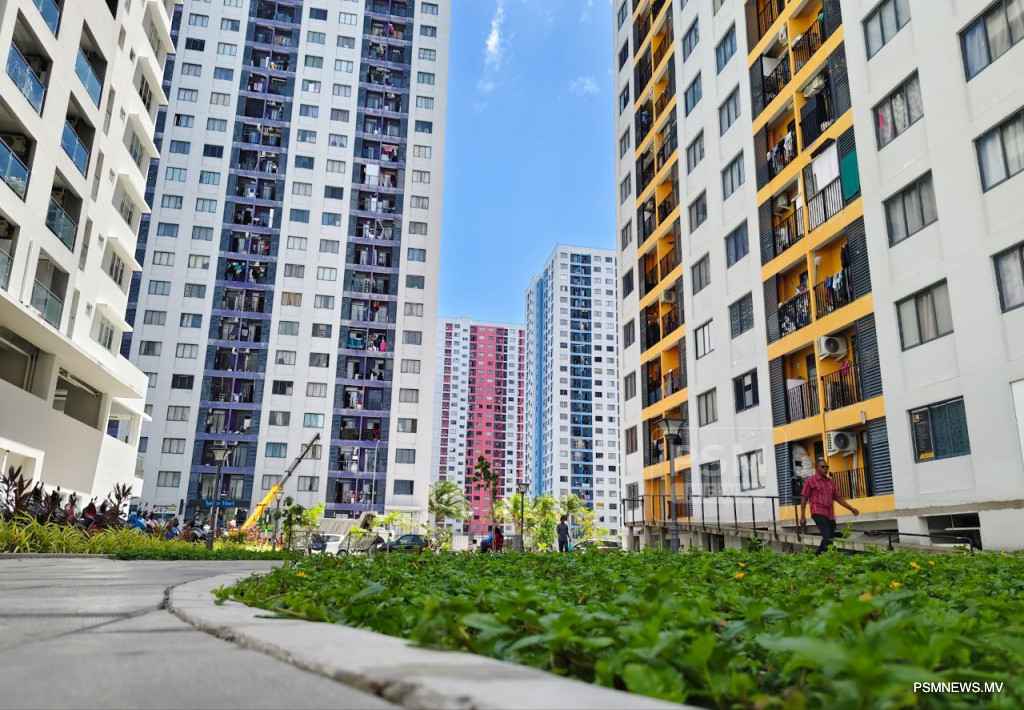
Government to Identify New Housing Options for Growing Hiyaa Flat Families
The Government is exploring new housing opportunities to alleviate overcrowding and improve living conditions for residents of the Hiyaa housing scheme. Minister of Infrastructure, Housing and Urban Development, Dr Abdulla Muththalib, announced that the administration is seeking ways to provide larger accommodations for families who have outgrown their original two-bedroom allocations.
Speaking at a ceremony marking the installation of additional lifts in the apartment towers, Minister Muththalib emphasized that the scale of the Hiyaa complex presents unique challenges. With an estimated 2,000 residents per tower, the high population density has strained essential services. The Minister noted that while the government aims to help families move into more spacious housing, priority must remain with citizens who currently have no housing at all.
Development within the Hiyaa neighborhood has been hindered by a lack of available land, as plots originally designated as open spaces have already been allocated. This has complicated the establishment of the public services necessary to support such a large community. Despite these hurdles, the Minister stated that extensive efforts over the past two years have focused on improving the neighborhood's overall liveability.
Ministry studies indicate that the Maldives currently lacks a comprehensive long-term national housing plan. This systemic gap is evident in the Hiyaa project, where many residents expressed dissatisfaction after a delayed and poorly managed handover process following the project's 2018 completion. Many beneficiaries received apartments with missing doors and unfinished fixtures, struggling without basic public services for years.
The administration of President Dr Mohamed Muizzu has since introduced targeted measures to address these long-standing grievances. The Ministry believes that the solution lies in creating housing projects tailored to the varying needs of different demographic groups rather than a one-size-fits-all approach, ensuring that as families grow, their housing options can evolve with them.