Government to Launch Peak-Hour and School Buses to Combat Male’ Traffic Congestion
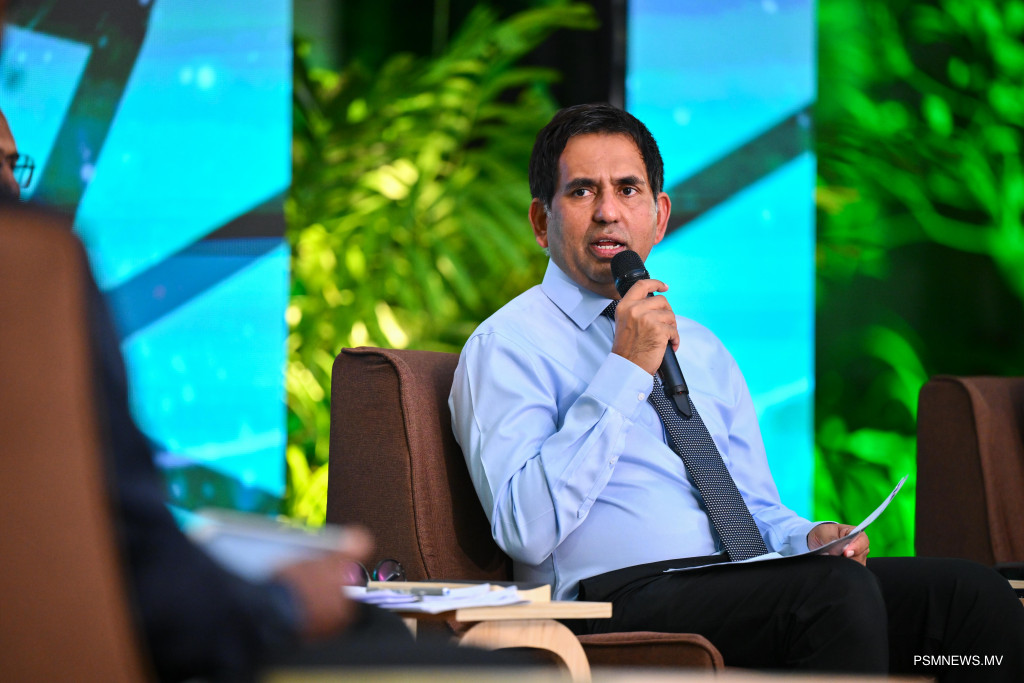
The government is introducing specialized bus services during peak hours and dedicated 'school-friendly' transport to alleviate the growing traffic crisis in the capital. Minister of Economic Development, Transport and Trade Mohamed Saeed announced the initiative during the eighth session of the ‘Ahaa’ forum, highlighting the urgent need for systemic change in urban mobility.
Recent data reveals a critical level of congestion, with 82 percent of roads in Male’ currently overwhelmed by vehicles. The capital currently hosts 130,806 registered vehicles, comprising 115,895 motorcycles and 14,911 cars. Given that Male’s land area cannot be expanded, the Minister stated that the government’s strategy is to transition the city into a vehicle-registration-controlled zone, effectively reducing private vehicle numbers while increasing reliance on mass transit.
To implement this vision, a dedicated office has been established to tackle traffic management. The planned peak-hour services will connect Male’ with Hulhumale’ Phase 1 and Phase 2, with specific scheduled routes serving the Velaanaage area and various green zones. These measures are part of a broader Mass Transport Mobility Plan aimed at streamlining commutes for residents and students.
Complementing the new bus services, the government is nearing the completion of the ring road around Male’. This infrastructure project, alongside the installation of new traffic lights and increased police visibility, is expected to significantly ease the flow of traffic. The Minister also hinted at potential charges for vehicles based on engine capacity (CC) to discourage the use of larger, less efficient vehicles in the congested city center.
Minister Saeed assured the public that these transitions would be managed carefully to minimize disruption. He expressed confidence that the combination of infrastructure completion and the shift toward mass transport would resolve the capital's primary traffic challenges within the next three years.