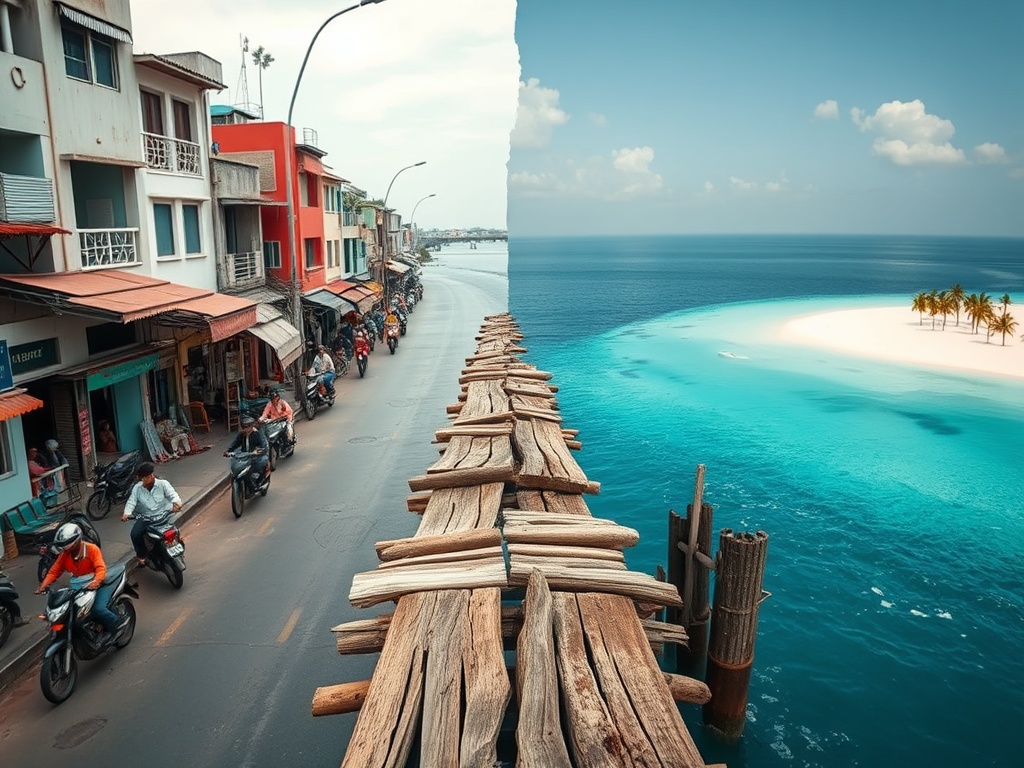
Greater Malé Housing Scheme Deepens the Atolls' Divide
The announcement of the 'Greater Malé' housing scheme was meant to signal progress. Instead, it has become a symbol of division—a policy that categorizes citizens by geography and institutionalizes what many describe as systemic discrimination against those from the outer atolls.
Across social media and public discourse, a painful reality is emerging: Maldivians who trace their origins beyond the capital are increasingly feeling like second-class citizens in their own country. The term 'geo-apartheid' has entered the political vocabulary, describing what critics see as a deliberate separation of the population along Malé-Raajjethere lines.
The core grievance centers on housing allocation policies that appear to privilege those with Malé registration while leaving atoll residents—who often work in the tourism industry that generates 28% of GDP—trapped in endless rental cycles. These workers pour their labor into the nation's economic engine yet find themselves excluded from the dream of land ownership in the very urban centers their work sustains.
This division isn't accidental, critics argue. The policy design carefully calculates allocations that marginalize atoll communities, ensuring the next urban center will have a majority from the privileged category. The result is generational inequality that will likely worsen the already dire 'rent slave' situation facing many families.
What makes this particularly galling for many is the political context. Just weeks ago, thousands from the atolls traveled to the capital to show support for the government. Now, they feel betrayed by policies that seem to confirm their worst fears about systemic bias.
The emotional toll is profound. Many speak of lost hope and broken trust, describing how politicians have cemented divisions that once seemed bridgeable. The sense of shared Maldivian identity—the concept of 'dhivehin' that once united the archipelago—now feels like an empty promise.
This isn't merely about housing allocation. It's about dignity, belonging, and the fundamental question of who counts as a full citizen. When policy creates categories of people with different rights and opportunities based on geography, it challenges the very notion of national unity. The division between Malé and the atolls, once a matter of distance, is becoming a chasm of opportunity—and the nation's social fabric may not survive the tear.
— Source fragments: Discrimination by law creating 2 categories of people; atoll residents feeling invisible despite contributing to tourism economy; second-class citizen sentiment; geo-apartheid concept; housing policy creating generational inequality; careful policy calculations marginalizing certain groups; broken trust in shared Maldivian identity