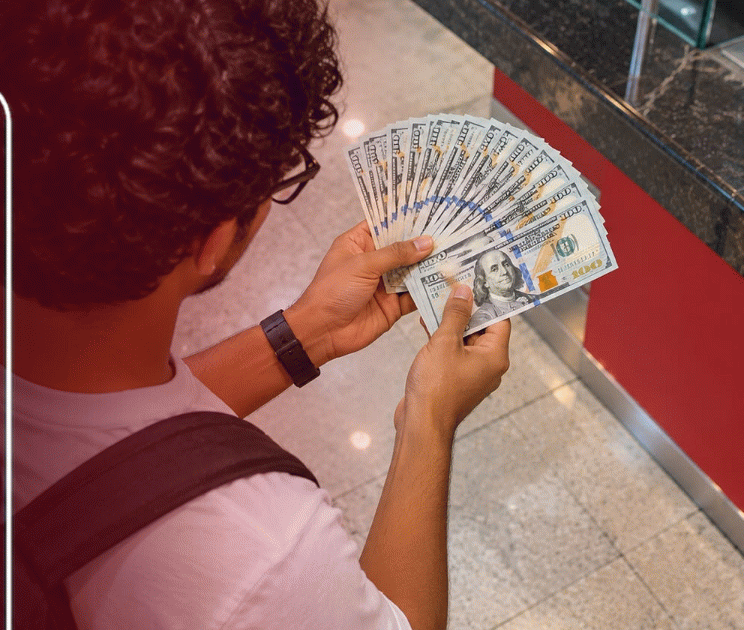
Group Trips Exploit Maldives Medical Dollar Scheme as Businesses Seek Scarce Foreign Currency
A scheme in which businessmen run cheap group trips to Sri Lanka for young people in order to collect their medical and travel dollar quotas is a symptom of a deeper failure in the Maldives' foreign currency system, an analysis has found.
Under the current system, a person travelling abroad can obtain 1,000 dollars in medical dollars from Bank of Maldives (BML) through the Medical Dollar Portal by submitting a flight ticket, a doctor's note from the Maldives and an appointment made by a hospital in the destination country. A further 500 dollars is issued for each person travelling. According to the article, the doctor's note and appointment can be obtained easily and at no cost, which is why the scheme is widely exploited.
In the group trips described, businessmen gather 12 or sometimes 20 young people and arrange free two-day trips to Sri Lanka. The 500-dollar ticket allowance from the bank goes directly to the businessman arranging the trip, while the 1,000 dollars issued for medical treatment, using a fabricated overseas hospital appointment in the young person's name, is also taken by the same businessman. The businessman can additionally trade using the participants' visa cards and withdraw money from ATMs, with trips often arranged for the latter part of the month so that withdrawals can be doubled when card limits renew at the start of the new month.
The article states the practice is not limited to ordinary group trips; even on official trips abroad from the Maldives, parties were obtaining the 1,000 dollars of medical allowance alongside the 500-dollar ticket quota by creating online doctor's appointments. As many people were taking these dollars without any real need for medical treatment, the Maldives Monetary Authority (MMA) restricted the 1,000-dollar allowance for those travelling for medical treatment at their own expense to six countries.
The financial arithmetic is significant: for a businessman taking 12 people to Sri Lanka, roughly 18,000 dollars is obtained from the ticket quotas and medical dollars, and through card withdrawals a total of about 24,000 dollars can be collected from a single trip. The cost of the trip — return tickets, hotel, food and other expenses — is approximately 75,000 rufiyaa. Even if the collected dollars are brought to Malé and sold on the black market, the businessman can make a net profit of about 100,000 rufiyaa within two days. The article notes, however, that many businessmen undertake this not so much for temporary profit but because there is no other way to obtain dollars to import goods for their shops.
The official dollar rate is 15.42 rufiyaa, but the black market price has risen beyond reach. Card facilities have eased the practice: under changes brought by BML on November 11, 2025, Maldivian rufiyaa debit cards can be used for travel and medical matters abroad up to 3,000 dollars per month, with transactions of up to 1,000 dollars per month from foreign POS machines in the Maldives, 125 dollars from ATMs and 250 dollars for e-commerce. These limits renew on the first day of each month, and cards linked to dollar accounts face no restriction beyond the money available in the account.
To close loopholes, the MMA has made the 1,000-dollar allowance available only to those travelling to India, Sri Lanka, Thailand, Malaysia, Singapore and the UAE. Previously the money could be obtained through BML or Maldives Islamic Bank (MIB) by submitting documents for medical treatment in any country. The policy of 2,000 dollars issued to patients travelling through Aasandha remains unchanged. However, restricting the allowance to six countries creates no obstacle to group trips to Sri Lanka, which is among the six and is the cheapest destination.
The government has taken legal measures against black market currency trading. Under the first amendment to the foreign currency law passed by the 20th People's Majlis on August 26 and ratified by the President on August 31, buying and selling foreign currency at a price higher than the rates determined by the MMA is prohibited. The amendment, effective from September 1, requires foreign currency trading to be done under a licence issued by the MMA, and unless specifically stated otherwise, all financial transactions in the Maldives must be carried out in Maldivian rufiyaa. The article adds that BML sold 345 million dollars to businesses within the first five months of this year.
Despite the law, black market trade continues in secret and over a wide area, and the article argues that tightening rules and restricting medical quotas will not solve the problem while dollars cannot be obtained through the official banking system to match business demand. It calls for a stable policy so that foreign currency entering the Maldives is received equally by businesses through the official banking system, and for the system that has forced citizens into deception, tricks and scams to be uprooted.