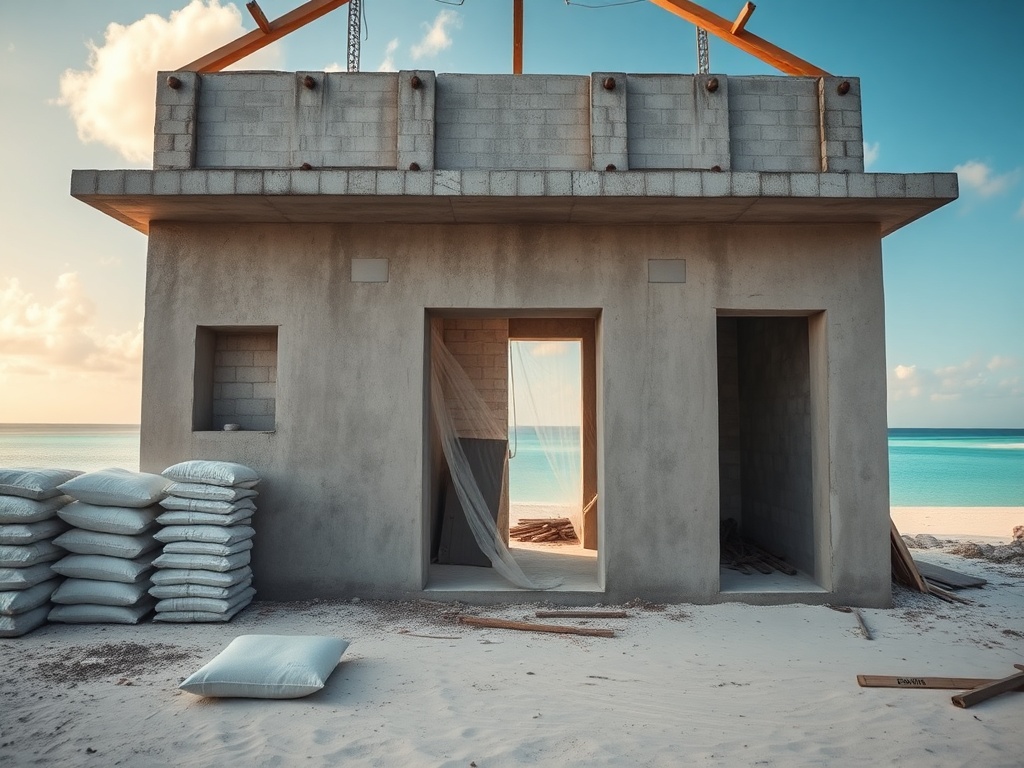
Half-Finished Buildings and the Promises Left Behind
The conversation across Maldivian social media reveals a growing frustration with the state of national development—a chorus of discontent about projects that promise transformation but deliver disappointment. From neglected outer islands to the congested capital, the pattern repeats: ambitious announcements followed by compromised execution.
For decades, the development narrative has centered on creating population hotspots with proper infrastructure, resources, and opportunities. Yet the reality tells a different story. While political rhetoric emphasizes regional development, the practical implementation often results in what citizens describe as 'half-arsed' solutions at 'sky high' prices. The fundamental mismatch between planning and execution has become a defining characteristic of Maldivian infrastructure.
The technical failures are as telling as the political ones. Basic building standards are routinely compromised—wooden doors with significant gaps at the bottom, insulation that leaks cooling capacity, compressors wasting power because proper engineering principles were overlooked. These aren't minor oversights but symptoms of a systemic approach that prioritizes ribbon-cutting ceremonies over functional outcomes.
Male' City, once the shining center of Maldivian progress, now faces its own infrastructure crisis. Residents describe the capital as increasingly unlivable, with traffic congestion reaching paralyzing levels during poorly planned events that block major thoroughfares for days. The economic impact is measurable—business transactions worth millions of rufiyaa disrupted daily, challenging the very notion of urban functionality.
The pattern extends beyond physical infrastructure to digital realms. Discussions about internet governance reveal similar gaps between ambition and capability. The technical limitations are acknowledged privately—the inability to implement deep packet inspection, reliance on outdated DNS filtering—yet publicly, the promises continue unabated.
What emerges from these conversations is not just criticism but a longing for competence. The desire isn't for grander projects but for basic functionality: cable cars that actually transport people, power plants that efficiently generate electricity, housing that provides comfortable living conditions. The gap between political vision and practical execution has become so wide that citizens now question whether the country can 'do anything right.'
This skepticism isn't born of cynicism but experience. After years of watching projects discussed, planned, and then poorly executed—often over decades-long timelines—the public has developed a keen eye for the distance between promise and delivery. The real development challenge facing the Maldives may not be funding or vision, but the basic competence to translate plans into functional reality.
— Source fragments: Developing islands neglected, infrastructure needs, Male' described as problematic, technical failures in construction, economic impact of poor planning, questions about national competence in project execution