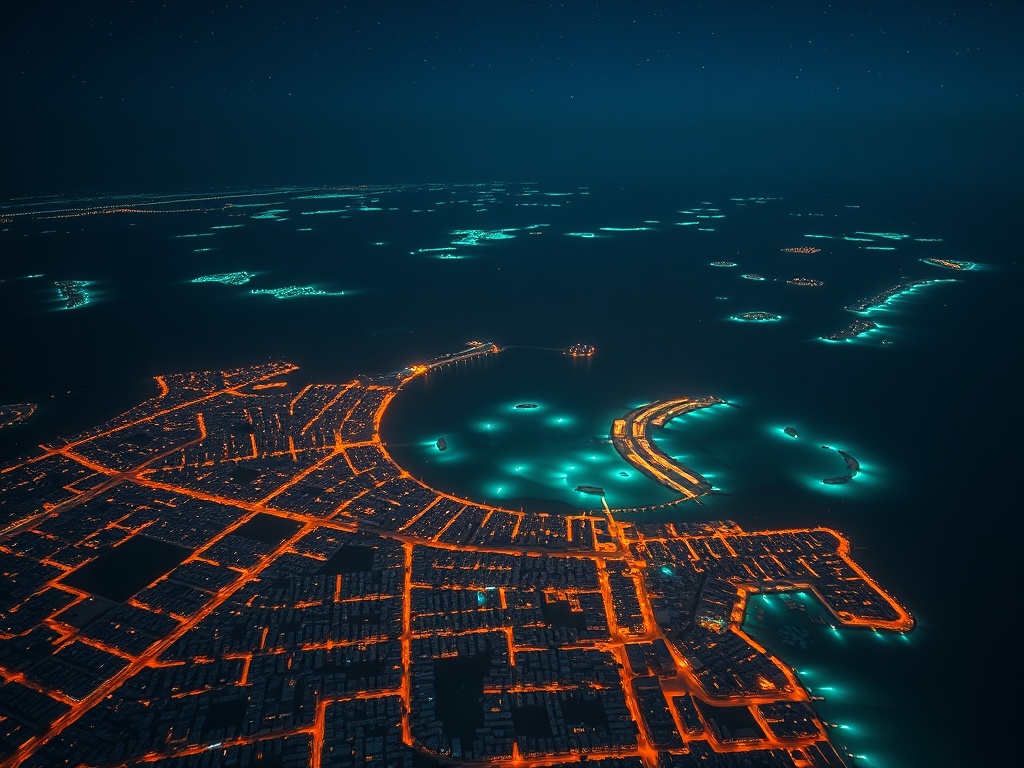
Half the Nation Crammed Into One Square Mile
The debate around decentralization in Maldives has shifted from abstract political promises to concrete arithmetic. With over half the nation's population crammed into the congested capital, the conversation is no longer about whether to decentralize, but how to execute it effectively.
The numbers tell a compelling story. The scattered populations of dozens of outer islands could theoretically fit within existing urban infrastructure like the Hiyaa flat neighborhood, suggesting that physical consolidation might be more feasible than maintaining fragmented communities across vast ocean distances. This mathematical reality challenges traditional approaches to regional development.
Proponents of population consolidation point to staggering potential savings—potentially billions of Maldivian Rufiyaa that could be redirected from maintaining redundant infrastructure across scattered islands toward building sustainable, well-planned urban centers. The economic argument has gained traction as the true costs of maintaining services across 187 inhabited islands become increasingly apparent.
The political dimension remains crucial. Voters have consistently expressed support for decentralized development models, viewing them as alternatives to the overwhelming centralization in Malé. Yet the implementation challenge lies in balancing democratic mandates with practical urban planning principles.
Urban planners note that successful decentralization requires more than just moving people—it demands creating communities with economic opportunities, social services, and cultural vitality. The experience of other island nations suggests that consolidation works best when accompanied by job creation, educational facilities, and transportation networks that make larger centers attractive alternatives to the capital.
Critics worry about losing local island identities and traditions, while advocates counter that strategic consolidation preserves cultural heritage more effectively than maintaining struggling communities with dwindling populations and limited opportunities.
The emerging consensus suggests that decentralization through consolidation represents not just a population management strategy, but a fundamental rethinking of how Maldivians inhabit their archipelago. As one urban economist noted, 'We're not just moving people—we're redesigning how Maldivians live, work, and connect across our scattered nation.'
With the capital's congestion reaching breaking point and outer islands facing development challenges, the arithmetic of population consolidation offers a compelling, if controversial, path forward. The question remains whether political will can match the mathematical logic of building better cities through strategic concentration rather than scattered development.
— Source fragments: Now that we have made this point clear, let's talk about HOW to decentralize. The population of those 79 islands can fit into the Hiyaa flat neighbourhood. We could save a few billion MVR by population consolidation to large population centers. We voted for decentralized development