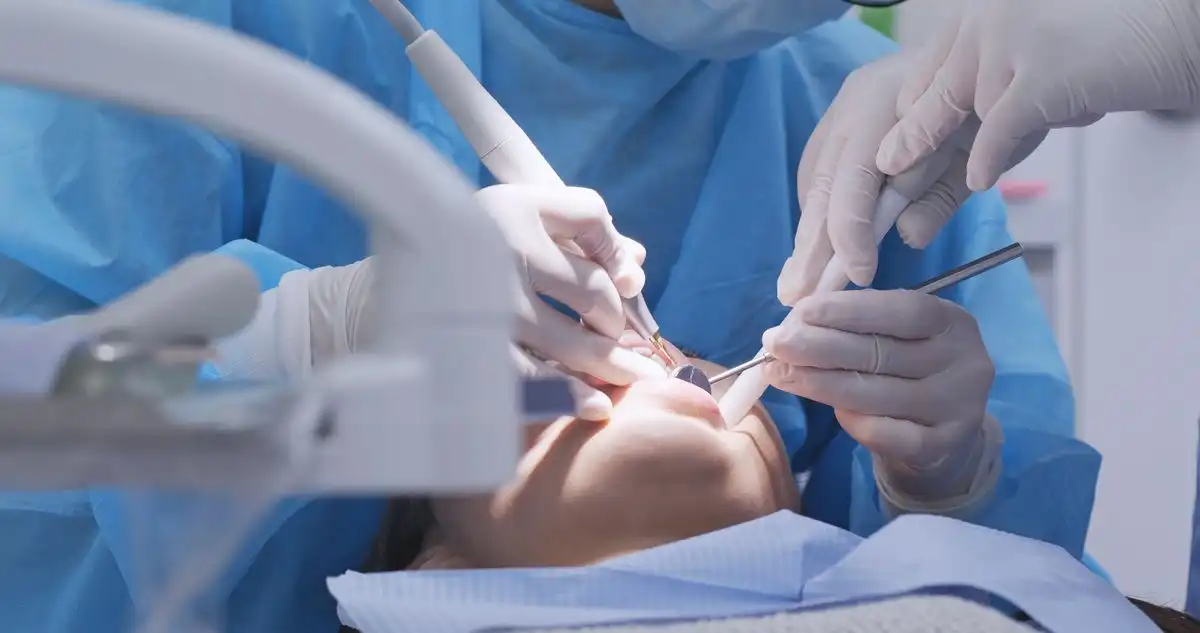
Health Ministry Report Reveals Grave Negligence in Dental Treatment Death
A Ministry of Health investigative report has revealed widespread negligence by health institutions in the death of a patient who sought routine dental treatment, according to the findings released nearly a year after the incident.
The patient died on 15 November 2025 after treatment that began at Tree Top Hospital. The report states that although it was known the patient was being treated for a chronic illness, the hospital did not check the patient's chronic disease condition before proceeding with dental treatment. In particular, the level to which diabetes was controlled was not checked and recorded, and no advice from a physician was sought before starting treatment. Vital signs and blood sugar levels were not checked before the tooth extraction.
When an effort to fill the tooth was unsuccessful, the patient was referred to Orakear for an oral and maxillofacial surgeon to examine. The report notes the patient was sent to a clinic instead of a hospital where treatment could be provided if an emergency arose. Because the referral documents did not include details of the injection given for numbness, the patient's attendant had to return to the hospital to obtain that information, wasting precious time.
At Orakear Dental Clinic the same day, medication was not recorded in the patient's file at the time of consultation and the patient's medical history was not noted. When the patient's records were viewed through the 'Vinavi' portal, the doctor had been informed that the patient had diabetes, a thyroid problem and cholesterol, and that the latest blood tests showed the diabetes was uncontrolled. However, the risks arising from these conditions were not noted in writing, and no advice from a physician was sought. The report states the amount of anaesthetic given by Tree Top Hospital is unknown, and although the doctor advised postponing treatment in light of the patient's anxiety and health condition, treatment proceeded when the family requested the tooth be filled that day due to the pain the patient was suffering.
Vital signs and sugar levels were not checked before treatment began at Orakear Dental. Although under Article 66 (h) (2) of the regulations governing the operation of health service institutions, obtaining the patient's consent in writing is mandatory when providing treatment under anaesthesia, consent was obtained only verbally. When three teeth were filled after the anaesthesia, the time the injection was administered was not recorded, and there is no documentation that the patient's vital signs were checked and the condition monitored after the filling. The investigation established that adequate time was not given to observe the patient's condition between the estimated time of anaesthesia and the time the clinic discharged him.
The report notes that although the clinic did not have an environment in which medical support could be provided if a dangerous situation arose, in view of the risks posed by the patient's heart conditions, no consideration was given to that either.
Not long after the clinic discharged him, the patient's condition became serious, and he was taken to the emergency department of Hulhumalé Hospital with incontinence, abnormal twitching and changes in consciousness. Upon examination, it was found the patient had suffered major damage to the heart, developed a 'complete heart block', elevated cardiac biomarkers, and went into a dangerous shock due to heart failure. When vital signs were first recorded at 15:15, the heart rate was 64 and the blood pressure was too low to be measured by the machine. He was moved to the resuscitation room and treatment began, but at 15:22 CPR was started due to the heart stopping. Despite continuous CPR and three shocks, the heart could not be restarted. At 16:20, it was announced the patient had died.
The report notes that many changes had been made in the recording of times in the medical records. The time the patient was brought was not noted in the emergency room documents of Hulhumalé Hospital, but that time was written in the discharge summary, and times had been changed and written in some documents, creating major difficulties for the investigation in determining the sequence of events reliably.
The report concludes that before treatment, during treatment and after treatment, the patient's condition was not monitored and vital signs were not recorded, consent was not obtained in writing, and the health institutions completely failed in weighing the danger to the patient's life.