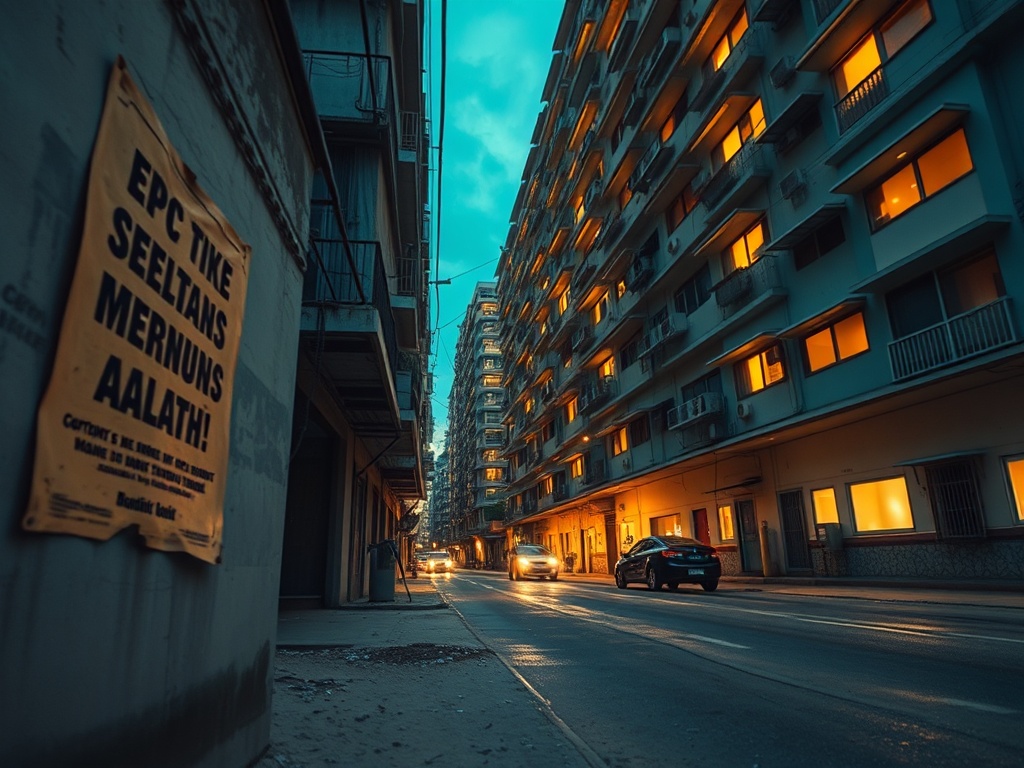
Housing Allocations as Political Currency
The political system in the Maldives operates on an established reality where corruption is the engine of governance. State mechanisms—from housing allocations and public tenders to law enforcement and infrastructure—function not as public services but as shadow economies for the politically connected.
This perception transcends party lines, viewing both the ruling PNC and the opposition MDP as different branches of the same corrupted system. The MMPRC scandal serves not as an anomaly but as a foundational blueprint for understanding power. When a mayoral candidate is linked to embezzled funds or an unqualified political appointee is installed at a utility corporation, the public reaction is weary recognition. These are confirmations, not scandals.
The consequences are daily and visceral. The housing crisis in Malé is seen as a rigged market. The promise of an apartment operates as transactional currency for political silence. The nation's struggle with narcotics is framed not as a law enforcement challenge but as a protected enterprise, with allegations of police complicity allowing operations to flourish. Community infrastructure, like the repeatedly altered Rasfannu running track, is viewed through the lens of kickbacks and crony contracts.
This pervasive cynesis creates a paralyzing political logic. Electoral choices become exercises in damage limitation, not hope cultivation. Voting navigates a landscape of known entities and their patronage networks. The focus on "persona-based politics" reflects an exhaustion with platforms, seeing policies as irrelevant shadows cast by personal allegiances and historical baggage. When a figure once vocal against corruption aligns with those previously condemned, it reinforces the axiom that all moral postures are negotiable.
The true cost is the evaporation of public trust. When citizens believe justice is controlled by the same interests, when they observe government debt soaring alongside the unexplained wealth of the powerful, the social contract frays. The state becomes a foreign territory to be navigated with suspicion, not a commons to be stewarded. This is the hollow core: a governing structure that has traded legitimacy for leverage, making deep-seated cynicism the nation's most abundant resource.
— Source fragments: User voices referencing: Housing corruption as political currency; MMPRC scandal as a recurring benchmark; Perceived equivalence between MDP and PNC on core issues like corruption; Drug trade as a state-supported enterprise; Corrupt practices in public utilities (Fenaka, water tanker mafias); Political appointments based on nepotism over qualification; Judicial system seen as controlled by powerful interests; Wealth of officials disproportionate to salaries; Aviation and tourism sectors seen as venues for kickbacks; Overall theme of elections being about power and family business, not public service.