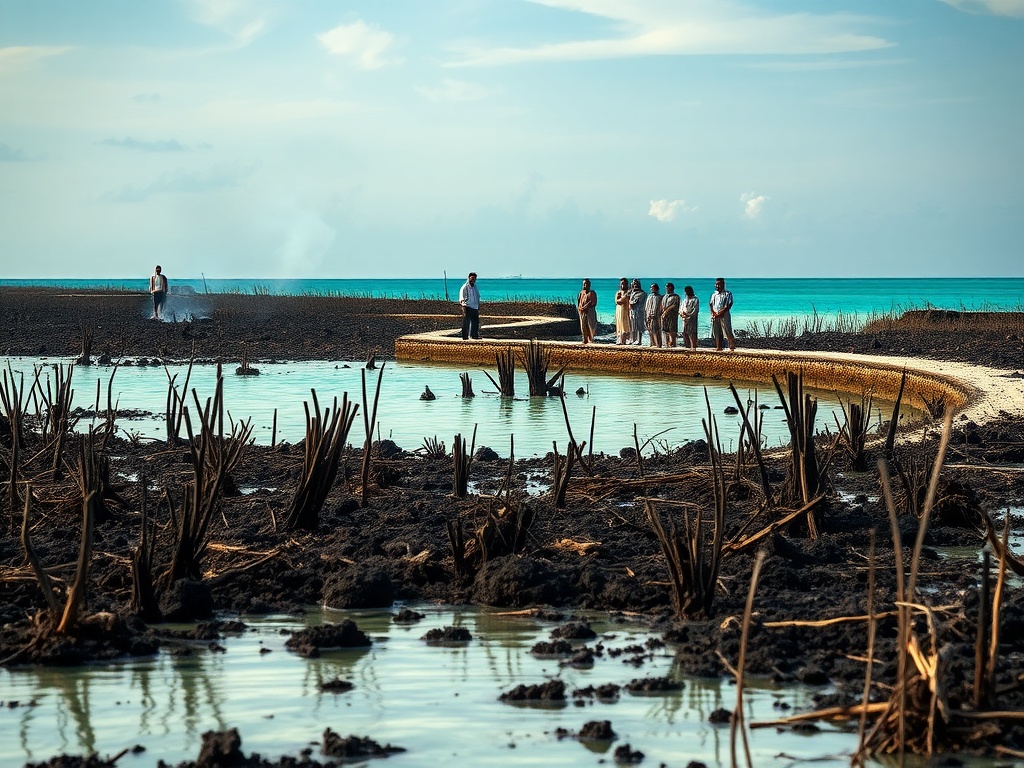
How a Wetland Caught Fire in the Dark
The charred remains of Kedhikulhudhoo's main wetland tell a story that many Maldivians find painfully familiar. A nighttime fire consumed what was once a thriving freshwater ecosystem, now reduced to ashes and questions. The most pressing: how does a wetland catch fire in the dark? The suspicion of arson hangs heavy in the air, but the deeper story lies in what preceded the flames.
This was no ordinary wetland. It had been approved for an aquaculture project that fundamentally altered its character. The transformation from freshwater to saline conditions represents more than just a chemical change—it symbolizes the broader tension between development and preservation that defines modern Maldives. When ecosystems are modified for economic purposes, the consequences ripple outward, affecting everything from local biodiversity to community livelihoods.
The irony cuts deep. As Maldives champions environmental causes on international platforms, speaking passionately about rising seas and coral preservation, back home we witness the systematic dismantling of our own ecosystems. The same institutions that promote conservation globally appear to enable degradation locally. This isn't about negating environmental efforts—many dedicated individuals work tirelessly to protect our fragile archipelago. Rather, it's about acknowledging the uncomfortable truth that our environmental governance sometimes protects ecosystems abroad while sacrificing them at home.
The Kedhikulhudhoo incident raises fundamental questions about our approach to environmental management. Are biosphere reserves and protected areas functioning as intended, or have they become paper parks—designated on maps but unprotected in reality? When development projects can so easily override ecological considerations, what value do these designations truly hold?
The conversation among concerned citizens reflects this tension. There's recognition of environmental protection efforts alongside frustration at their selective application. The demand isn't for condemnation but for accountability—for institutions to acknowledge missteps and learn from them. The path forward requires bridging the gap between international environmental advocacy and domestic environmental practice, ensuring that the protection we champion globally begins with the ecosystems outside our own doors.
— Source fragments: How did a wetlands catch fire during the night? Was it a deliberate act of arson?; whole site destroyed now; approved the project for aquaculture in Kedhikulhudhoo main kulhi; went from fresh water to salty due to the process affecting the whole ecosystem; accept & apologise for your failures; irony is wild, destroy it locally but the opposite internationally; Biospheres Reserves in Maldives are not working?