How Coventry's Tram Idea Could Build Maldives' Next Airport
In an era of constrained budgets and environmental challenges, infrastructure development requires both fiscal creativity and visionary thinking. The recent Coventry tram proposal demonstrates how innovative approaches can dramatically reduce costs while delivering essential transit. By eliminating the need for extensive underground work and utilizing council-owned patents, such projects could transform urban mobility at a fraction of traditional costs.
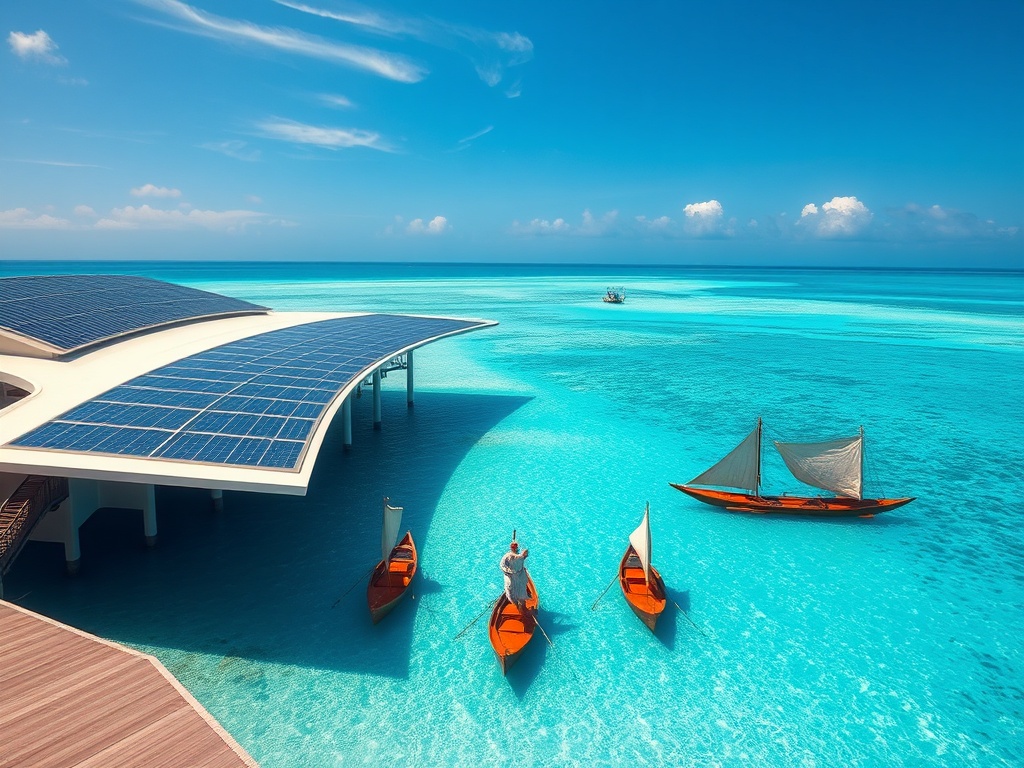
This approach resonates deeply in the Maldives, where infrastructure investments must balance economic returns with environmental sustainability. The recent $135 million Hanimaadhoo Airport development represents exactly this kind of strategic thinking—a significant investment in regional connectivity that promises to unlock tourism potential in the northern atolls. Like the Coventry model, it demonstrates how targeted infrastructure can generate substantial returns while serving broader development goals.
The visionary perspective of leaders like KR Sridhar, with his NASA background and deep understanding of energy systems, provides crucial context for these developments. His insight that energy has become a critical chokepoint in modern infrastructure speaks directly to Maldivian challenges, where power generation and distribution remain persistent concerns across the archipelago.
What connects these seemingly disparate examples—from British trams to Maldivian airports to global energy thinking—is a recognition that infrastructure must serve multiple purposes: economic development, environmental sustainability, and social progress. The conversation has shifted from simply building things to building smarter systems that address interconnected challenges.
In the Maldives context, this means recognizing that airport development isn't just about runways and terminals—it's about creating economic ecosystems that benefit local communities, preserve fragile environments, and build resilience against climate threats. The debate now centers on how to replicate such successes across other sectors, from renewable energy to water management to digital connectivity.
As development conversations evolve globally, the Maldives stands at a critical juncture—able to learn from international innovations while adapting them to its unique island geography and development needs. The challenge isn't merely building infrastructure, but building the right infrastructure in the right way, creating systems that serve both present needs and future generations.
— Source fragments: Coventry tram cost efficiency, KR Sridhar's visionary infrastructure thinking, Hanimaadhoo Airport as strategic investment