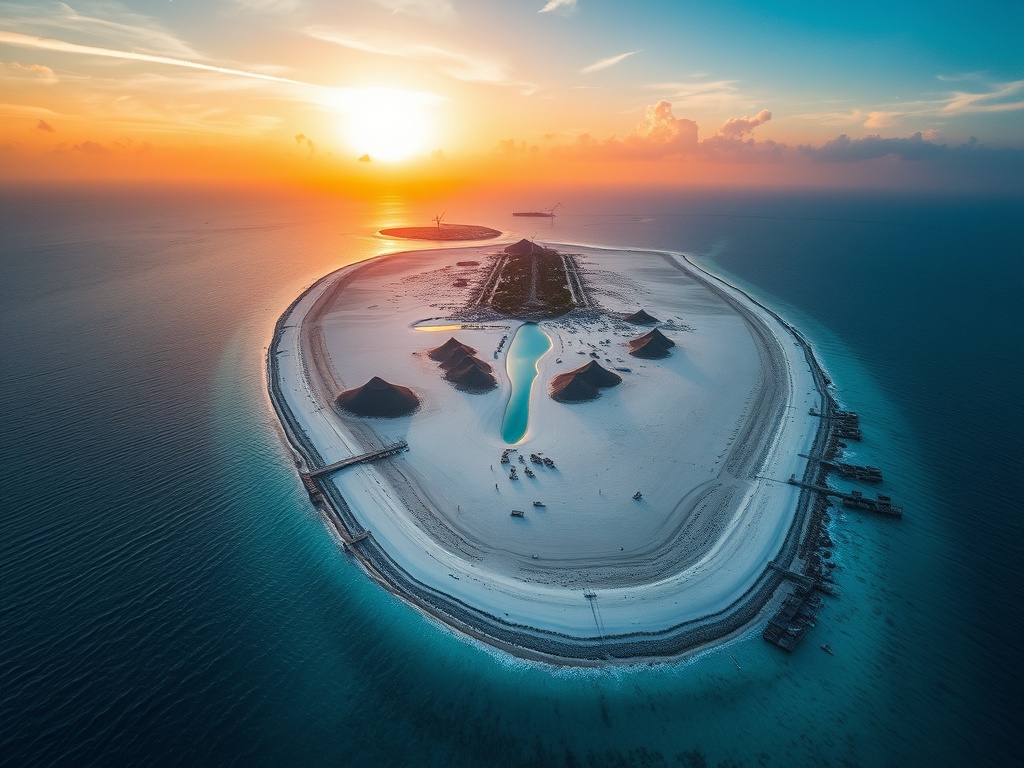
Hulhumalé's New Land and the Old Centralized Power
The presidential inspection of Hulhumalé Phase III land reclamation represents more than just another infrastructure milestone. It symbolizes the ongoing tension between centralized development solutions and the growing public demand for decentralized governance that many see as the only sustainable path forward.
While the government rightly highlights progress in addressing housing shortages through land reclamation, this approach represents a continuation of top-down development planning centered in the capital region. The very need for massive reclamation projects stems from decades of centralization that has left outer islands underdeveloped and Malé overcrowded.
The call for decentralization isn't merely political rhetoric—it's a practical response to systemic failures that land reclamation alone cannot solve. When housing projects become politicized, when economic opportunities remain concentrated in the greater Malé area, and when essential services struggle to reach distant atolls, the limitations of centralized governance become starkly apparent.
Decentralization advocates argue that true development requires empowering local communities to shape their own futures. This means not just building islands but building capacity—transferring decision-making authority, financial resources, and administrative powers to island councils and atoll development committees. The current system, where even basic infrastructure decisions require central approval, creates bottlenecks that hinder responsive governance.
The housing crisis in Malé, despite numerous reclamation projects, demonstrates how physical expansion without administrative reform provides only temporary relief. When subsidized housing becomes entangled in political patronage, and when leaseholders can profit from public assets without proper oversight, the fundamental inequities persist regardless of how much land is reclaimed.
What emerges from this ongoing debate is recognition that development must be holistic—combining physical infrastructure with governance reforms. Land reclamation addresses symptoms of overcentralization, but decentralization tackles the root cause. As Maldives continues its development journey, the conversation is shifting from whether to decentralize to how to implement it effectively, ensuring that growth benefits reach every corner of the archipelago rather than remaining concentrated in the capital region.
The solution lies not in choosing between development projects and governance reform, but in integrating them—using infrastructure investments as opportunities to strengthen local institutions and build community capacity. This balanced approach could transform not just the physical landscape but the very governance structure that has defined Maldivian development for generations.
— Source fragments: President Dr inspects the progress at the Hulhumalé Phase III land reclamation site today; The only solution to everyone's problem is decentralization