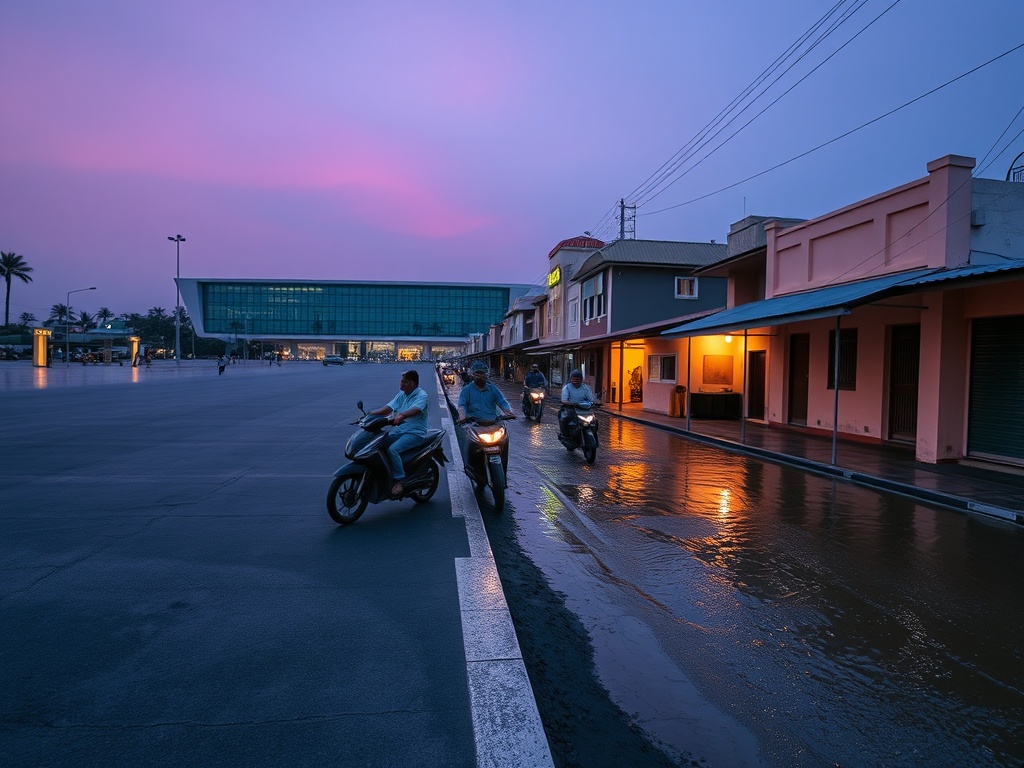
Hulhumalé's Pavement: A Road or Just a Surface?
The promise is always etched in concrete and steel. A new road, a modernized airport, a freshly paved walkway—each project is presented as a stepping stone to prosperity. Yet, across the islands, a quiet, collective skepticism has taken root, born of lived experience where grand openings fade into the mundane struggles of maintenance, utility, and genuine human need.
In Hulhumalé, a newly laid pavement is met not with celebration, but with a pointed question of definition. Is this a road, or merely a surface? The distinction is critical. A road connects, facilitates, and enables economic life. A surface is merely something to walk on. This semantic debate encapsulates a larger national ailment: the prioritization of visible, political deliverables over functional, systemic development.
This dissonance echoes 500 kilometers south in Addu City. The atoll has possessed an international airport for over half a century, a head start that, according to a simplistic development model, should have guaranteed transformation. It did not. Addu is not Dubai. The lesson is that infrastructure alone is inert. It is population scale, sustained economic activity, and robust local governance that breathe life into tarmac and terminals. Building airports for islands with populations in the low thousands is not an investment in the future; it is an expensive monument to a flawed theory, a drain on national coffers already stretched thin by debt and import reliance.
The consequences of this top-down, project-centric approach manifest in acute daily shortages. State-owned enterprise warehouses run out of basic construction materials like cement for months, stalling local projects and undermining public trust. This supply chain fragility is a silent crisis, where the inability to source cement can halt the construction of a simple neighborhood drainage system, leaving communities vulnerable. Simultaneously, islands face shortages of fresh produce and other essentials, a stark contrast to the glossy imagery of untouched beaches. The message is clear: you can visit our paradise, but living in it requires navigating a landscape of scarcity.
In the capital, the infrastructural failures are visceral. Chronic flooding in Malé after minimal rainfall points to years of neglected drainage systems, a basic municipal duty overshadowed by political maneuvering. Meanwhile, congested roads and hazardous parking habits on major thoroughfares like Majeedhee Magu highlight a breakdown of civic order and enforcement, where individual convenience trumps collective safety.
This pattern reveals a governance model in crisis. It is a model that confuses motion with progress, and announcement with achievement. It builds where it can cut a ribbon, not necessarily where it is most needed. It focuses on the new and the newsworthy while the old and the essential—drains, supply chains, regulatory enforcement—crumbles. The result is a nation of beautiful endpoints connected by broken pathways, where the journey for its citizens remains fraught with obstacles no new airport can ever clear.
— Source fragments: User voices re: Hulhumalé paving not being a real road; Addu airport not bringing Dubai-like development; cement shortage stalling projects; Addu shortages despite nice beaches; flooding and drainage issues in Malé; traffic and parking hazards on Majeedhee Magu; general critique of political delivery vs. real governance.