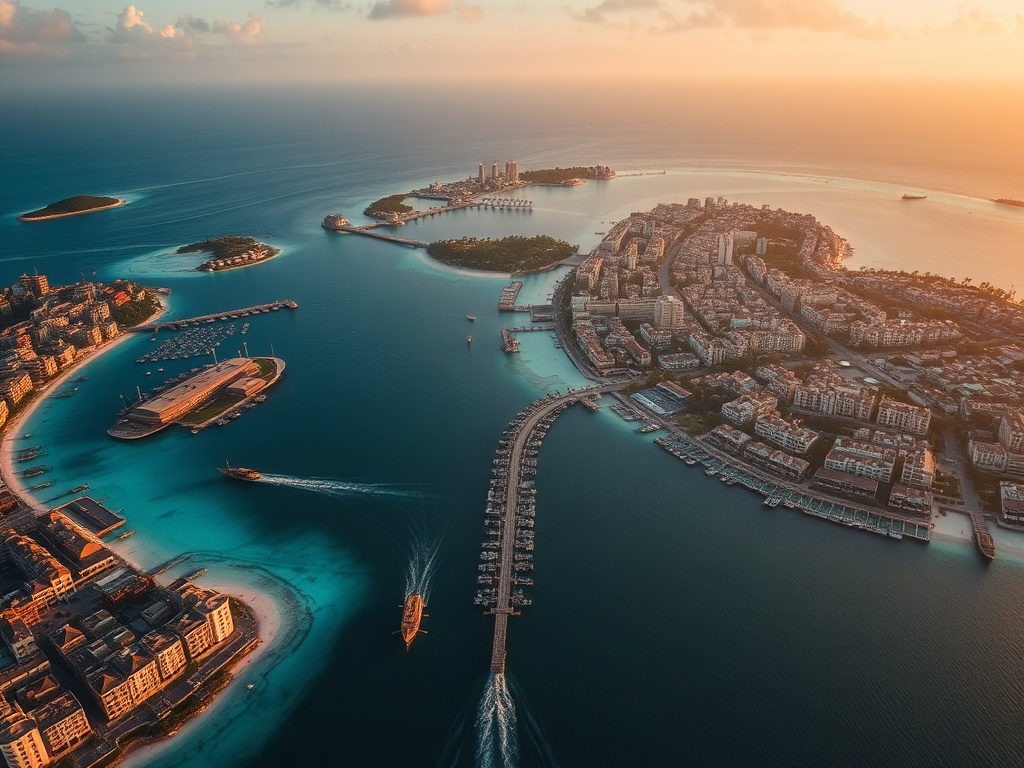
If You Can't Wean Yourself From the Land, What Is It Worth?
The question hangs in the salt-heavy air: if you can't wean yourself from the land, what is it truly worth? In these islands where sea defines our boundaries and sand our foundations, land becomes more than property—it becomes identity, heritage, and sometimes, burden.
Across the atolls, voices debate who deserves what piece of earth. Should Malé residents have priority in the capital where space vanishes faster than the evening tide? Or should every Dhivehin, regardless of origin island, have equal right to settle where the heart calls? The arguments echo through tea shops and social media, revealing deeper questions about what makes a Maldivian and where we truly belong.
Meanwhile, practical realities complicate ideological purity. A 2000 square foot plot in Hithadhoo might cost what a handkerchief-sized space commands in Malé. The mathematics of dirt and coral tell stories of inequality that no policy paper can fully capture. And always, the specter of politics hovers—land becoming currency in electoral battles, distributed not by need but by political calculation.
Some advocate for free land for living, with conditions ensuring it serves as actual homes rather than investment vehicles. Others reject handouts entirely, seeing in them the seeds of dependency and market distortion. The tension between compassion and pragmatism plays out in every discussion about our limited terrain.
Beneath these policy debates lies a quieter truth: our relationship with land mirrors our relationship with each other. In a nation scattered across ocean, how we distribute these precious patches of earth reflects what kind of society we aspire to be. The environmental impact assessments continue, the reclamation projects advance, but the human question remains—how do we ensure every Maldivian has not just a place to stand, but a place to call home?
The answer may lie not in rigid categories of 'Malé meeha' or 'Raajjetherey meeha,' but in recognizing that our connection to land transcends geography. It's in the fisherman who knows every coral head near his island, the family that has cultivated the same soil for generations, the young couple dreaming of a home where their children can play safely. These are the truths that policy must ultimately serve.
— Source fragments: technically maybe not, but if you can't yourself wean out of the land and use it for anything else then what is it?; I think the correct policy is not to differentiate between Male' meeha or Raajetherey meeha; I don’t believe in free land handouts to begin with; About land: I believe land for living shall be given for free; A 2000 sqft land in S. Hithadho on average is worth about 300-500k I believe. A 200sqft land in Male’ is still worth millions; Ultimately the land will end up with the landowner