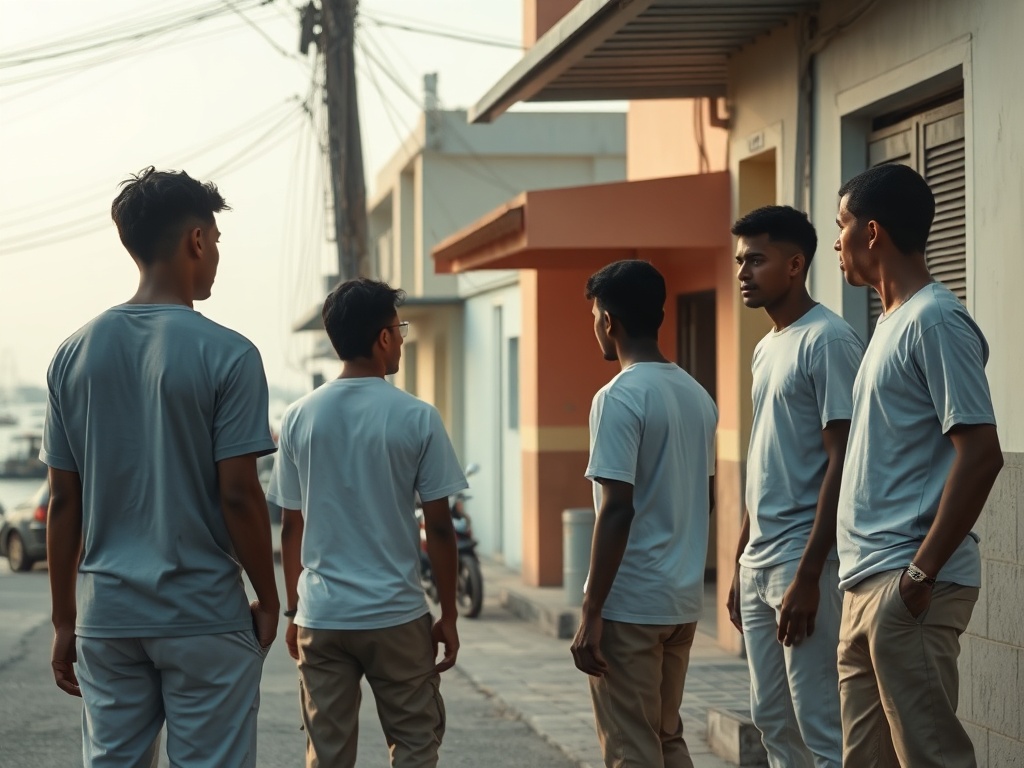
In Maldives, politics often sways between two giants.
The Maldives has long navigated the treacherous waters of international diplomacy, but today, the compass seems broken. Our political leaders no longer chart a course based on the stars of national interest, but rather on the shifting winds of foreign influence. The question every Maldivian must ask is: who truly steers our dhonis? Is it the people of these islands, or the distant capitals that fund our political campaigns and infrastructure projects?
The ruling party’s pivot away from India and toward China was not born from a public referendum or a deep-seated ideological shift. It emerged from closed-door meetings and the allure of alternative financing. Conversely, the opposition’s historical alignment with New Delhi offers a familiar, yet equally dependent, relationship. This isn't a debate over which foreign policy best serves our people; it's a bidding war where the highest bidder wins the loyalty of our political class. The real currency isn't rupees or yuan, but political survival.
What does this mean for the average Maldivian struggling with the cost of living in Malé? When foreign powers become the primary patrons of our political system, our domestic priorities are inevitably sidelined. The urgent need for affordable housing, functional healthcare, and youth employment is drowned out by the geopolitical noise. Our national debt, a crushing burden on future generations, is often accrued to service these very alliances, locking us into cycles of dependency.
The ‘India Out’ campaign successfully tapped into public frustration, but did it merely replace one master with another? The underlying structure remains: a political economy where external validation and financial support trump local accountability. This system encourages a focus on grand, visible projects that serve as monuments to these partnerships, while the foundational cracks in our society—corruption, a bloated public sector, and a politicized judiciary—widen unnoticed.
Are we, as a nation, trading our long-term sovereignty for short-term political gains? The answer lies not in the halls of power, but in the crowded streets of Malé and the quiet atolls. It is our collective responsibility to demand that our leaders answer to the Maldivian people first, and to foreign powers last. The ocean that surrounds us has always been our greatest source of independence; we must not allow it to become a moat that isolates us from our own destiny.