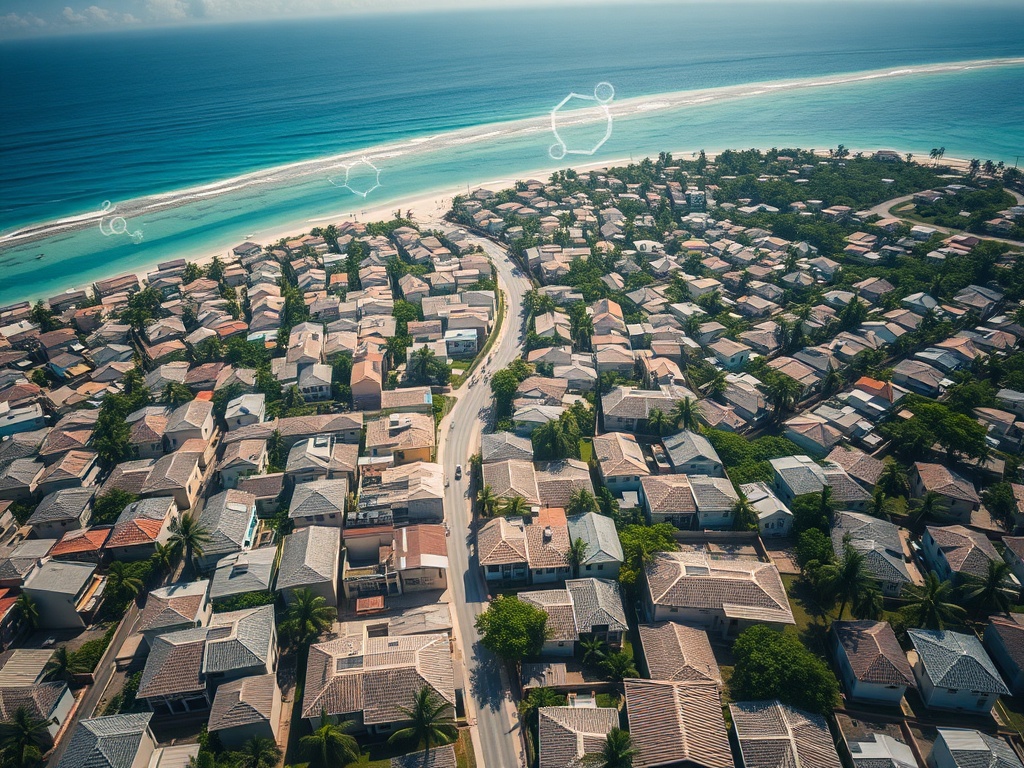
In Malé, the land your grandfather owned now belongs to a stranger
In the scattered archipelago of the Maldives, where land is both scarce and sacred, a quiet revolution of inequality unfolds. The conversation around wealth distribution has shifted from abstract economic theory to tangible reality—the reality that land ownership represents the ultimate asset, while financial illiteracy ensures most will never grasp its significance.
This isn't merely about economic disparity; it's about the architecture of a system where resources flow predictably toward those already holding advantage. The mechanism operates with silent efficiency: generational wealth accumulates through land ownership and strategic asset management, while generational debt becomes the inheritance for those outside this circle. The injustice isn't merely in the distribution itself, but in the systemic failure to provide the tools—particularly financial literacy—that might allow for navigation of this landscape.
In a nation where tourism revenue fuels the economy yet often benefits a concentrated few, the pattern repeats. Resort ownership, land development rights, and government housing allocations follow similar trajectories—opportunities clustering around existing wealth while the majority contends with the consequences: inflated living costs, limited housing options, and economic uncertainty.
The most profound injustice may be the withholding of knowledge. Without understanding how assets compound, how land appreciates, how generational planning works, many remain permanently outside the conversation about wealth building. They see the symptoms—the rising cost of living, the housing shortages, the economic pressures—but lack the framework to understand the underlying mechanisms.
This creates a self-perpetuating cycle where political promises of land distribution or housing projects become transactional rather than transformative. The debate has shifted from how to build equitable systems to how to manage the symptoms of inequality. The real conversation we need isn't about temporary relief but about permanent access—to knowledge, to assets, to the fundamental building blocks of economic security.
As the Maldives navigates complex economic challenges from foreign currency shortages to employment crises, the solution may lie in addressing this foundational imbalance. Not through redistribution alone, but through democratizing the understanding of how wealth works. The true measure of justice in this island nation may eventually be calculated not in rufiyaa or square feet of land, but in how many citizens possess the literacy to navigate their economic futures.
— Source fragments: Unconsciously you are promoting plutocracy, where only the rich get resources and pass generational wealth and the majority passes generational debts. Own land is the biggest resource and assets anyone can have no matter where. Lacking in financial literacy to understand these. Not giving is the injustice.