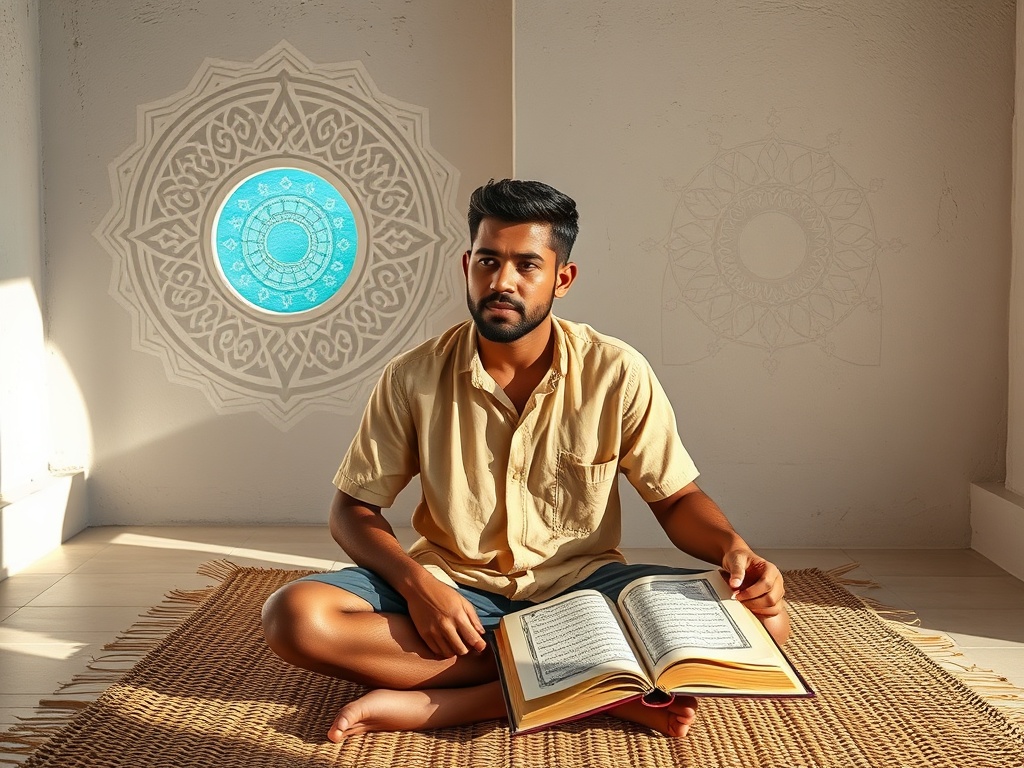
In Malé's Cafés, a Quran and a Science Book Share One Table
In the quiet prayer rooms and bustling cafés of Malé, a quiet intellectual struggle unfolds—one that mirrors conversations happening across the Muslim world. The question isn't whether the Quran contains truth, but how that truth interacts with human discovery.
The debate often centers on scientific theories like the Big Bang. Some argue passionately that the Quran anticipated modern cosmology, pointing to verses describing the heavens and earth as once joined then separated. Others counter that such validation-seeking misunderstands the relationship between revelation and science. The Quran, they insist, is the absolute standard—theories must align with it, not the other way around.
This tension reflects a deeper concern about religious authority in an age of information. As one observer noted, a companion from Islam's golden age might struggle with modern attempts to harmonize scripture and science. The very framework of scientific inquiry—"I don't know who did this but this happened"—conflicts with the certainty of divine authorship.
Yet the Maldivian context adds unique dimensions to this discussion. In a nation where Islamic identity is constitutionally enshrined, questions of interpretation carry social and political weight. The conversation isn't merely academic; it touches on how a 100% Muslim society navigates modernity while preserving religious integrity.
The human evolution debate provokes similar tensions. Where some see scientific evidence of common ancestry, others see a fundamental challenge to the Islamic narrative of human creation. The middle ground—where many Maldivians quietly reside—acknowledges scientific discovery while maintaining that ultimate truth resides in revelation.
What emerges is neither rigid fundamentalism nor wholesale adoption of secular frameworks. Instead, there's a thoughtful engagement with complexity—a recognition that some questions may have layers of meaning that transcend simple binary answers. This approach allows space for both faith and reason, acknowledging that while the Quran provides ultimate guidance, human understanding of both scripture and science continues to evolve.
In a nation facing pressing practical challenges—from economic pressures to governance issues—these theological discussions might seem abstract. Yet they reveal something fundamental about the Maldivian character: a deep commitment to Islamic identity that nevertheless engages thoughtfully with the modern world.
— Source fragments: Ancestor of chimp discussion, Big Bang validation debates, Quran as absolute standard, tension between religious and scientific frameworks