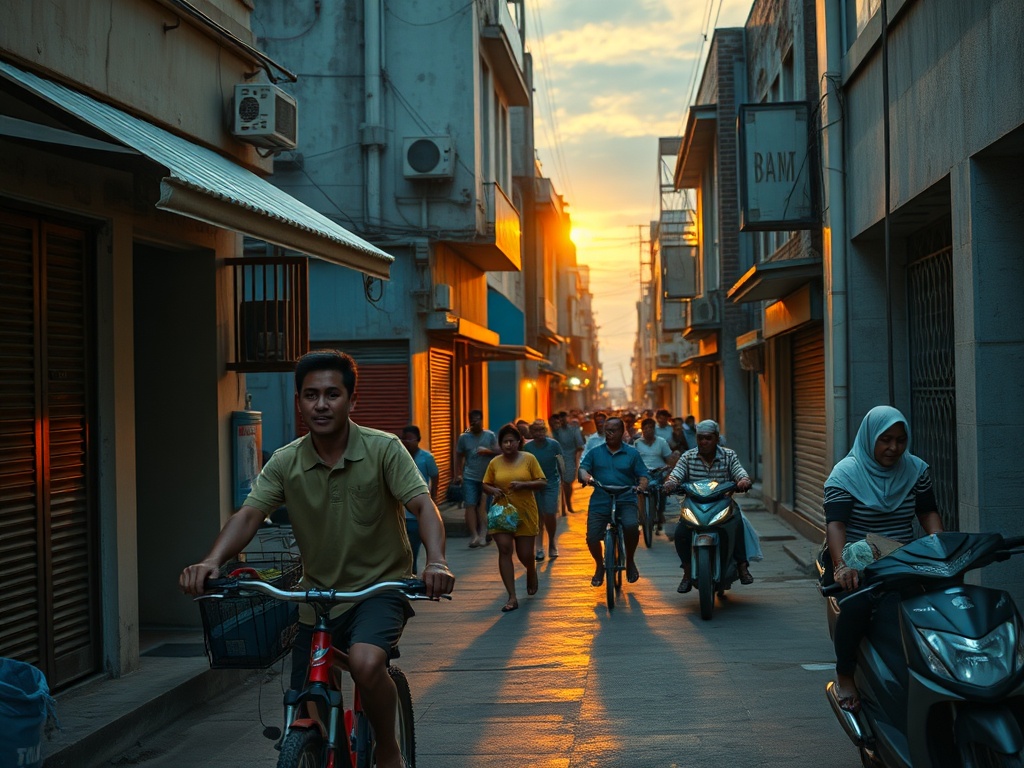
In Malé's Crowded Lanes, a Revolution Against the 'Not Registered'
In the crowded lanes of Malé, where space is measured in square feet and social standing often in lineage, a quiet revolution is brewing. It's a movement born from the daily experiences of those who call the capital home but are marked as outsiders by a single bureaucratic designation: not being registered as born in Malé.
This distinction, seemingly administrative on paper, has evolved into a powerful social divider in the Maldives' densely populated capital. Those without the coveted Male' birth registration find themselves navigating an invisible hierarchy that affects everything from housing opportunities to social acceptance. The system creates what many describe as a two-tiered citizenship within the city's 8.3 square kilometers.
The discrimination manifests in subtle but significant ways. In housing applications, where space is the capital's most precious commodity, being 'from Malé' often carries weight beyond objective need. In social circles, the question 'Kihineh Male' ah?' (Are you from Male'?) can determine inclusion or exclusion. Even in employment and educational opportunities, the distinction sometimes surfaces as an unspoken qualification.
This growing awareness has sparked calls for a more inclusive definition of belonging. Advocates argue that decades of migration from the atolls to the capital for work, education, and opportunity have created a generation for whom Malé is the only home they've ever known. Yet they remain perpetually marked as outsiders by a registration system that fails to reflect contemporary urban realities.
The movement isn't seeking special privileges but equal footing. It challenges the notion that connection to place should be determined by birth certificates rather than lived experience, contribution to community, and shared urban identity. As one observer noted, the very streets that witness their daily lives, the mosques where they pray, and the markets where they shop should count for more than a line in a registry.
This conversation touches on broader questions about modernization, urbanization, and identity in the Maldives. As the nation grapples with rapid development and social change, the Male' registration debate represents a microcosm of larger tensions between tradition and progress, between inherited status and earned belonging.
The emerging consensus suggests that true urban community cannot be built on exclusionary foundations. For Malé to function as a cohesive capital, it must embrace all who contribute to its rhythm and life, regardless of where their birth was officially recorded. The city's future may depend on its ability to transform from a collection of registered inhabitants into a community of engaged citizens, united by shared space and common purpose.
— Source fragments: Discrimination against those who live in Male' but are not registered to Male' at birth; mentality driving huge rift between people