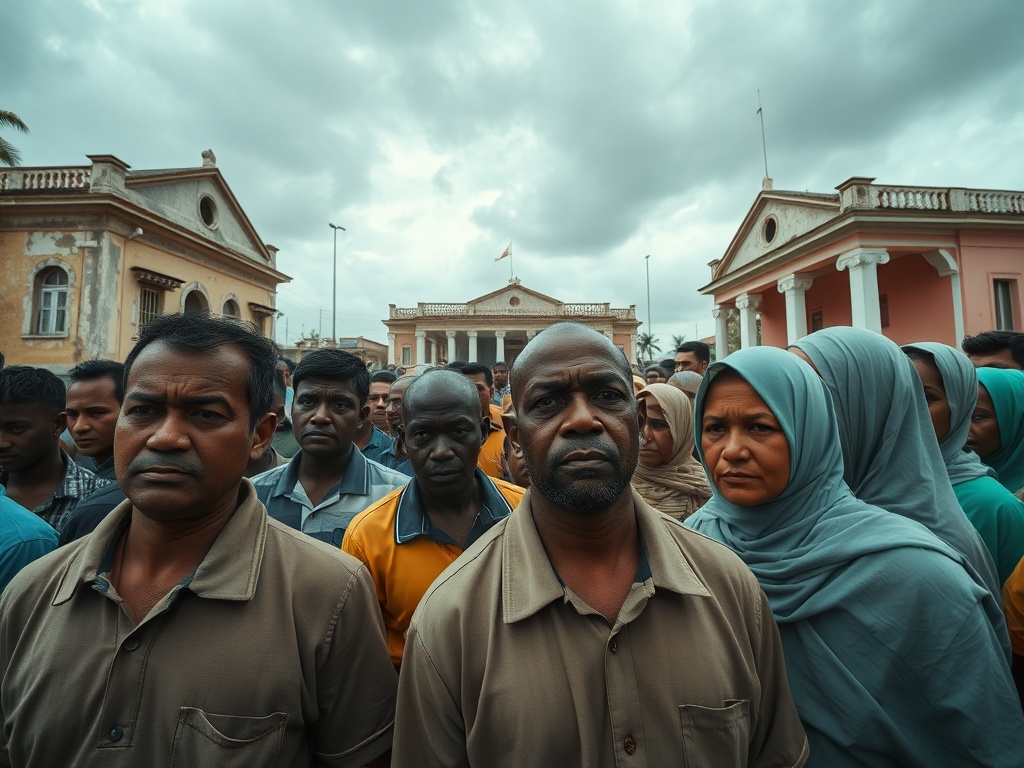
In Malé's Crowded Streets, Who Gets to Speak?
In the crowded streets of Malé, where political tensions simmer beneath the surface of daily life, a growing unease is taking hold. The fundamental question of who gets to participate in civic life—and who gets silenced—has become central to the national conversation.
At the heart of this debate lies the principle of equal opportunity. Residents of the capital, regardless of their island of origin, should have equal access to government schemes and constitutional protections. When regional migrants move to Malé seeking better opportunities, they bring with them the same rights guaranteed to every Maldivian citizen. The exclusion of any group from public programs represents not just administrative oversight but a deeper failure of governance.
The current administration's approach to dissent has raised particular alarm. When government advisors speak of compulsory public gatherings, citizens rightly question what happens to those who choose not to attend. The line between civic participation and coercion becomes dangerously blurred when attendance is framed as mandatory rather than voluntary. This creates a chilling effect on political expression and raises fundamental questions about the state's relationship with its citizens.
Equally troubling are the mechanisms of enforcement. The vague categorization of individuals as 'extremely dangerous' or 'threats to society' without transparent criteria invites abuse. When determinations are made based on questionable intelligence or unproven allegations about hidden beliefs, the very foundation of due process crumbles. This is particularly concerning given the administration's composition—experienced politicians and former ministers who understand constitutional protections yet appear willing to bypass them.
The constitutional guarantee of freedom becomes meaningless when citizens feel they must prove its existence rather than the state demonstrating its protection. The burden of proof has somehow shifted from the government justifying restrictions to citizens defending their basic liberties.
What emerges is a pattern where political consolidation takes precedence over democratic principles. The tools of governance—from public programs to security assessments—increasingly serve political rather than public interests. This erosion occurs not through dramatic confrontations but through gradual administrative decisions that collectively narrow the space for dissent.
In a nation where political allegiances have historically shifted with the tides, the current trajectory suggests a worrying departure from the democratic norms that Maldivians have fought to establish. The test of any administration lies not in its ability to command compliance but in its commitment to protecting the rights of those who disagree with it.
— Source fragments: Equal opportunity for Malé residents, constitutional rights for RT migrants, due process concerns, compulsory gathering warnings, vague threat categorizations, freedom guarantees