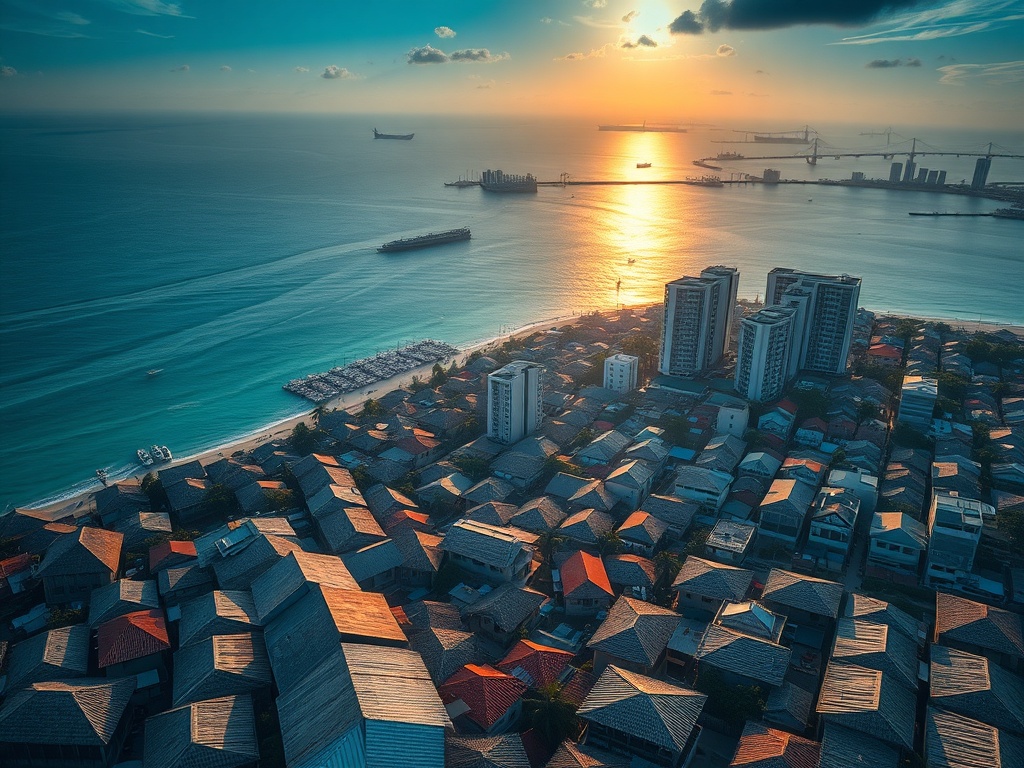
In Malé’s Shadow, Concrete Rises Where Families Wait
In the cramped geography of Malé, where concrete towers stretch skyward and the ocean seems to recede with each new reclamation project, a quiet revolution is unfolding in how Maldivians think about home. The debate over housing has moved beyond simple questions of shelter into complex territory involving land value, political priorities, and the very definition of community.
The current system, where land distribution is tied to political cycles and housing programs often serve electoral calculations rather than housing needs, has created peculiar distortions. We now see situations where land worth millions is allocated for development into 7-10 story buildings—assets that represent investment potential rather than solutions to housing scarcity. This isn't about providing homes as much as distributing valuable real estate.
Construction companies increasingly drive development decisions, with building designs often coming from corporate offices rather than reflecting the needs of families who will inhabit these spaces. The result is a landscape where the logic of profit supersedes the logic of community. Even shared spaces like terraces become negotiated commodities rather than natural gathering places.
The migration policy that once incentivized movement from islands to Malé by offering housing and services now shows its limitations. What was intended as a pathway to better opportunities has created generations caught between places—people who spent decades in the capital dreaming of returning to their islands, yet finding both options increasingly out of reach.
The rental crisis in areas like Maafanu reveals another layer of complexity. Proposed solutions like rental boards that account for apartment specifications—elevators, views, amenities—acknowledge the need for regulation but struggle with implementation. Meanwhile, the average Malé resident builds upward primarily when family needs expand, not as an investment strategy.
There's growing recognition that the Land Act itself may need reconsideration. The legislation's emphasis on land distribution for housing, while well-intentioned, may no longer suit an era of land scarcity and high reclamation costs. Some argue for separating housing policy from land allocation entirely, creating specialized legislation focused specifically on shelter needs rather than asset distribution.
The challenge lies in balancing legitimate concerns about inequality with the practical realities of limited space and resources. When housing programs appear to favor specific groups or regions, they risk creating the very divisions they purport to heal. The solution may lie in stricter controls on how executive priorities shape housing programs, ensuring non-discriminatory access becomes the standard rather than the exception.
As one observer noted, policies made before we were born aren't sacred texts—they can and should evolve as circumstances change. The question facing Maldivians is whether we can build a housing system that serves people rather than political agendas, that creates communities rather than just buildings, and that recognizes home as something more valuable than square meters of developed land.
— Source fragments: Housing distribution policies, construction company influence on development, rental crisis solutions, intergenerational displacement between islands and Malé, Land Act limitations, political priorities in housing programs