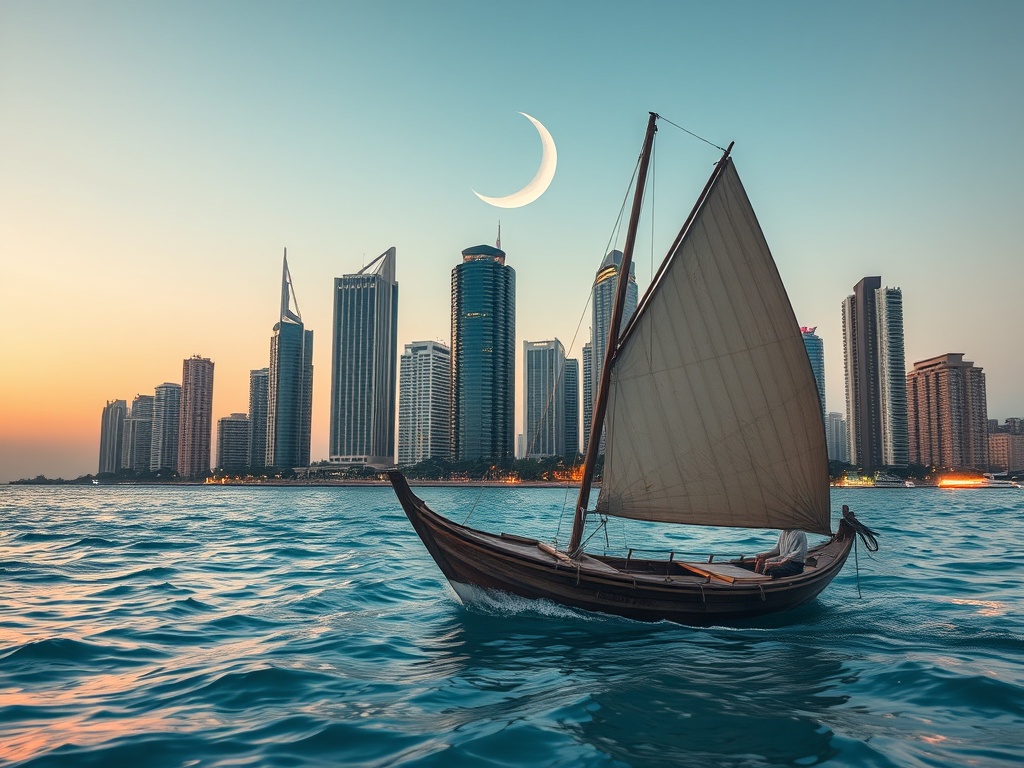
In the World's Only 100% Muslim Nation, a Quiet Conversation Begins
In the Maldives, where Islam is both constitutionally mandated and culturally embedded, a quiet but profound conversation is unfolding about the boundaries of faith, reason, and national identity. The archipelago's unique position as the world's only entirely Muslim nation creates a social laboratory where theological debates intersect with modern governance in ways unseen elsewhere.
The discourse reveals a society grappling with its relationship to both tradition and modernity. Some voices advocate for a faith so absolute that scientific theories like the Big Bang must align with Quranic interpretation or be rejected entirely. This perspective positions religious texts not as complementary to scientific inquiry but as the ultimate arbiter of truth. Meanwhile, others express concern about what they perceive as rigid interpretations of Islamic law, particularly regarding gender and citizenship.
The citizenship question remains particularly contentious. The legal framework excluding non-Muslims from Maldivian citizenship reflects the nation's constitutional identity, yet critics question how this aligns with principles of justice in an increasingly interconnected world. This isn't merely theoretical—it touches on real questions of human rights, international perception, and the practical challenges of governance.
Simultaneously, a generational divide appears to be emerging. Some younger Maldivians, exposed to global conversations through social media, are questioning inherited beliefs while others double down on religious orthodoxy as an anchor in changing times. The discussion about religious punishment reveals this tension, with traditional interpretations of correctional justice facing scrutiny in light of contemporary human rights standards.
What emerges is a portrait of a society at a crossroads. The Maldivian identity, so firmly rooted in Islam for centuries, now navigates the complex waters of globalization, scientific advancement, and evolving social norms. How the nation balances its religious heritage with the demands of modern statehood will likely define its trajectory for decades to come. The conversation isn't about abandoning faith, but about understanding its place in a rapidly changing world—a challenge facing many Muslim-majority societies, but one that takes unique form in this island nation where faith and citizenship have been inseparable for generations.
— Source fragments: Discussions about Big Bang theory and Quranic interpretation, citizenship laws for non-Muslims, debates about Islamic punishment methods, concerns about religious freedom and discrimination, observations about generational shifts in belief systems