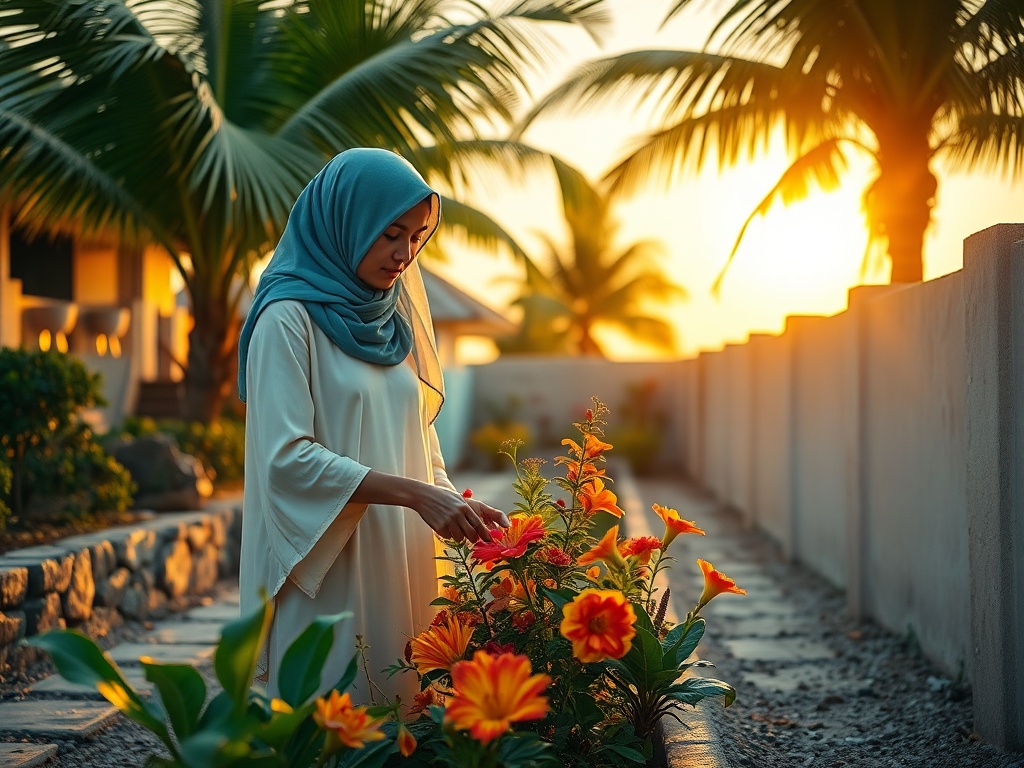
Island Gardens Bloom with Youth
There's something quietly revolutionary happening in the scattered islands of this archipelago. In the spaces between concrete and coral, young hands are turning soil, planting seeds, and tending to flowers with a care that feels both ancient and new. I watched a girl no older than sixteen on a local island yesterday, her fingers gently pressing marigold seeds into dark earth while her friends scrolled through phones nearby. She moved with a patience that seemed to belong to another time, yet her modern sneakers and colorful hijab told a different story—this wasn't nostalgia, but something more deliberate.
These young gardeners aren't just growing flowers; they're cultivating connection. In a nation where the sea dominates every conversation and livelihood, this return to the land feels like a quiet rebellion. The careful watering of rose bushes at dawn, the patient weeding around jasmine vines, the sharing of cuttings between neighbors—these small acts create invisible threads that bind communities together in ways that social media never could.
What moves me most is the transformation I see in the gardeners themselves. The boy who used to spend afternoons drifting between video games now checks his tomato plants with the focus of a scientist. The university student home for break finds solace in the rhythmic work of preparing soil, her worries dissolving with each turn of the trowel. There's a groundedness that comes from this work, a reminder that some growth cannot be rushed, some beauty requires daily tending.
In the golden hour, when the sun softens and casts long shadows across these island gardens, you can see the real magic. It's not just in the vibrant blooms that defy the salty air, but in the postures of the young people tending them—shoulders relaxed, faces calm, completely present in their small patch of earth. They're planting more than flowers; they're growing roots in a world that often feels adrift.
— Source fragments: young people tending to flower gardens in the islands is so refreshing to see