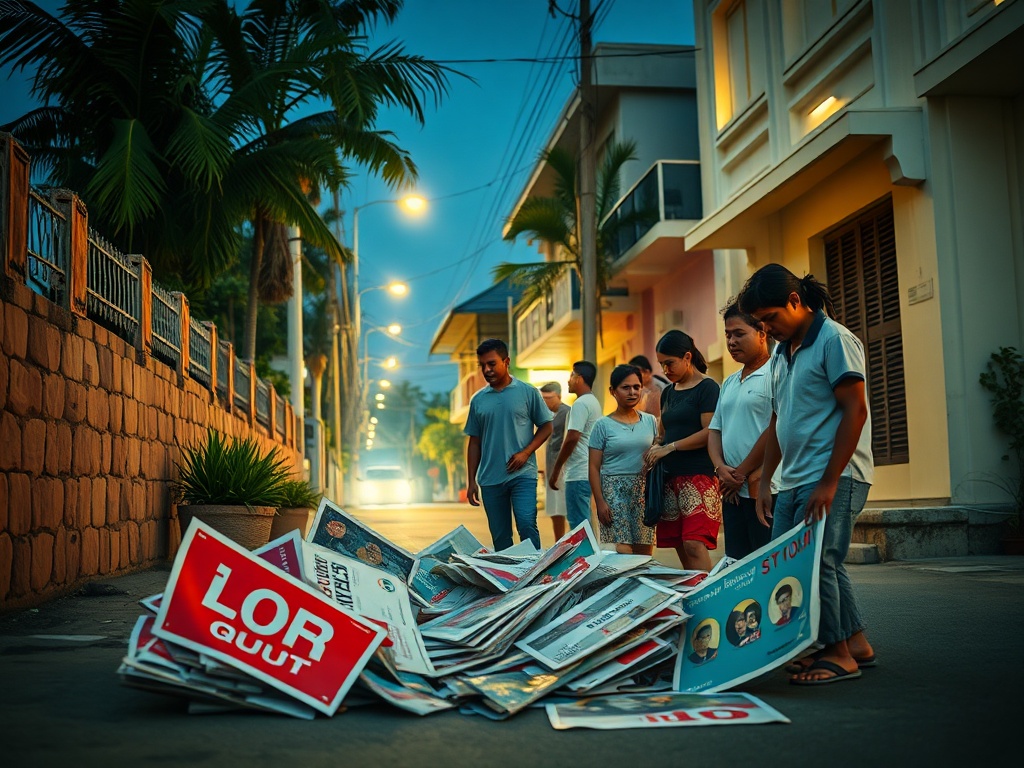
It was also cleaned up by protesters last night.
Last night, after the chants faded and the banners were folded, something remarkable happened: the protesters cleaned up. This wasn't just about picking up litter; it was a powerful, silent statement. In a political climate where public spaces are often stages for conflict and government actions are frequently questioned, this act of collective responsibility speaks volumes. Why would citizens who are angry enough to protest also feel compelled to care for the very infrastructure they are demonstrating against?
This reflects a deep-seated cultural value of communal care, starkly contrasting with the perceived negligence at higher levels of power. When the state is accused of nepotism, with relatives appointed to ambassadorial roles, and public sector ministries bloated with non-working political appointees, the citizens' meticulous cleanup becomes a form of moral critique. It asks a simple, piercing question: if ordinary people can manage their shared spaces with such respect, why can't the government manage the nation with the same integrity?
The cause is clear: a breakdown in the social contract. The effect is this visible dichotomy—public frustration manifested not as destruction, but as dignified upkeep. Consider the context: a capital city, Malé, grappling with a severe housing crisis where subsidized flats are subleased for profit by absentee leaseholders. The system seems designed for personal gain, not public good. Meanwhile, protesters, many of whom may be youths facing unemployment and a lack of opportunities, demonstrate a model of accountability that the state appears to lack.
This act also subtly challenges the narrative of eroding freedoms. In an environment where political rights are perceived to be shrinking and the judiciary is seen as politicized, such peaceful, constructive protest becomes a resilient form of expression. It avoids giving authorities the easy justification to crack down on 'disorder,' instead highlighting the protesters' commitment to order and civic pride. The cleanup is a strategic, peaceful resistance that underscores their demands for transparent and responsible governance.
What does this mean for the future? If the government continues on its current path—with high-profile corruption cases like the MPRC scandal, rising living costs from money printing, and foreign currency shortages—such symbolic acts may multiply. They represent a grassroots demand for a system that works for the people, not just the powerful. The real question isn't just about who cleans the streets, but who is ultimately responsible for cleaning up the mess in our institutions.