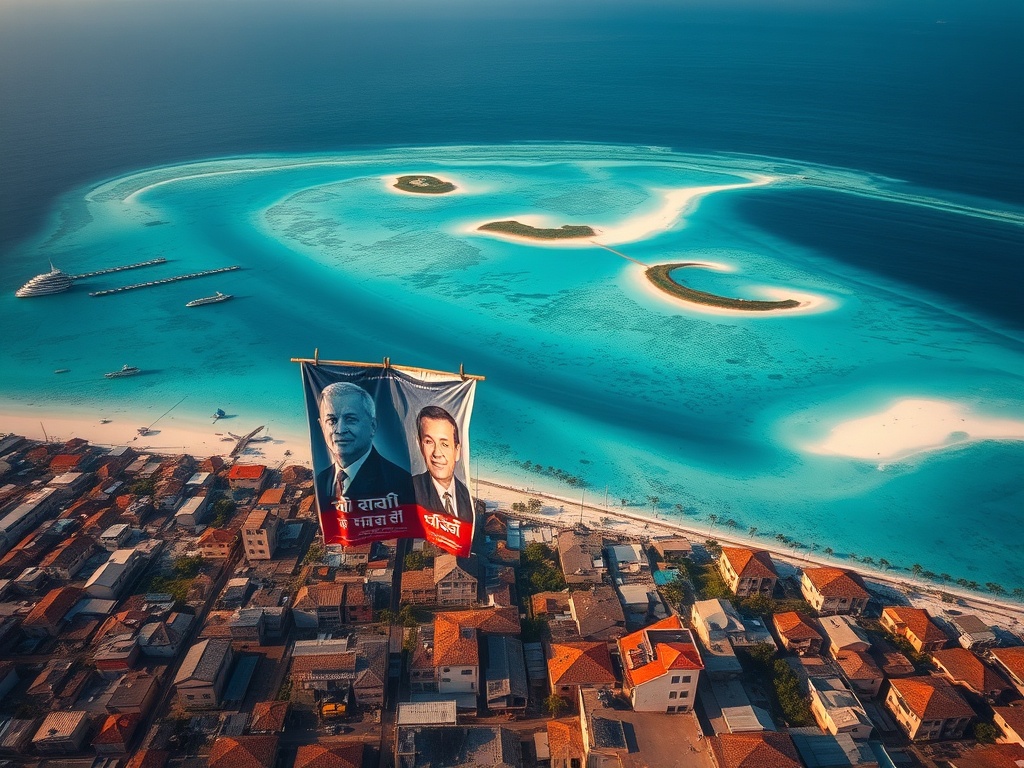
Land Given as Electoral Favors While Families Wait
In the scattered archipelago of the Maldives, land represents more than just physical space—it embodies security, identity, and the promise of self-sufficiency. Yet this precious resource has become entangled in political machinery, distributed not according to need or merit but as electoral collateral. The pattern repeats: governments use land allocations as bargaining chips to secure political loyalty, creating a cycle where policy bows to political expediency.
The fundamental question emerging from this practice isn't about who receives land, but why they receive it. When distribution follows political allegiance rather than transparent criteria, it undermines the very concept of good governance. The debate has shifted from whether land should be distributed to how—and to whom—this national asset is allocated.
Recent controversies surrounding land distribution schemes have highlighted these tensions. Critics argue that sidelining thousands of Maldivians based on arbitrary criteria represents a fundamental unfairness in how national resources are managed. The concern isn't merely about who gets what, but about the precedent set when essential resources become political rewards.
Local councils have begun pushing back against what they perceive as the gradual erosion of community assets. When chunks of land are allocated for projects with questionable public benefit, it raises alarms about whose interests are truly being served. The pattern extends beyond individual plots to broader concerns about long-term leases and island sales to foreign entities, often with inadequate regulatory oversight.
Beyond the political dimensions lies a deeper human reality. For many Maldivians, land represents income security—the ability to grow food, achieve some measure of self-sufficiency, and build stable futures. In a nation where many depend solely on salaries, land ownership can mean the difference between merely surviving and truly thriving. This connection between land and livelihood makes fair distribution not just a political issue, but a matter of national well-being.
The conversation has moved beyond individual schemes to question the very philosophy governing resource allocation. When land becomes political currency, it ceases to serve its purpose as a foundation for community development and individual dignity. The challenge facing the Maldives isn't merely technical or administrative—it's about reclaiming the principles of fairness and good governance in how the nation's most precious resources are shared among its people.
— Source fragments: Resource distribution based on political feeling; Free land not a basic need; Discriminatory distribution criteria; Local council resistance to land allocation; Pattern of island sales and leases; Land as income security and self-sufficiency