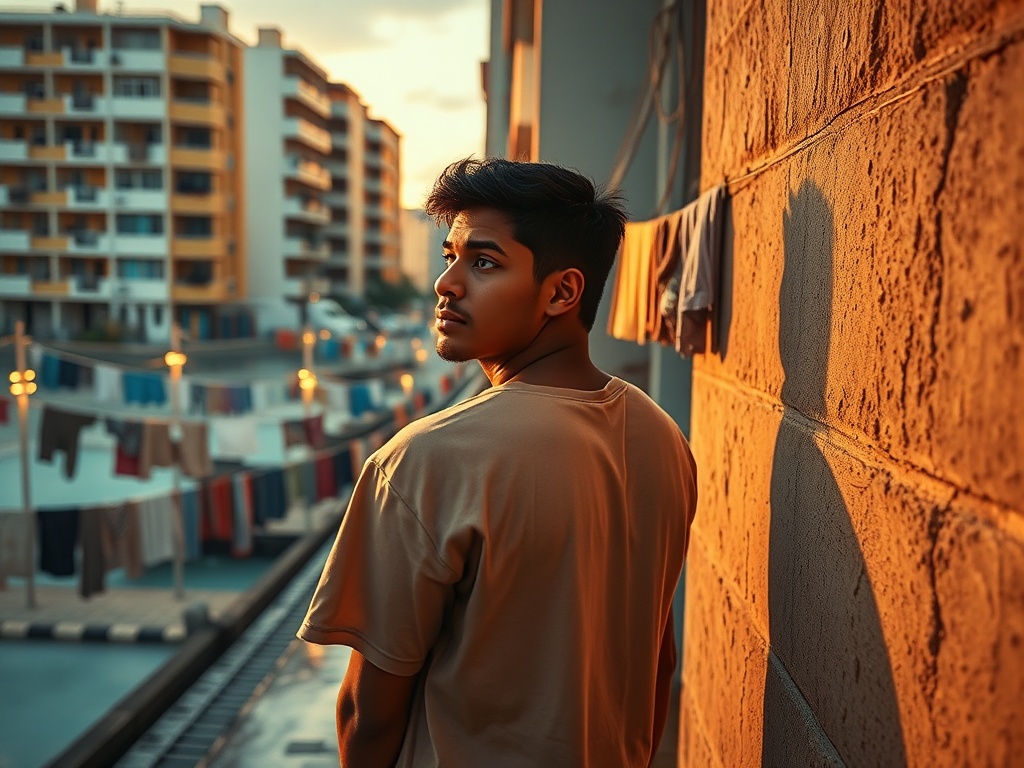
Laundry Lines and Distant Resort Lights
There's a certain heaviness that settles over the islands when the tourist seaplanes have departed for the day. It's in the way the evening light catches the laundry lines between cramped apartment buildings in Malé, in the quiet conversations at the local coffee shop where young men speak of jobs that don't exist, in the weary shoulders of fathers returning from jobs that barely cover the rising cost of rice and fish.
We live in a nation of breathtaking beauty, where turquoise waters meet endless skies, yet our daily realities often feel disconnected from the postcard perfection. The sea that surrounds us should be our greatest comfort, but for many it has become a barrier—separating us from opportunities, from adequate healthcare, from the simple dignity of affordable housing.
I watch the resorts glitter on distant horizons, their lights like false stars promising prosperity that rarely trickles down to our local shops and families. The money flows out as quickly as the tides change—to foreign bank accounts, to remittances sent home by expatriate workers, to pay for medicines we should have available here.
Our youth navigate these contradictions daily. They're educated, connected to the world through smartphones, yet find themselves adrift in an economy that can't absorb their ambitions. Some turn to substances to numb the frustration; others simply wait, their dreams slowly weathering like the coral that surrounds our islands.
Yet there's resilience here too. It's in the fisherman who still rises before dawn, in the mother who manages to feed her family despite rising prices, in the quiet determination of those who refuse to let our cultural identity be washed away by these challenges. We are more than the sum of our struggles—we are people who understand the ocean's rhythms, who know that even the lowest tide eventually turns.
The real Maldives exists in these spaces between the glossy advertisements and the political rhetoric. It's in our shared longing for stability, for transparency, for a future where our children won't have to choose between leaving their homeland and struggling within it. We carry both the weight of these challenges and the hope that somehow, we'll find our way back to calmer waters.
— Source fragments: