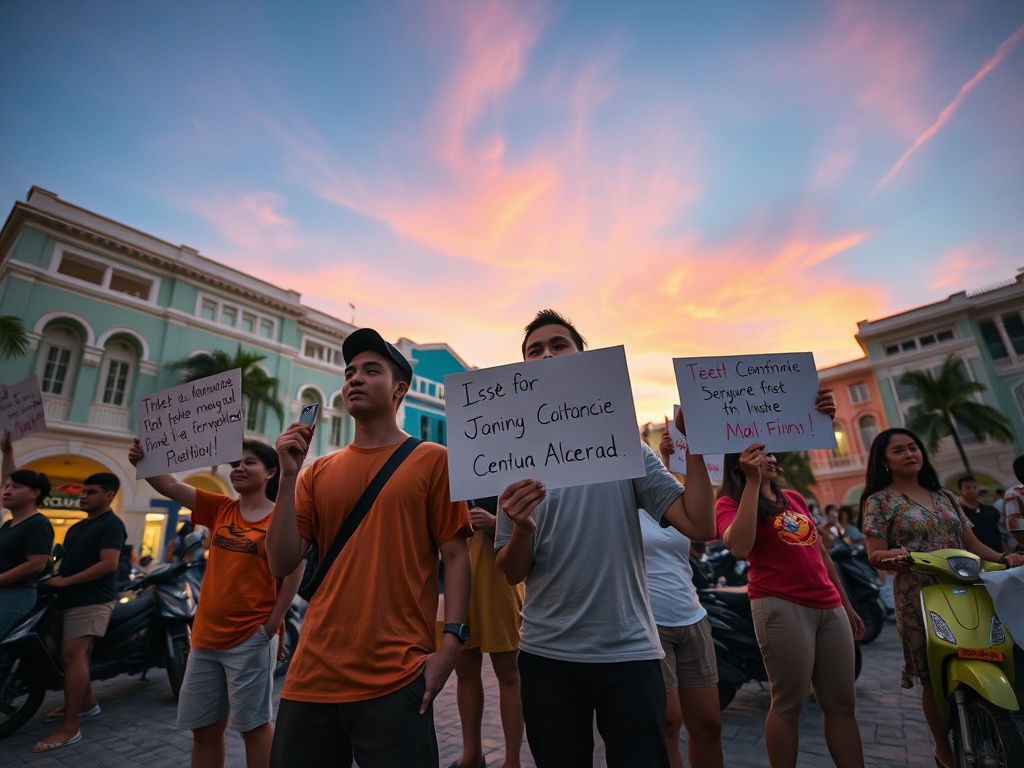
LootuvaifiLootuvaifi 2.0 is making a comeback.
The announcement of #LootuvaifiLootuvaifi 2.0 isn't just a hashtag; it's a collective cry from a populace that feels systematically ignored. Why does a protest movement, born from accusations of grand-scale looting, find such fertile ground in our society? The answer lies not in a single scandal, but in the daily erosion of trust. When people see high-profile corruption cases like the MPRC scandal go unresolved, when they witness the Supreme Court's independence questioned, and when they are governed by a public sector bloated with political appointees, the term 'lootuvaifi' ceases to be a slogan. It becomes the only word that accurately describes the feeling of watching national resources vanish before your eyes.
What is the direct human cost of this perceived looting? Look no further than the skyrocketing cost of living in Malé. The government's response to economic pressure has often been to print more money, a technical solution that feels like a betrayal to the family struggling to afford groceries. This isn't an abstract economic policy; it's the reason a father has to choose between his child's school supplies and a full meal. The foreign currency shortages, exacerbated by money parked abroad by resort owners and drained by expatriate remittances, mean that basic imports become luxuries. The system seems designed to benefit a connected few while the majority scrambles for scraps.
And where does this leave our youth? They are the generation inheriting a nation burdened by high debt and plagued by unemployment. The very opportunities that should be their birthright are stifled by a system where jobs and housing are politicized. Is it any wonder that disillusionment festers, sometimes manifesting in the social scourge of drug use? The government's housing projects, touted as a solution, are themselves a microcosm of the problem. When subsidized flats are subleased for profit by absentee leaseholders, it confirms the public's worst fears: the system is not broken; it is being gamed.
So, what does the return of #LootuvaifiLootuvaifi truly signal? It is less about a specific political party and more about a fundamental breakdown in the social contract. The protest is a symptom of a disease—a deep-seated belief that the nation's wealth is being systematically extracted rather than invested in its people. The question now is whether this collective voice will be met with meaningful reform or with further consolidation of power. The streets are speaking. Is anyone in power truly listening?