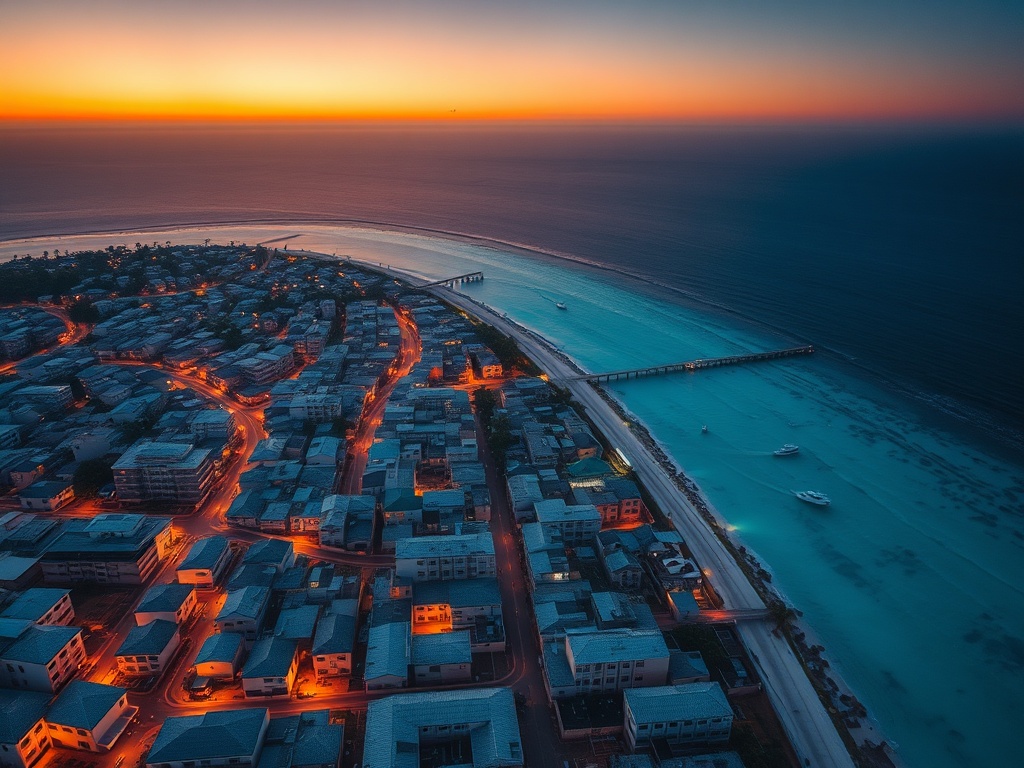
Majeedhee Magu at a Standstill, While Islands Wait
The debate over Malé's identity is no longer abstract. It pulses through the gridlocked streets of Majeedhee Magu, echoes in the towering silhouettes of Hulhumalé's high-rises, and simmers in the frustrations of citizens navigating a city that feels increasingly alien. The sentiment that Malé has lost its soul—'Male ah ufan Male' meehun'—captures a profound unease with the centralized model that has defined Maldivian development for decades.
The core argument against this hyper-centralization is both practical and philosophical. Practically, critics point to the unsustainable burden of maintaining basic infrastructure across 200 communities while simultaneously pouring resources into a single metropolitan area. This creates a vicious cycle: centralized government services in Malé force migration, which fuels congestion, which in turn demands more centralized solutions. The result is a nation perpetually playing catch-up with its own growth, forever poorer for it.
Financially, the current model creates perverse incentives. As one observer notes, governments resist genuine decentralization because they benefit from the centralized financial architecture, particularly loans from the Bank of Maldives. This corporate grip extends to urban development itself, with entities like HDC wielding immense power over Hulhumalé's development without the accountability of elected local councils. If islands like Hulhudhoo can manage their own affairs, why can't a population center of Hulhumalé's size?
The human cost is measured in dignity. The promotion of congested, unhealthy living conditions—where a citizen's primary mode of transport can be impounded for minor violations despite the government's failure to provide adequate parking—stands in stark contrast to the vision of a 'dignified healthy living space for everyone.' This isn't merely about urban planning; it's about what kind of society we choose to build.
Technology offers alternatives. A decentralized system is no longer a pipe dream but a feasible reality, requiring only political will. Instead of creating new urban centers that risk becoming 'car parking and garage villages,' we could foster genuine regional development. The space between a potential new capital and Malé could see rapid development, creating a dual-city nation rather than a single overwhelmed metropolis.
The solution isn't in technical fixes like abolishing permanent addresses, which critics argue merely worsens centralization. The path forward requires confronting the fundamental architecture of Maldivian governance. It demands moving beyond treating decentralization as a political slogan and embracing it as a national imperative—one that balances economic sustainability with the basic human need for space, community, and self-determination.
— Source fragments: Male' has lost its identity; Very-cumming in Male was the biggest blunder; recurrent cost of maintaining 200 communities is unsustainable; promote congested living with centralised government services; Hulhumale should be freed from corporate grip; problem is centralization; dignified healthy living space