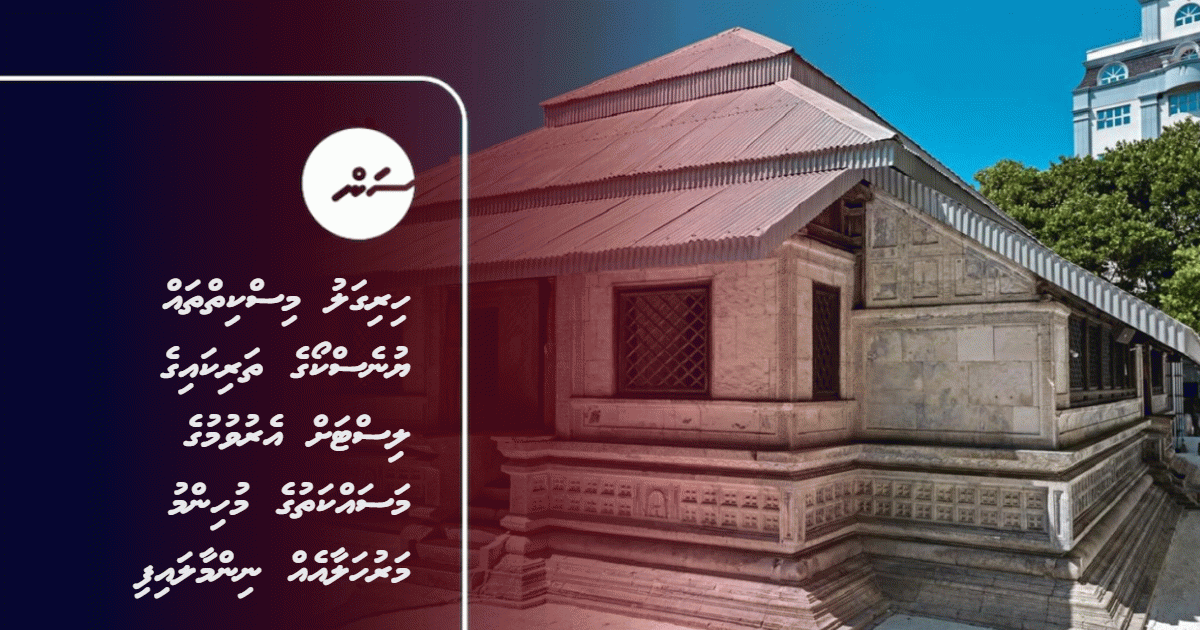
Maldives' Coral Stone Mosques Clear Key Stage in UNESCO World Heritage Bid
The Maldives has successfully completed an important stage in its 13-year effort to have the country's historic coral stone mosques included in UNESCO's World Heritage List.
According to a report carried by 'Muslim Network TV', seven historic mosques from across the Maldives are currently being studied for submission to the UNESCO list. UNESCO is expected to reach a decision on whether to inscribe these mosques late next year.
As part of the process, the nomination dossier submitted by the Maldivian government in January this year was accepted by UNESCO last month. Following this, an international assessment team visited the Maldives, inspected the mosques, consulted with island communities, and carried out a historical and cultural evaluation. According to the relevant authorities, this evaluation stage has now been fully completed. However, the final decision will rest with UNESCO's World Heritage Committee.
The effort dates back to 2013, when the Maldives' coral stone mosques were placed on UNESCO's tentative list, marking them as sites deserving international protection. The current bid is the result of that long-running work.
These mosques represent a form of Islamic architecture unique to the Maldives and not found in any other country. Instead of conventional building materials, coral stone and wood available in the Maldivian environment were used, and the walls and ceilings were decorated with intricate carvings and cut-outs.
The mosques stand as evidence of the Maldives' Islamic culture, its long maritime history and its trade links across the Indian Ocean. After the Maldives embraced Islam in the 12th century AD, the religion became the most important foundation of Maldivian society, and these mosques are the most important living testimony to that religious and cultural history.
If the UNESCO honour is secured, international support for preserving these historic religious buildings for future generations would increase. In addition, it would open the opportunity to broaden Maldivian tourism — currently reliant on resorts and beaches — into the cultural and historical sphere, attracting visitors interested in Islamic history and bringing economic benefits to the islands where the mosques are located.
However, officials note these benefits will only materialise if the sites are maintained properly and in a way that does not compromise the sanctity of the mosques.
Protecting the coral stone structures is a major challenge, as the hot climate, salt and environmental conditions cause them to deteriorate. While inclusion on the UNESCO list does not guarantee financial assistance, it would increase technical help and support from experts.
No site in the Maldives has so far been included in UNESCO's World Heritage List. If the coral stone mosques pass, they would become the first heritage site in the Maldives to receive this honour.