Maldives Demands Shift from Climate Pledges to Tangible Shoreline Protection
Foreign Minister Iruthisham Adam has called for a fundamental transformation in global climate adaptation financing, urging developed nations to move beyond pledges and project approvals toward the actual delivery of resilience on the ground.
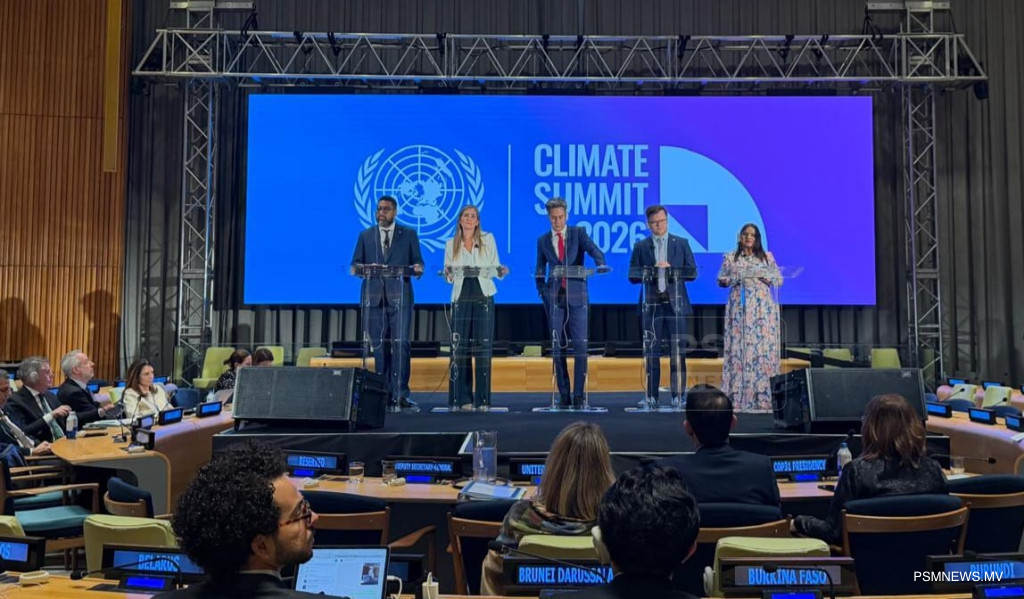
Speaking at a high-level climate event on Thursday, Minister Iruthisham emphasized that developed countries must honor their existing commitments. She asserted that while private and innovative financing can play a role, they should serve as supplements to public funding rather than replacements for it.
For Small Island Developing States (SIDS) like the Maldives, the Minister argued that finance must be predictable, accessible, and primarily grant-based or highly concessional. She warned that the cost of protecting vulnerable populations from climate change should not push these nations deeper into unsustainable debt.
Minister Iruthisham advocated for a systemic change in how climate funds are utilized, suggesting that finance should focus on embedding resilience into overall national development rather than funding isolated projects. For the Maldives, she noted, this means prioritizing the protection of islands and shorelines, reinforcing critical infrastructure, and safeguarding coral reefs, communities, and local livelihoods.
Addressing the bureaucratic hurdles of international funding, the Foreign Minister called for streamlined and faster access to finance. She argued that SIDS should not be forced to navigate complex, multi-year processes to secure essential funding during an escalating crisis.
Furthermore, the Minister proposed a new metric for success. Instead of measuring progress by the amount of money pledged or the number of projects approved, success should be gauged by tangible outcomes: whether communities are safer, infrastructure is more durable, and countries are better equipped to withstand environmental shocks.
While emphasizing adaptation, Minister Iruthisham warned that these measures cannot substitute for the urgent reduction of greenhouse gas emissions. She cautioned that there are absolute limits to how much small island states can adapt, noting that delays in cutting emissions make adaptation increasingly difficult and costly.
Closing her remarks, the Minister called upon participants of the upcoming COP31 to fundamentally "move adaptation from planning to protection."