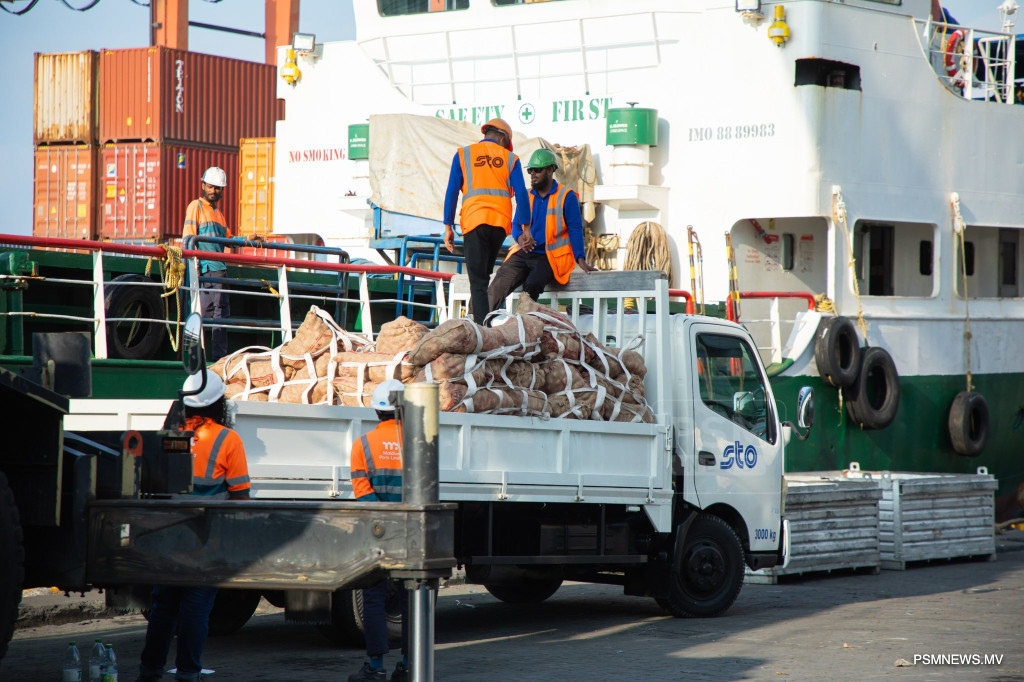
Maldives Diversifies Imports to East Asia Amid Middle East Trade Disruptions
The Maldives government is actively diversifying its import sources towards East Asia, a strategic move designed to shield the island nation's economy from the ripple effects of the ongoing Middle East conflict. With key global trade routes under threat, the initiative aims to secure supply chains and mitigate potential price hikes for essential commodities.
The conflict, intensifying for over a month with the involvement of Yemen's Houthi rebels, has cast a shadow over critical maritime arteries like the Bab al-Mandab Strait and the Suez Canal. These passages are lifelines for trade between Europe and Asia, and any significant disruption could have profound global consequences, driving up costs worldwide.
For the import-dependent Maldives, such volatility poses a direct risk to economic stability. Officials acknowledge that rising global commodity prices are an expected fallout. However, the government has provided assurances that stocks of essential goods—from food staples to medical supplies—remain available, with measures in place to maintain supply stability.
In response, Malé is forging stronger commercial links with East Asian markets. Countries like Malaysia, Vietnam, Thailand, and Indonesia are now being prioritized as alternative import hubs. This pivot seeks to reduce reliance on potentially compromised routes through the Middle East.
'The current situation presents an opportunity to expand our commercial engagement with these markets,' stated Minister of Economic Development and Trade Mohamed Saeed. 'Previously, goods were imported from Indonesia, Thailand, Malaysia and Vietnam, but without deeper commercial links. We are now working with the Ministry of Foreign Affairs to make better use of these opportunities.'
Minister Saeed also pointed to the Maldives' Free Trade Agreement with China as a vital tool in facilitating smooth trade, noting such agreements help ease barriers. While no similar formal pact exists with India, officials confirm that the country remains a priority export partner, with discussions underway to further strengthen bilateral trade relations.
'China and India are among the world's largest markets and remain key partners,' Saeed emphasized. 'Both countries have been working closely with us to ensure continuity in trade.'
On a practical level, air cargo services from the Middle East continue uninterrupted, and vital oil imports, primarily sourced through Oman, have not been disrupted despite regional tensions. This provides a layer of short-term security.
Looking ahead, authorities are committed to strengthening international partnerships across multiple fronts. The goal is clear: to ensure the steady availability of essential goods for all Maldivians, while proactively preparing for any further escalation in the volatile global trade landscape.