Maldives Doubles Annual Mariculture Training to Accelerate Marine Food Security
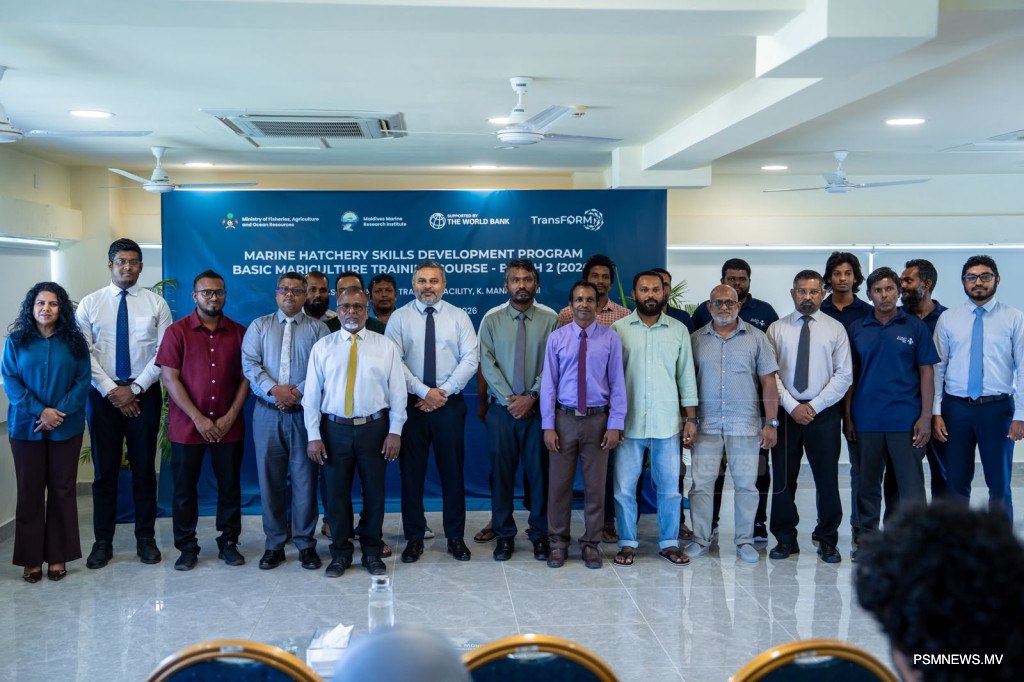
The Maldives is accelerating its push toward a sustainable aquaculture industry, doubling the frequency of its specialized mariculture training to meet national food security goals. The second session of the Basic Mariculture Training Course recently concluded, marking the sixth group of trainees since the program's launch under President Dr Mohamed Muizzu’s "Week 14 Roadmap."
Over twelve intensive days at the Maldives Marine Research Institute facility on Maaniyaafushi, Kaafu Atoll, eight participants from across the archipelago underwent rigorous hands-on instruction. The curriculum focused on critical hatchery techniques, live-food culture, and the farming of high-value species, including groupers, sea cucumbers, clownfish, pearl oysters, and seaweed.
Beyond basic farming, the program equipped trainees with essential skills in disease identification and prevention, emphasizing environmentally responsible practices. These competencies are designed to enable the establishment of reef-fish hatcheries across the various atolls, reducing reliance on wild catches and imported seafood.
Minister of Fisheries, Agriculture and Ocean Resources Ahmed Shiyam, who attended the closing ceremony, declared mariculture a "high-priority" sector for the nation. He revealed that the government will expand the training schedule from two annual sessions to four, following a presidential directive to expedite the marine-food agenda.
To date, 76 individuals have completed the program, which is funded by the World Bank’s TRANSFORM Project and delivered by the Marine Research Institute. The Minister further announced that the third publicly available cohort is scheduled to begin in October.
Participants described the training as vital, providing the practical experience and technical knowledge necessary to transition from traditional fishing to a sophisticated, sustainable mariculture industry. By scaling up this educational infrastructure, the Maldives aims to build a resilient blue economy that empowers local communities and ensures long-term ecological stability.