Maldives Joins Singapore and UAE as Global Leader in Migration Biometrics
The Maldives has become one of only three countries worldwide to reduce the proportion of its unidentified foreign population to a one percent threshold, marking a significant breakthrough in national security and migration management.
Minister of Homeland Security and Technology Ali Ihusaan announced the achievement during an address to the High Council of the People's National Congress (PNC). He revealed that the government has successfully collected biometric data for 95 percent of the expatriate population, a stark contrast to the situation inherited by the current administration.
Upon taking office, President Dr Mohamed Muizzu's government found that while nearly 296,000 expatriates were granted residency, only 22,700 had been fingerprinted. Minister Ihusaan described this gap as a critical security risk, noting that the issue had been largely neglected since the late 1980s while the focus remained on the economic gains of importing labor without adequate oversight.
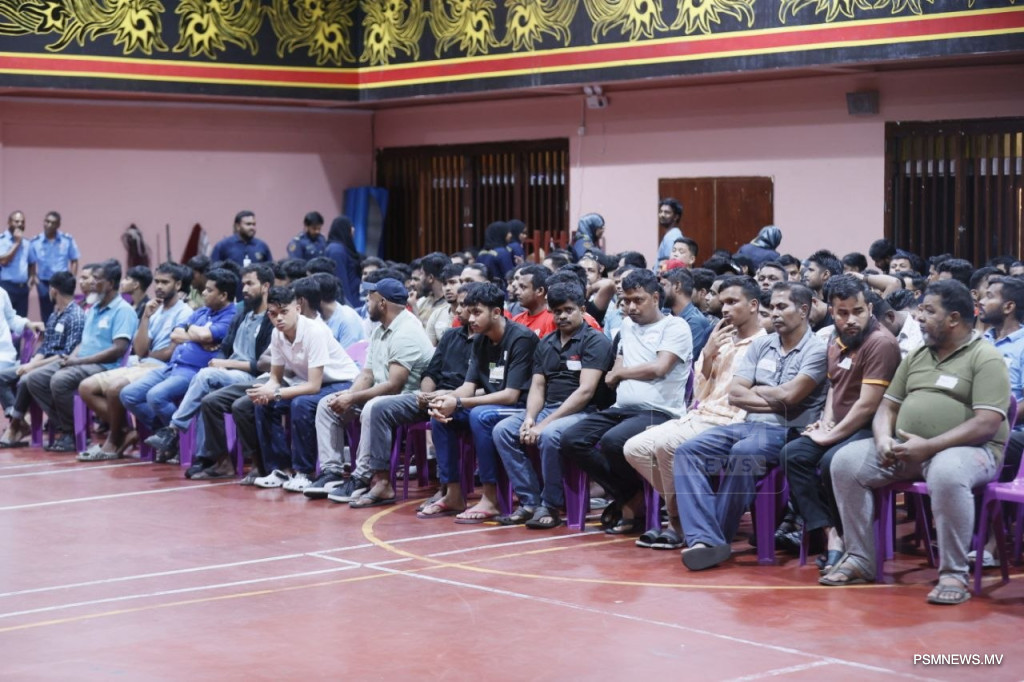
Through an intensive initiative led by the Ministry of Homeland Security and Technology, authorities have now recorded data for approximately 294,000 expatriates. Of the remaining five percent, the government has confirmed that four percent are no longer residing in the country, leaving only one percent of the current foreign population without complete biometric identification.
This milestone places the Maldives in an elite group alongside Singapore and the United Arab Emirates, both renowned for their stringent migration controls. With expatriates accounting for one-third of the total population, the move is seen as a vital step in curbing the number of individuals living in violation of local regulations.
The government stated that these efforts are part of a broader strategy to establish a permanent solution for migration management. Future priorities include strengthening work permit protocols and implementing continuous verification systems to ensure the long-term safety and security of the archipelago.