Maldives Launches Parasitoid Center to Combat Destructive Coconut Pests Sustainably
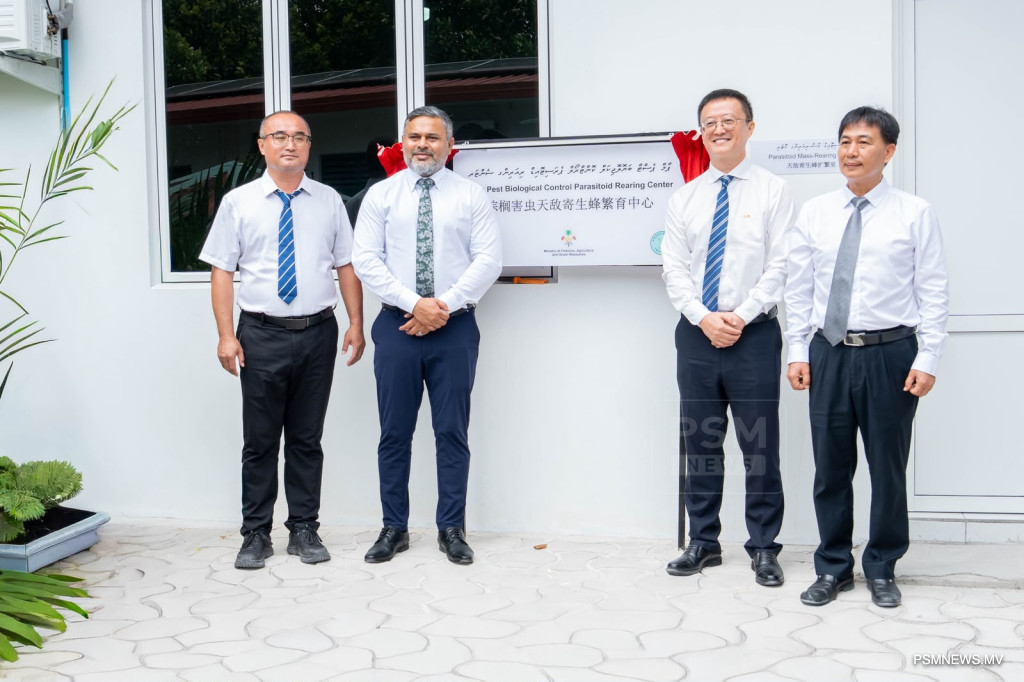
The Maldives has officially opened the Palm Pest Biological Control Parasitoid Rearing Center at the Hanimaadhoo Agriculture Center, marking a strategic shift toward sustainable, chemical-free pest management to protect the nation's coconut palms.
Minister of Fisheries, Agriculture and Ocean Resources Ahmed Shiyam and Chinese Ambassador Kong Xianhua inaugurated the facility. The center is a primary component of the "Maldives Coconut Tree Pest Control Assistance Project," a bilateral initiative established through an agreement signed on July 14, 2025, between the Ministry of Agriculture and China’s Ministry of Commerce.
Designed to combat the Coconut Hispid Beetle, the center specializes in rearing beneficial insects, known as parasitoids, which naturally prey on the destructive beetle. With a robust daily capacity of 100,000 parasitoids, the facility will provide an environmentally friendly alternative to chemical pesticides, supplying biological agents for release into heavily infested areas across the archipelago.
The battle against the Hispid Beetle began in December 1999, when the pest was first detected at Sun Island Resort in Ari Atoll. Since then, the government has utilized integrated pest-management strategies, including a 2003 initiative with the Food and Agriculture Organization (FAO). The new center strengthens these efforts by ensuring a consistent supply of natural predators, complementing existing measures such as strict import regulations, inter-island transport guidelines, and quarantine enforcement to stop the spread of the beetle and the spiraling whitefly.
To ensure the facility's long-term success, experts from the Chinese Academy of Tropical Agricultural Sciences conducted a comprehensive training program in Hanimaadhoo. This program combined theoretical knowledge with hands-on practice in biological pest-control techniques and disease management, equipping local technicians with the skills necessary to operate the center and scale the project's impact nationwide.