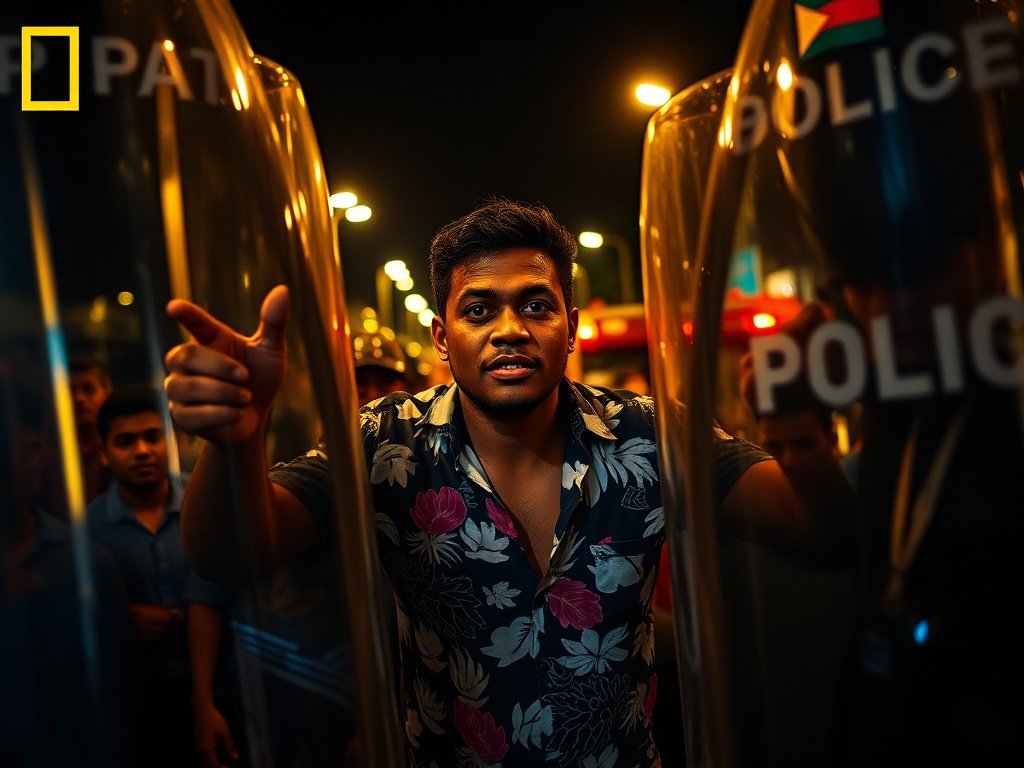
Maldives lawmaker was brutally sandwiched between two police shields
The streets of Malé witnessed another troubling confrontation last night as a sitting lawmaker found himself brutally compressed between two police shields during what should have been a peaceful demonstration. This violent restraint occurred as citizens gathered to voice their frustration against the Muizzu government's alleged corruption and the worsening inflation that continues to squeeze household budgets across the archipelago.
The incident raises serious questions about the state of democratic freedoms in our nation. When elected representatives cannot safely express dissent, what hope remains for ordinary citizens? The eight arrests made during the overnight protest further underscore the government's apparent determination to silence opposition voices rather than address legitimate concerns.
This crackdown occurs against a backdrop of growing public anger over multiple crises. The 75% parliamentary majority that should serve as a check on executive power appears instead to enable systematic looting of national resources. Both major parties—PNC/PPM and MDP—stand accused of plundering the nation during their respective terms, creating a cycle where political elites protect each other while citizens suffer.
Meanwhile, concerning questions emerge about the militarization of our police force. The importation of LRAD sound weapons and other advanced crowd control equipment suggests preparation for more violent confrontations with citizens exercising their constitutional rights. These tools of discomfort and potential harm have no place in a democracy that claims to value peaceful assembly.
The economic reality facing Maldivians makes these protests inevitable. With rising prices, foreign currency shortages, and a housing crisis in Malé that leaves families struggling for basic shelter, the government's response of suppression rather than solution only deepens public distrust. When people cannot afford to feed their families or find decent housing, they will inevitably take to the streets—no matter the risk.
As we witness these scenes unfold, we must ask: Is this the Maldives we want? Where lawmakers face police brutality for speaking truth to power? Where the basic right to protest is met with advanced weaponry? The answers we find will determine whether our democracy survives or becomes another casualty of political ambition.