Maldives Makes Major Strides in Disaster Preparedness, NDMA Says
October 13 is the International Day for Disaster Risk Reduction. The theme for this year’s observance is “Resilience begins at home,” which focuses on identifying risks, protecting homes, and being aware and prepared before disasters.
Following the tsunami disaster, the Maldives has made extensive efforts to build a disaster-resilient society and has achieved major progress. The day is marked to increase resilience, ensure the safety of communities, and strengthen efforts toward a resilient Maldives in light of disaster risks.
As a developing small island nation, the Maldives faces inherent vulnerabilities due to its geography, low elevation, climate change impacts, erosion, severe weather, and various disaster threats.
At the national level, the National Disaster Management Authority (NDMA) says the biggest progress in disaster risk reduction and management strategic planning is that the country has shifted from only responding when a disaster occurs to a comprehensive system that includes protection from disasters, risk reduction, preparedness, response, recovery, and resilience building, supported by national policies and well-planned mechanisms.
The “National Disaster Risk Reduction Strategy” is strategic guidance that incorporates disaster risk considerations into national policies, sector projects, and development plans. NDMA says this strengthens coordination among institutions and lays the foundation for risk-informed decisions at all levels of government.
To support this mechanism, NDMA is formulating the “National Disaster Management Plan.” Its purpose is to streamline the roles and responsibilities of relevant institutions and operational arrangements under one system at the national level.
NDMA has also formulated the “National Emergency Operations Plan” (NEOP). One of the most important steps taken to strengthen disaster risk management in the Maldives is the formulation of the “National Risk Register and Assessment 2026.”
NDMA said the long-term benefit of this national study is to use information on disaster risks to protect communities, protect basic infrastructure, and take practical steps to strengthen sustainable development.
A system for early warning and rapid action has also been established in the Maldives. This roadmap is a mechanism designed to increase early warning capacity at national and island levels and to work in coordination.
NDMA says the main foundation of its work to manage disaster risk is increasing the resilience of islands. With the assistance of international partners, especially the Government of Japan, the provision of water pumps and fire pumps has increased the response capacity of islands.
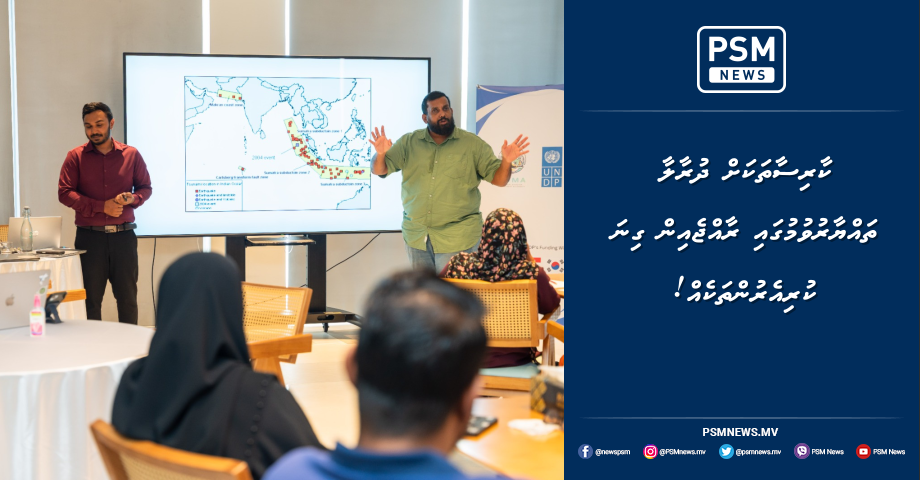
NDMA is also working to implement the UNESCO Intergovernmental Oceanographic Commission’s “Tsunami Ready Recognition Programme” in Kulhudhuffushi City. Kulhudhuffushi City is a city working to obtain official “Tsunami Ready” status. This is an example of how international standards can be implemented in practice. NDMA said that with this experience, tsunami preparedness efforts can be expanded to other islands of the Maldives.
In disaster risk management, NDMA opened the “Disaster Assessment and Loss Analysis” (DALA) system last year to strengthen the digital system. This is progress for the government’s “Maldives 2.0” digital transformation agenda. It shows how digital tools can be used to strengthen disaster governance and strengthen coordination between institutions.
The article also carries photographs with captions showing work beginning on the Disaster Management Plan for K. Guraidhoo, the third meeting of the Disaster Management Steering Committee this year, NDMA response efforts, and completion of a Community Based Resilience Building training of trainers program.
Building a resilient Maldives is the responsibility of everyone in the country, and reducing disaster risk is one of the most important foundations of sustainable development.