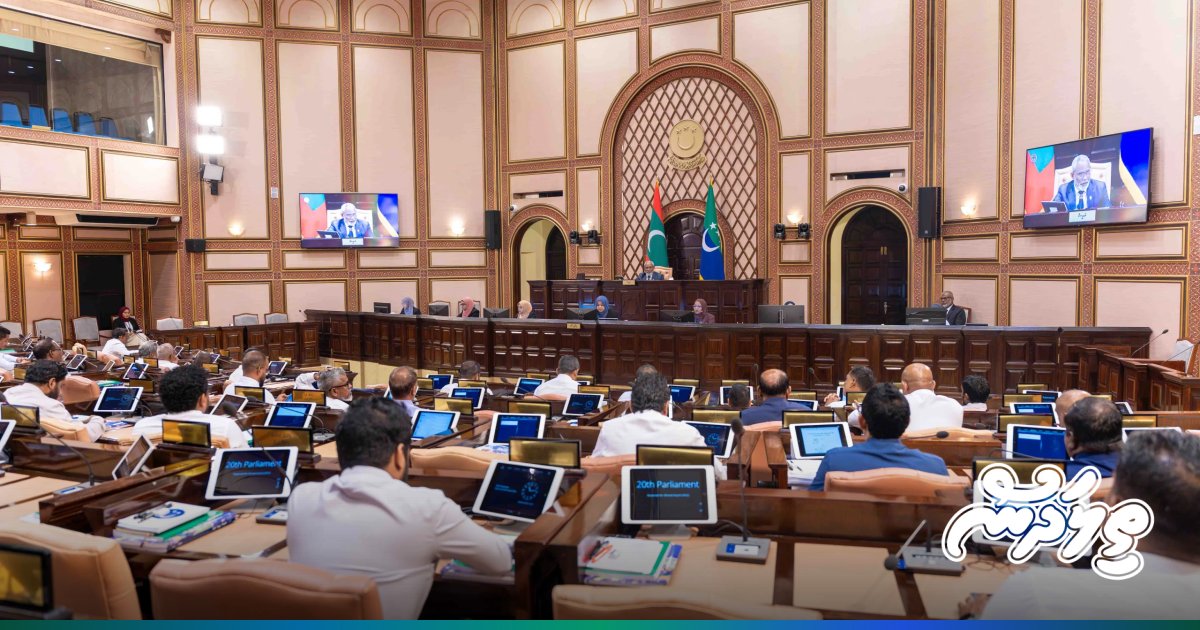
Maldives Parliament Receives Real Estate Bill Banning Gambling, Alcohol and Non-Muslim Worship in Special Zones
The government has submitted a bill on the real estate business to the People's Majlis, which prohibits establishing any business or service that facilitates activities such as gambling, which is explicitly forbidden in Islamic Sharia, and provides for integrated real estate zones to be leased to master developers for up to 99 years.
Article eight of this bill is specifically dedicated to introducing a special legal framework for integrated real estate zones. According to this article, the President of the Republic is granted the authority to designate specific special areas as integrated real estate zones with the recommendation of the Minister, for the purpose of facilitating the development of the real estate business in the country.
In accordance with this, the bill sets out strict conditions to ensure compliance with Islamic principles within these designated zones. Accordingly, no permit will be issued for importing, selling, or using alcohol, items containing alcohol, pork, items containing pork, and products derived from pork in such zones, nor for establishments developed or businesses operated there, nor for individuals residing there. It is also stated that master developers shall not provide opportunities to display symbols of religions other than Islam, hold ceremonies, or establish places of worship for other religions.
As stated in the bill, purchasing a property in an integrated real estate zone does not grant any right to become a citizen of the Maldives. Furthermore, leasehold rights to properties in the zone shall not be sold to citizens of Israel or to any legal entity that directly or indirectly owns or holds shares owned by Israeli citizens, and subleasing land in the zone is also prohibited. Additionally, registration may only be provided to citizens belonging to any particular country or entities controlled by them up to a maximum of 25 percent of the total land parcels.
Regarding security matters concerning the zones, the bill states that the security and safety of these areas will be maintained by the country's security services. The bill also states that master developers must not commit any act that harms the sovereignty or independence of the country, nor give opportunity for such acts. Furthermore, it is stated that goods and services provided in these zones will be treated as tourism sector goods and services, and taxes will also be collected at the tourism sector rate.
To implement this law, under this bill comprising 14 articles and more than 160 provisions, a separate department operating under the Ministry named "Property Regulatory Authority" has been included. While the Minister is accountable to the People's Majlis regarding the operation of this authority, the Chief Executive Officer who will run the authority will be appointed by the President upon the recommendation of the Minister. Responsibilities of this department include registering developers and agents, maintaining property registers, and determining escrow banks, and the accounts of the authority will be audited by the Auditor General.
Generally, to protect the rights of parties purchasing goods, money paid for off-plan units must be deposited into a special 'Project Escrow Account' opened in a bank in the country. The developer can withdraw this money based on the proportion of construction work completed. The bill also states that five percent of the money must be retained in the account until one year after the project is completed and registered in the names of those purchasing the units.
Furthermore, the bill states that announcing and selling any project without registering it with the authority is prohibited, and the maximum amount that can be charged as booking fees must be determined by regulation. Those purchasing off-plan are entitled to provisional registration and the right to obtain information on the progress of the project and the escrow account. If an act contrary to this law constitutes a criminal offense, besides taking administrative action, the authority must submit the matter to the law enforcement agency for investigation, as stated in the bill.