Maldives Plans USD 175 Million Bond to Cover Deficit in Record MVR 59.7 Billion 2027 Budget
The Maldives government plans to raise USD 175 million (approximately MVR 2.7 billion) through an international bond or sukuk in 2027, as part of a large borrowing programme needed to cover the deficit in next year's state budget.
Of the MVR 18.9 billion needed to finance next year's budget, 14 percent is expected to come from this proposed borrowing. However, the amount that can actually be raised this way, and its cost, depends on investor interest and market conditions.
The main reason for raising money as debt is that proposed expenditure exceeds the revenue the government expects to receive. Revenue and grants for 2027 are estimated at MVR 43.2 billion, while expenditure is projected at MVR 52.6 billion. The budget is therefore expected to run a deficit of approximately MVR 9.4 billion, or 7.3 percent of GDP.
On the other hand, 63 percent of the money needed for the budget, or approximately MVR 12 billion, is arranged to be raised from domestic sources. This includes MVR 8.7 billion raised as domestic securities, money drawn from the Sovereign Development Fund, and money received for loans previously issued by the government.
The government also plans to raise approximately MVR 6.9 billion from foreign parties. In addition to the proposed bond or sukuk, this includes a loan of MVR 2.4 billion needed for projects and a loan of MVR 1.9 billion needed for budget support.
With the government planning to raise the majority of the money needed for the budget from domestic sources, the opportunity those institutions have to issue loans to private businesses narrows. A report released by the World Bank in June 2026 warned that the close fiscal relationship between the government and the Maldives' financial institutions is causing economic and fiscal risks to increase.
In the view of fiscal experts, raising debt from the international market is a matter that includes additional costs. Moreover, investors will release funds only after determining the rate of return they want, based on the Maldives' ability to repay debt, the fiscal situation and the market situation. Therefore, an amount entered in the budget is not something that confirms that the money is within reach.
When debt is raised in foreign currency, that money must also be repaid in foreign currency. Because of this, even if money is received immediately, the debt can only be paid with the ability of the government to raise foreign currency to a sufficient level, alongside raising foreign currency for other needs of the economy.
By the end of 2027, the state's debt and the debts guaranteed by the government are estimated to reach a total of MVR 161.3 billion. This is 124.5 percent of GDP, and includes the government's direct debt and other debts raised in a manner for which the government is responsible.
Therefore, although the newly proposed borrowing will temporarily fulfil the need for money, it is noted that this is an additional fiscal burden that will increase in the future.
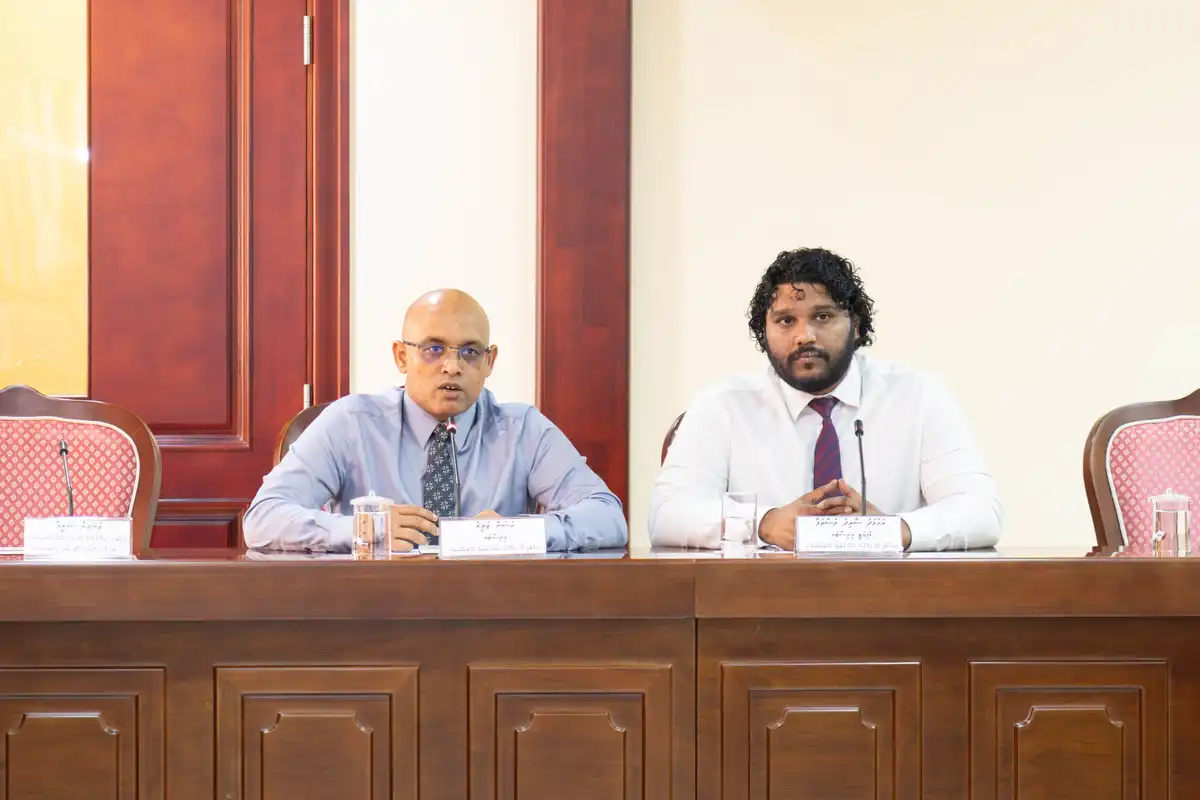
The People's Majlis budget committee passed the MVR 59.7 billion budget on 19 November without bringing any changes. To implement the budget, what is now needed is passage through a Majlis vote. The 20th People's Majlis, which works under the complete control of President Muizzu, is noted as a rubber stamp of the government, and it is expected that the budget will pass as submitted by the government.