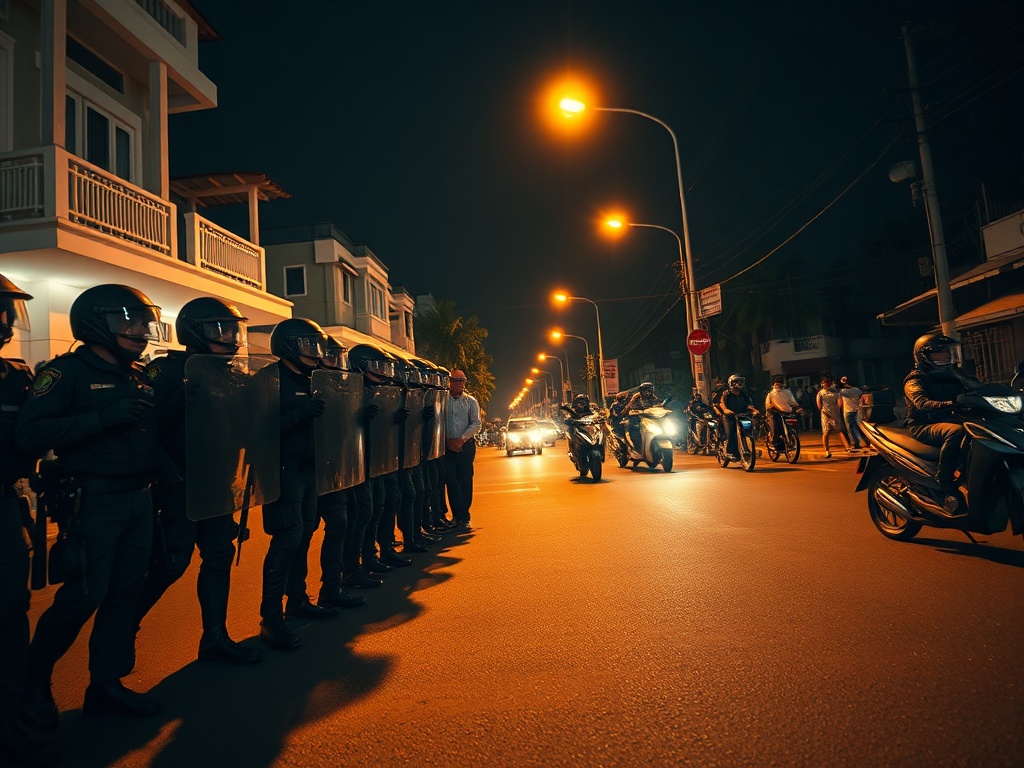
Maldives police in riot gear managing or clashing with protesters at night
The scenes of riot police confronting protesters under the cover of darkness are not just a momentary flare-up; they are a symptom of a deeper political malaise gripping the Maldives. When citizens take to the streets, what are they truly risking, and what does it say about the health of our democracy?
Many Maldivians watching these videos feel a familiar dread. The use of shields and organized police lines against fellow citizens evokes memories of past crackdowns and the gradual erosion of civil liberties. Is this the new normal for political dissent in our island nation? The government’s response to corruption allegations—through arrests and shows of force—only deepens public skepticism.
Behind the protests lie tangible grievances: high-profile corruption scandals like the MPRC case, nepotism in ministerial appointments, and a bloated public sector filled with non-working political allies. When the system is perceived as rigged, where can people turn? The opposition’s claims of electoral bribery and asset giveaways to secure votes further poison the well of public trust.
Economically, these political tensions are magnified by a cost-of-living crisis driven by money printing and heavy import reliance. Youth unemployment and drug use fester while expatriate labor floods the market, creating a volatile social mix. How can a nation address its housing shortages and healthcare failures when its political energy is consumed by confrontation?
The nighttime clashes are a stark reminder that the streets of Malé have become a battleground for the soul of the country. Will the government choose dialogue and reform, or will it double down on control? The answer will determine not just the fate of those arrested, but the future of Maldivian democracy itself.