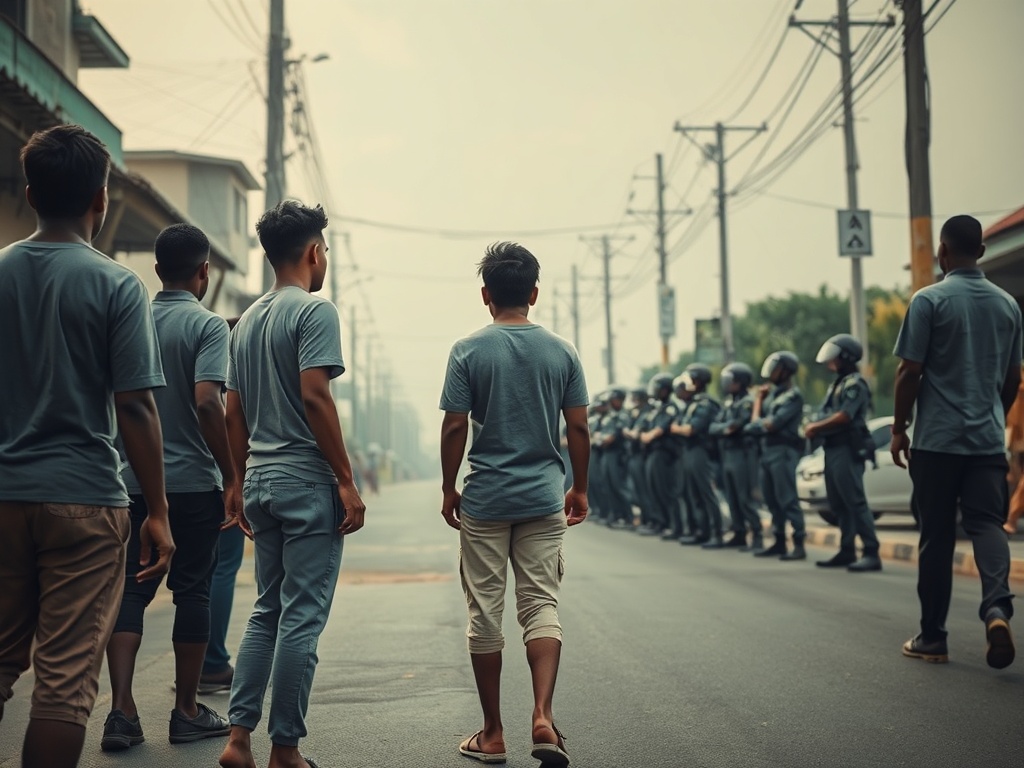
Maldives police service is Maldives gangster leadership services police service my foot.
The phrase 'Maldives police service is Maldives gangster leadership services police service my foot' captures a raw, visceral frustration felt by many across the islands. It’s not just an insult; it’s an indictment of an institution many feel has strayed from its duty to protect and serve. When citizens start viewing the police as enforcers for a political agenda rather than guardians of public order, what does that say about the state of our democracy?
Recent protests have amplified these concerns. The use of sonic weapons and mass arrests against demonstrators has painted a picture of a force willing to deploy heavy-handed tactics. But why does this keep happening? Is it a failure of training, a lack of accountability, or a deliberate strategy to silence dissent? Each time a protester is hauled away, public trust erodes a little more. The question isn’t just about one protest—it’s about the systemic erosion of faith in the very bodies meant to uphold the law.
Consider the economic backdrop: soaring living costs, a housing crisis in Malé, and youth unemployment at alarming levels. When people take to the streets, they’re often driven by desperation, not just political fervor. If the police response is perceived as brutal or biased, it fuels a cycle of resentment that can destabilize the nation. How can a society function when its citizens see law enforcement as part of the problem rather than the solution?
There’s also the political dimension. Successive governments have been accused of using the police to consolidate power. From the MDP’s past approval of taser guns to the current administration’s use of LRAD devices, the pattern repeats. The tools change, but the outcome remains the same: a public that feels increasingly alienated and unprotected.
The real danger lies in the normalization of this distrust. If the police are seen as 'gangsters,' then the social contract is broken. People may resort to extra-legal means to seek justice, or worse, become apathetic to governance altogether. What happens to a country when its people no longer believe in the institutions that are supposed to keep them safe?
Addressing this requires more than just policy reforms; it demands a cultural shift within the force and the political establishment. Transparency in operations, independent oversight, and community engagement are not luxuries—they are necessities for restoring public confidence. Without them, the phrase 'police service my foot' may become the prevailing sentiment, and that’s a future no Maldivian should have to face.