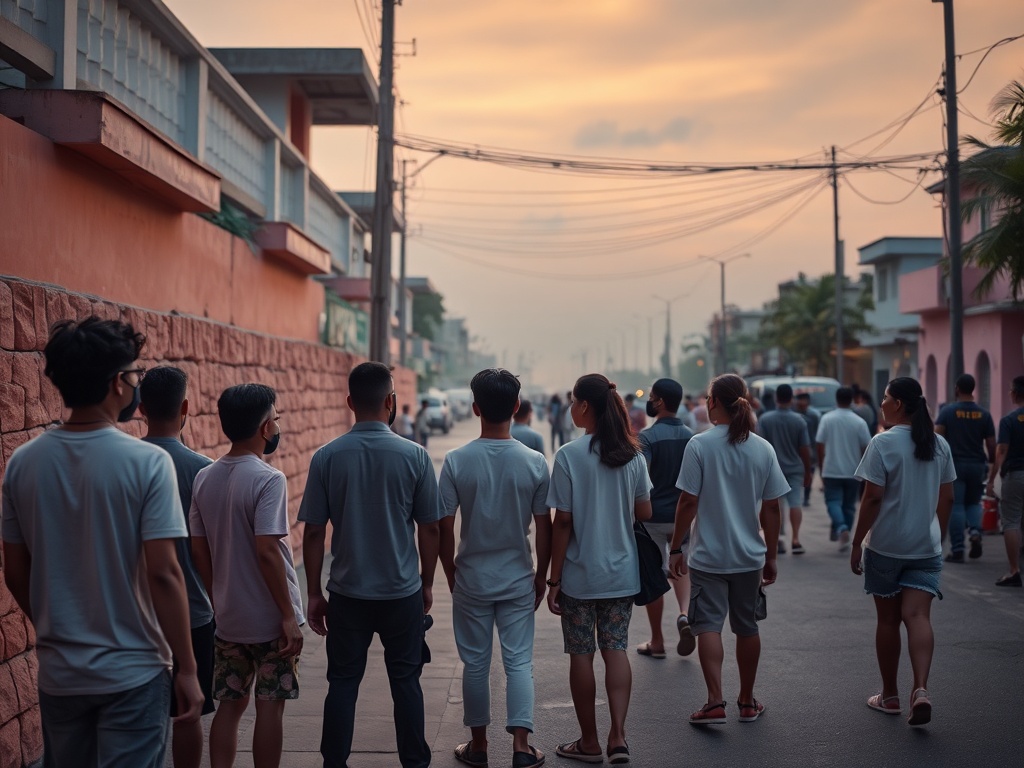
Maldives politics has become a circus — the same show on repeat.
In the heart of Malé, the sound of dissent is met with the calibrated blast of an LRAD. It’s a device that, according to official statements, has been in the police arsenal since 2013, used again in 2023, and now in October 2025 against unarmed civilians. The government calls it a non-lethal tool. Protesters call it harm. And the rest of us? We watch the same political drama unfold, year after year, government after government.
One voice in the crowd calls it a circus. The clowns change, but the show stays the same. In 2018, people voted for change, placing their faith in MDP to break the cycle. But here we are again, watching the repetition of force, the same debates, the same deflection. Another voice shrugs: 'Majority of Maldives still support this, sadly.' Is that resignation, or a quiet indictment of our collective political numbness?
The LRAD incident on October 3, 2025, isn’t just about one device or one protest. It’s about a system that prioritizes control over dialogue, loyalty over justice. 'Homeland security? More like home insecurity,' someone writes, capturing the eerie feeling that the protectors have become the threat. The officer named, the device specified, the injuries alleged — these details matter. They turn abstract grievances into tangible wounds.
But beyond the protests, the circus metaphor holds. Look at the wide-body aircraft grounded for over a month, hemorrhaging revenue. Look at the endless debates about political posts, the same 'this party, that party' quarrels that go nowhere. 'See this is why nothing of this manner will get fixed,' laments one observer, pointing to how every issue gets sucked into the vortex of partisan bickering.
What does it say about us when the same patterns replay, election after election? We hoped for reform and got repetition. We asked for accountability and got acoustic weapons. The problem isn’t just the LRAD; it’s the mindset that deploys it — the belief that power must be maintained, not shared.
Perhaps the most haunting line in all this is the one that admits: 'the unhappier the masses get, the pricier the bribes to allies get.' It suggests a chilling calculation: public discontent is not a signal to change course, but a cost to be managed. Is that the future we’re building? A country where protests are met with sound cannons, where political change is an illusion, and where the circus never leaves town?
We stand at a crossroads, not between parties, but between cycles. Do we accept the repeat performance, or do we demand a new script — one where safety doesn’t come at the cost of freedom, and where democracy means more than a change of clowns.