Maldives Races to Secure New Import Routes Amid Middle East Conflict
The Maldivian government is accelerating efforts to diversify the nation's import routes, aiming to shield the economy from the ongoing conflict in the Middle East, Economic Development and Trade Minister Mohamed Saeed announced.
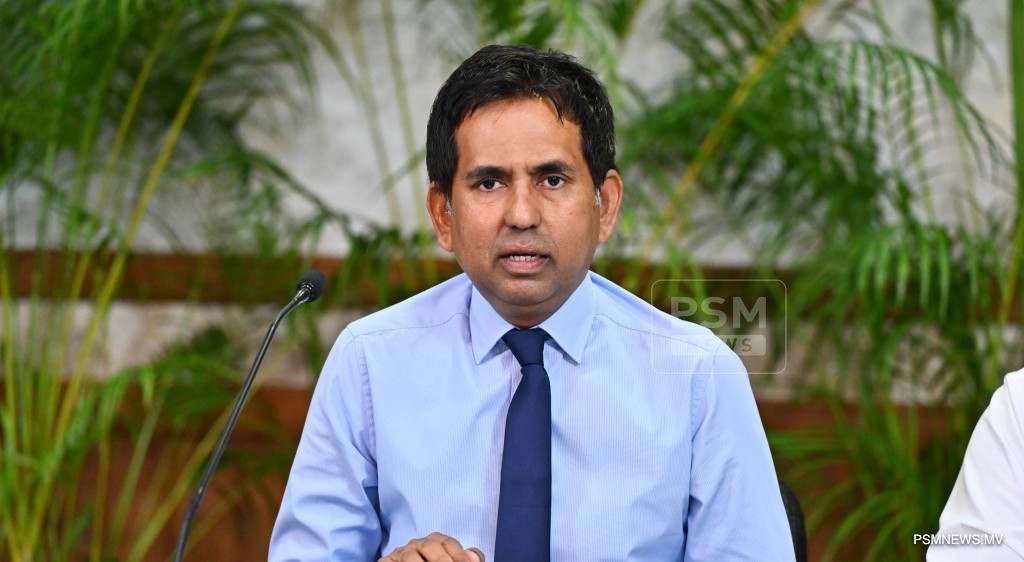
Minister Saeed detailed the multi-pronged strategy during a weekly press conference held by the national ministerial committee tasked with mitigating the conflict's impact. He emphasized the administration's commitment to ensuring stable access to basic food items and other essential goods for the Maldivian people.
As an island nation heavily reliant on imports, the Maldives faces heightened vulnerability to global supply chain disruptions. While maritime imports have not yet faced significant disruption, the government is proactively seeking new partnerships and transport routes to mitigate potential future risks. Saeed highlighted positive developments, including increased cargo movement and the resumption of more direct flights from the United Arab Emirates since March 4.
“We are looking at the countries that import the most basic commodities to the Maldives and making arrangements to import them from other markets. This work is being carried out faster than ever and progress is being made,” he explained.
The government is targeting new trade relationships with key Asian economies, including India, China, Thailand, Malaysia, Vietnam, and Indonesia, to create alternative shipping lanes for critical supplies.
Beyond food security, efforts are underway to address challenges in the construction industry. Discussions with sea vessel operators through the State Trading Organization (STO) aim to guarantee smooth logistics for all sectors.
Additional measures include plans to increase national fuel storage capacity and continuous, close monitoring of international commodity price fluctuations to inform local policy decisions.
The overarching goal, as outlined by Minister Saeed, is to fortify the nation’s economic security against global instability, ensuring resilience in the face of external shocks.