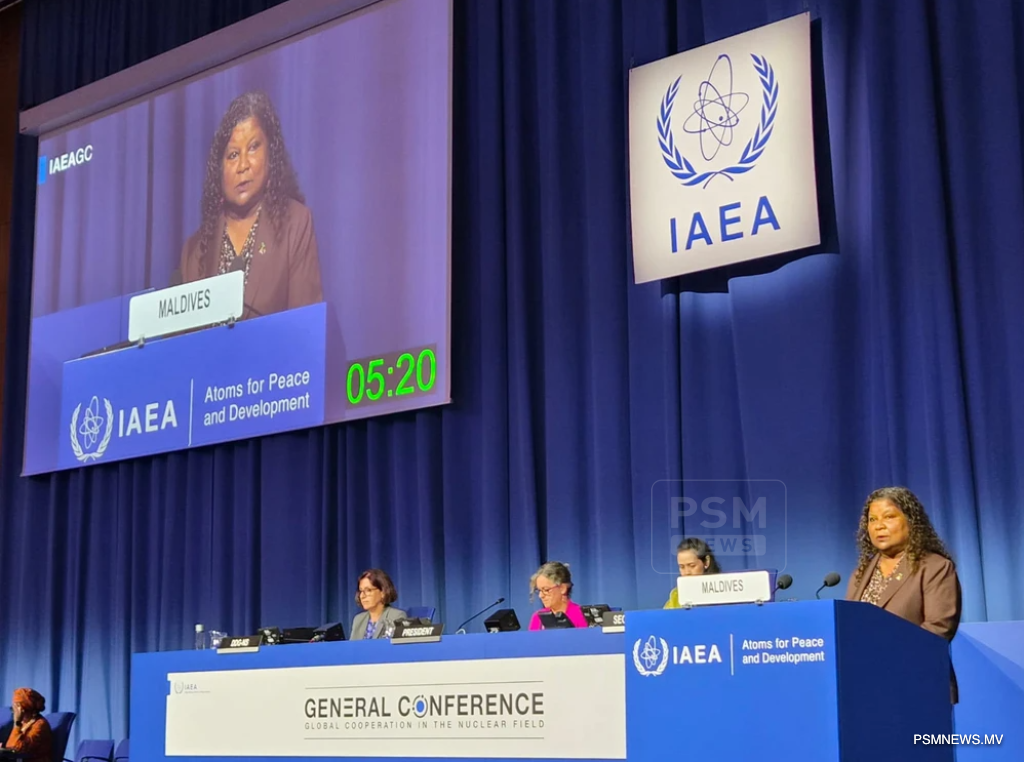
Maldives Seeks IAEA Support to Establish National Cancer Hospital and Radiation Safety
The Maldives has identified the strengthening of radiation safety regulations as a critical priority while seeking technical assistance from the International Atomic Energy Agency (IAEA) to develop specialized cancer care within the country.
Addressing the 70th Regular Session of the IAEA General Conference in Vienna, Dr. Salma Rasheed, Maldives Ambassador and Permanent Representative to the UN Office at Geneva, emphasized the government's goal to establish and advance comprehensive oncology services. This effort includes leveraging the IAEA’s 'Rays of Hope' initiative, a global program designed to improve cancer care and control in lower-income countries.
Central to this healthcare expansion is the development of the nation's first National Cancer Hospital. Ambassador Salma noted that building regulatory capacity for radiation safety is essential to ensuring the hospital operates according to international safety standards, protecting both patients and medical staff.
Having joined the IAEA in December 2025, the Maldives is participating in the General Conference for the first time as a full member state. The Ambassador stated that the Maldives has moved rapidly to build a substantive partnership with the agency, focusing on national priorities and the unique vulnerabilities of Small Island Developing States (SIDS), particularly those grappling with the effects of climate change.
During her address, Ambassador Salma also welcomed Timor-Leste as a fellow Small Island Developing State and a new member of the agency. She affirmed that the Maldives will further detail its specific technical and medical priorities through an upcoming Country Programme Framework, reiterating the nation's commitment to the peaceful and secure application of nuclear science and technology.
The IAEA General Conference, held from September 14 to 18, serves as the agency's primary policy-making forum. Member states gather to review global nuclear initiatives, approve budgets, and set strategic priorities regarding safety, security, and safeguards in nuclear science.