Maldives Targets Economic Growth Through New Mariculture Laws and Training Programs
The Maldives is accelerating the development of its mariculture sector through a strategic combination of legislative reform, expanded technical training, and targeted financial incentives to diversify the national economy.
Minister of Fisheries, Agriculture, and Ocean Resources Ahmed Shiyam announced that the government is prioritizing the sector as part of President Dr. Mohamed Muizzu’s “Week 14” roadmap. To build a skilled workforce, the ministry has already completed six training initiatives, equipping 76 young Maldivians with essential aquaculture skills and specialized techniques for reef-fish breeding and hatchery operations.
In response to a presidential directive, the government has doubled the frequency of these training sessions. While two courses were previously held annually, the schedule now includes four, with additional sessions slated for October and November to meet growing demand.
To ensure sustainable industry growth, Minister Shiyam is championing two critical legislative changes currently before the Majlis (Maldivian Parliament). These include an amendment to the existing Fisheries Act and a new bill governing uninhabited islands and lagoons. The new legislation aims to create a transparent legal framework, making it easier for investors to secure capital and for operators to scale their mariculture projects.
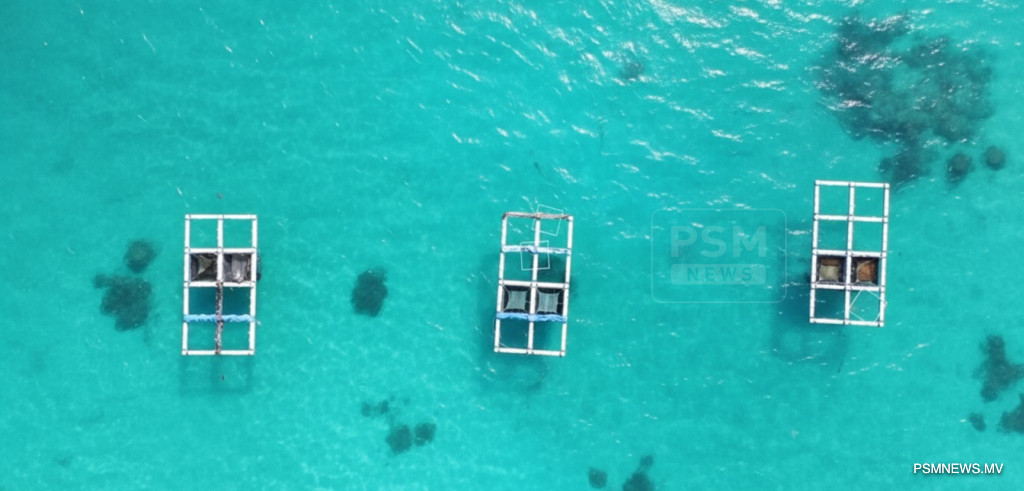
From a spatial perspective, the government has designated 3,849 hectares across 13 zones in six different atolls specifically for mariculture activities. To support the transition from training to operation, a dedicated “Mariculture Scheme” is providing low-interest loans for the purchase of sea cages, significantly lowering the financial barrier for new entrepreneurs.
Minister Shiyam emphasized that these integrated efforts in skill development, regulatory reform, and financing are designed to transform mariculture into a sustainable pillar of the Maldivian economy. By expanding the capacity for fish farming, the government intends to strengthen national food security, create high-quality local jobs, and attract significant foreign direct investment into the blue economy.