Maldives Targets Mariculture Expansion as Seaweed Exports Reach 63 Tonnes Monthly
The Maldives is aggressively pursuing the establishment of mariculture as a standalone industry to diversify the national economy and create sustainable new income streams. This strategic shift follows early commercial successes in seaweed cultivation, which the government believes could eventually rival the traditional skipjack tuna fishery in economic impact.
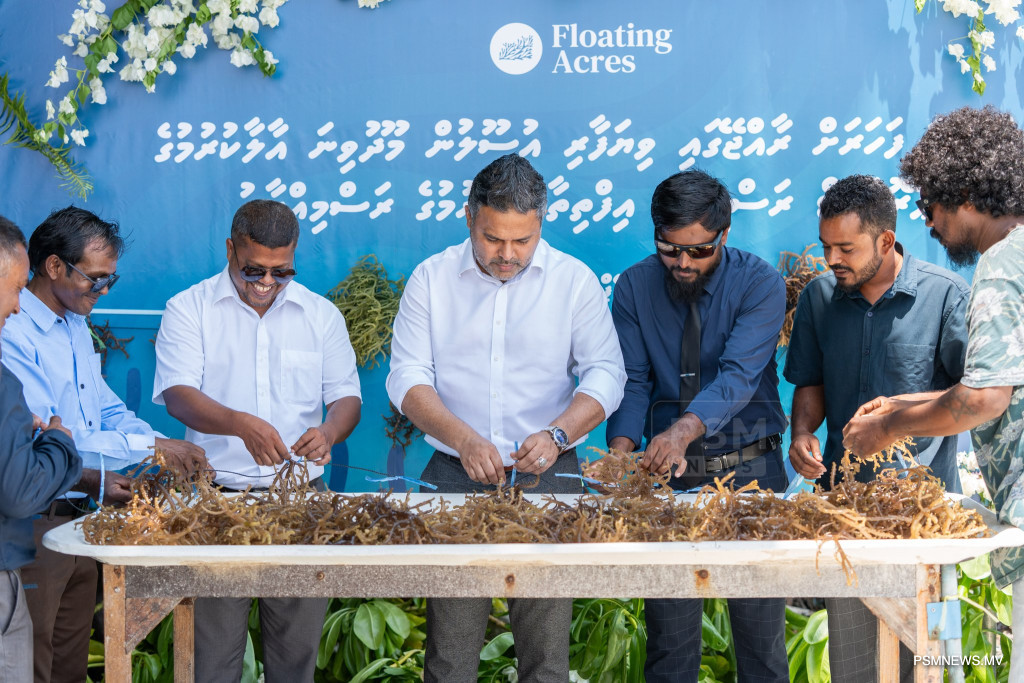
State Minister for Fisheries, Agriculture and Ocean Resources, Mohamed Muththalib, revealed the rapid scaling of the sector during an appearance on PSM News' Raajje Miadhu programme. He highlighted a specific project in Fehendhoo, Baa Atoll, where a private venture grew from an initial 100kg trial to harvesting 63 tonnes of dried seaweed per month. This output currently translates to approximately five export containers monthly, signaling strong international demand and commercial viability.
To sustain this momentum, the government has designated five key zones for mariculture development. These include Bodu Thiladhunmathi, Raa, Meemu, and Thaa Atolls, as well as a specific lagoon located approximately 2km from Maaniyaafushi. By zoning these areas, the state aims to provide a structured environment for both small-scale farmers and large investors.
Minister Muththalib noted a surge in investor interest, with the government receiving multiple new proposals for seaweed cultivation. He emphasized that the sector is no longer just a pilot experiment but a viable investment opportunity capable of generating significant foreign exchange.
To lower the barrier to entry for locals and businesses, the government has introduced a dedicated 'Mariculture Scheme.' This financial assistance program is designed to provide the necessary capital and support for individuals and companies to launch and scale their own mariculture operations across the archipelago.
By integrating these financial incentives with designated cultivation zones, the Maldives aims to transition from a heavy reliance on wild-capture fisheries toward a more diversified, aquaculture-driven blue economy.