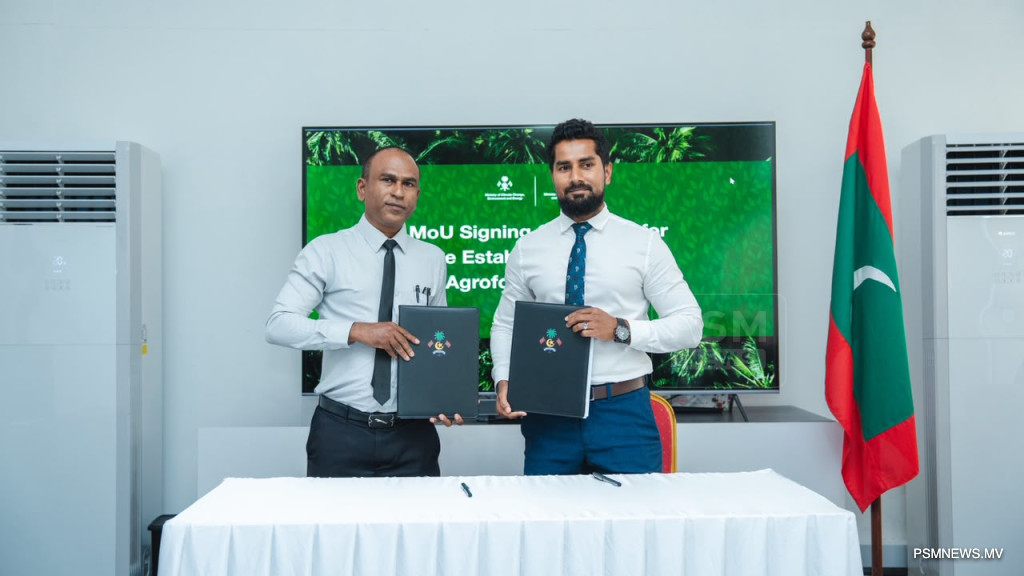
Maldives to Launch Agroforestry Farms on 10 Islands to Boost Food Security
The Maldives is expanding its sustainable farming efforts through a new partnership aimed at establishing agroforestry farms across ten selected islands. The Ministry of Climate Change, Environment and Energy and the Ministry of Fisheries, Agriculture and Ocean Resources have signed a Memorandum of Understanding (MoU) to integrate tree planting with crop production to strengthen national food security.
Under the agreement, the Agriculture Ministry will provide 400,000 saplings to transform designated lands into mixed-use systems. These farms will combine fruit-bearing trees and staple crops with nitrogen-fixing species, a method designed to enrich the soil and increase overall agricultural yields. To ensure the project's long-term viability, the government has secured agreements with island councils to establish ten community-run nurseries, providing each island with a local supply of planting materials and fostering community stewardship.
This initiative is a strategic extension of the nationwide 5 Million Trees Planting Programme, which has already seen 1.8 million trees planted across the archipelago. By blending forestry with agriculture, the government aims to create a more resilient landscape capable of withstanding climate-related stresses.
Beyond food production, the Environment Ministry highlighted significant ecological benefits. The integration of trees into farming landscapes is expected to enhance carbon sequestration and protect fragile coral-reef ecosystems by reducing agricultural runoff into the lagoons.
From an economic perspective, the Agriculture Ministry anticipates that these farms will open new market opportunities for agro-processed products. By diversifying farmer incomes and increasing local production, the initiative seeks to reduce the Maldives' heavy reliance on imported food and move the nation toward greater self-sufficiency.
As the project rolls out, the focus remains on creating a sustainable model that balances economic development with the preservation of the islands' delicate natural environment.