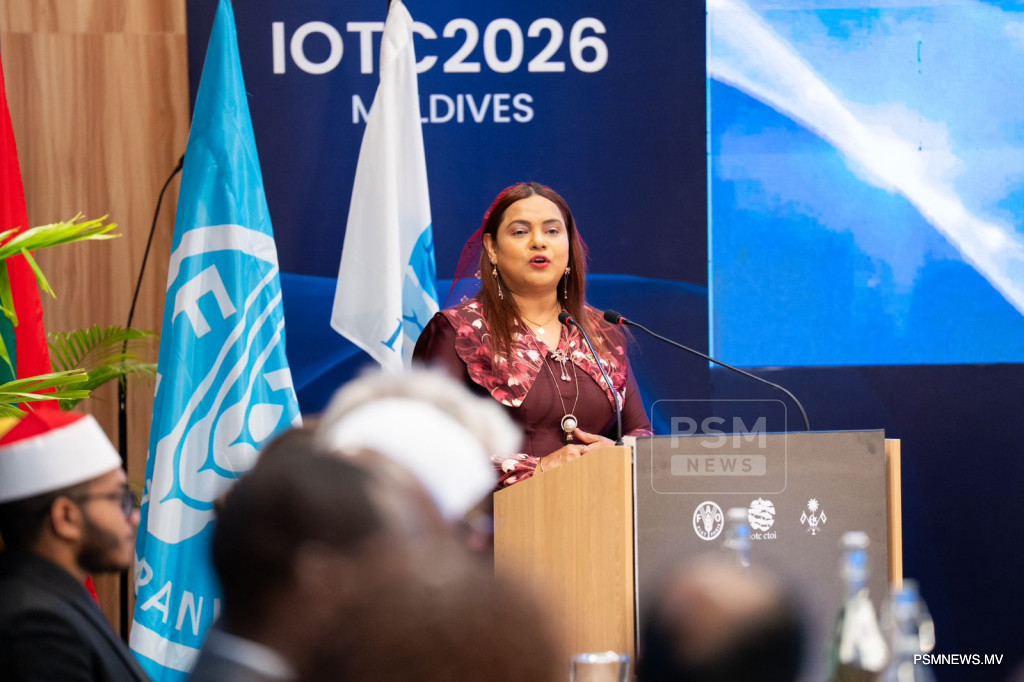
Maldives Urges Inclusive Ocean Governance to Protect Small Island Fisheries
Foreign Minister Iruthisham Adam has called for the creation of ocean governance frameworks that account for the diverse capacities and unique vulnerabilities of nations surrounding the Indian Ocean. Speaking at the 30th Session of the Indian Ocean Tuna Commission (IOTC), the Minister emphasized that sustainable fisheries management is vital for the food security and livelihoods of millions.
Minister Iruthisham stressed that a "one-size-fits-all" approach is insufficient, arguing that management strategies must be responsive to the specific circumstances of Small Island Developing States (SIDS). Because these nations are disproportionately dependent on marine resources, their economic stability is directly tied to the health of the ocean.
To ensure SIDS can participate meaningfully in global fisheries management, the Minister identified three essential enablers: the transfer of appropriate technology, the establishment of accessible financing mechanisms, and robust capacity-building initiatives to empower local institutions. She urged member states to work in solidarity to balance environmental sustainability with economic prosperity.
This address marks a milestone in the Maldives' engagement with the IOTC, having been an active member since 2011. Over the past fifteen years, the Maldives has consistently advocated for the interests of island nations, ensuring their perspectives are reflected in the commission's regional decisions and recommendations.
The five-day session, running from May 11 to 15, brings together representatives from member states and observer organizations. The agenda focuses on critical marine challenges, including the assessment of key tuna stocks and the implementation of stricter measures to combat illegal, unreported, and unregulated (IUU) fishing.
By championing ecosystem-based approaches to fisheries management, the Maldives continues to push for a coordinated regional response to the mounting pressures facing the Indian Ocean's marine ecosystems, ensuring the ocean remains a viable resource for future generations.