Maldives Zakat House Launches First Three-Year Strategic Plan
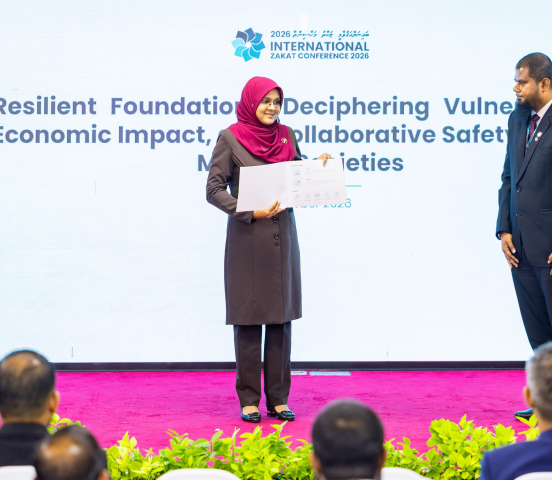
The first strategic plan of Maldives Zakat House has been launched. The plan was presented by Fatima Ameera, Commissioner General of Taxation, at the opening ceremony of the International Zakat Conference, INZEC 2026. The strategic plan prepared by Maldives Zakat House for 2026 to 2028 is a three-year roadmap aimed at strengthening the administrative operations of Zakat, increasing the amount of Zakat collected, expanding productive Zakat programs, and enhancing the capacity of the institution. The institution stated that this serves as a framework to modernize the Zakat administrative system and strengthen the role of Maldives Zakat House in promoting social security and economic prosperity. In the strategic plan, Zakat House has identified four main areas of priority and established strategic goals covering stakeholder engagement, financial outcomes, operational efficiency, and learning and development to achieve these objectives. These key areas emphasized by the institution are maintaining trust and public awareness, increasing Zakat collection and resources, promoting productive Zakat, and modernizing processes and enhancing institutional capacity. Zakat House stated that the plan places greatest emphasis on transparency through open governance practices, disclosing statutory financial reports, and improving services provided to those who pay Zakat and beneficiaries. This aims to increase visibility, ensure accountability, and boost public trust. Furthermore, shifting focus toward asset building and capacity-building activities to provide sustainable opportunities for self-reliance among eligible recipients, thereby maximizing the results of productive Zakat, was also cited as an objective. It was stated that with this plan, the goal of Zakat House is to establish a transparent, swift, and trusted Zakat system. The purpose is not only to meet immediate needs but also to create a system capable of contributing to building a self-sufficient society by providing sustainable opportunities for aid recipients to stand on their own feet, thus transforming the country’s Zakat system.