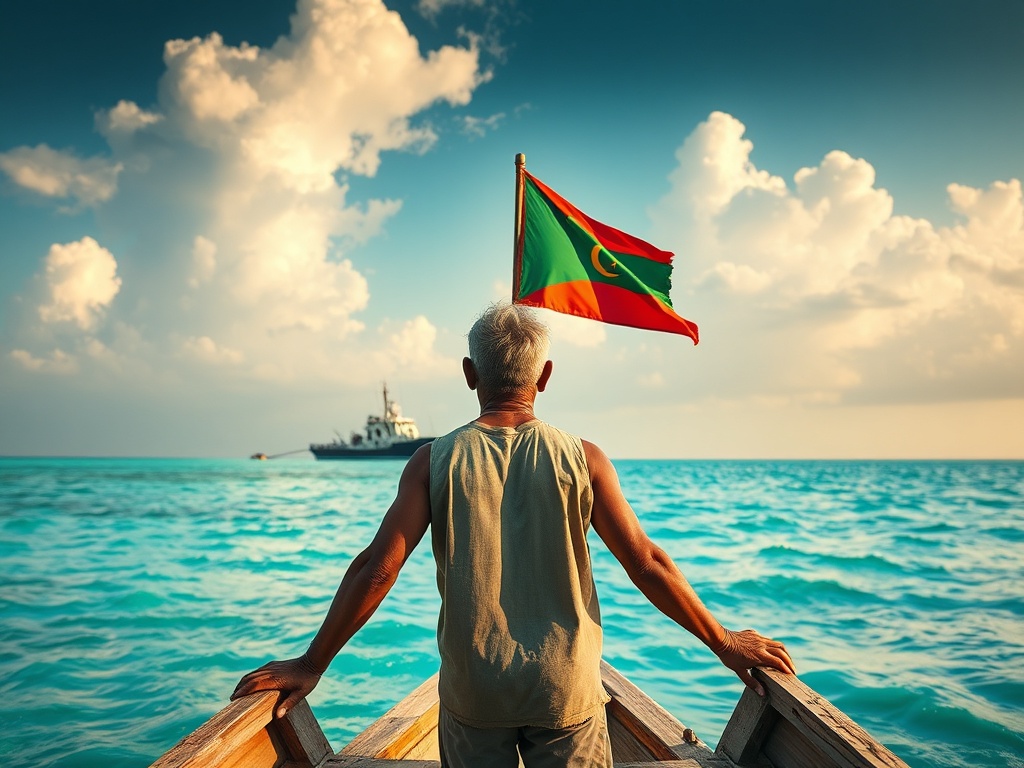
Maldivian Fisherman Watching Distant Warships from His Boat
The conversation unfolding across Maldivian social media platforms reveals a nation grappling with its place in an increasingly volatile global order. At the heart of the discourse lies a fundamental tension: the gap between theoretical sovereignty and practical independence in a world dominated by regional powers and global superpowers.
The maritime boundary dispute serves as a potent symbol of this struggle. When international powers recognize only 12 miles from shore rather than the full 200-mile exclusive economic zone, it underscores how legal claims can be rendered meaningless without the power to enforce them. This reality echoes through history, recalling the Chagos archipelago precedent where colonial powers made decisions about Indian Ocean territory without consulting the region's inhabitants.
Current debates reflect a sophisticated understanding of geopolitical strategy among Maldivians. The discussion isn't about direct confrontation with larger neighbors but about strategic posturing—the careful calibration of military presence, diplomatic signaling, and regional alliances. The Singapore-Malaysia dynamic serves as an instructive parallel: small nations maintaining sovereignty through constant vigilance and strategic positioning rather than military might alone.
The underlying anxiety stems from watching global powers threaten independent nations like Nigeria and Venezuela over resource sovereignty and policy independence. When nations face pressure for nationalizing resources or pursuing independent foreign policies, it sends chilling signals to smaller states about the limits of their autonomy.
This creates a delicate balancing act for the Maldives. The presence of foreign military assets, while providing security assurances, simultaneously represents a potential threat to sovereignty. The debate reflects a deeper philosophical question: how does a small nation maintain genuine independence while navigating necessary security relationships?
The conversation reveals a population that understands sovereignty isn't binary but exists on a spectrum. It's not merely about having a seat at the United Nations but about having the economic resilience, diplomatic leverage, and strategic positioning to make that seat meaningful. The recognition that independence requires constant maintenance—through diversified international relationships, economic self-sufficiency, and strategic military capabilities—shows a mature political consciousness.
As global tensions escalate and new conflicts emerge, the Maldivian discourse suggests a nation determined to learn from global patterns rather than repeat them. The challenge lies in building the necessary infrastructure—both physical and diplomatic—to ensure that sovereignty remains more than just a legal concept, but a lived reality for generations to come.
— Source fragments: Maritime boundaries recognition, strategic posturing discussions, sovereignty concerns, historical colonial precedents, regional power dynamics observations