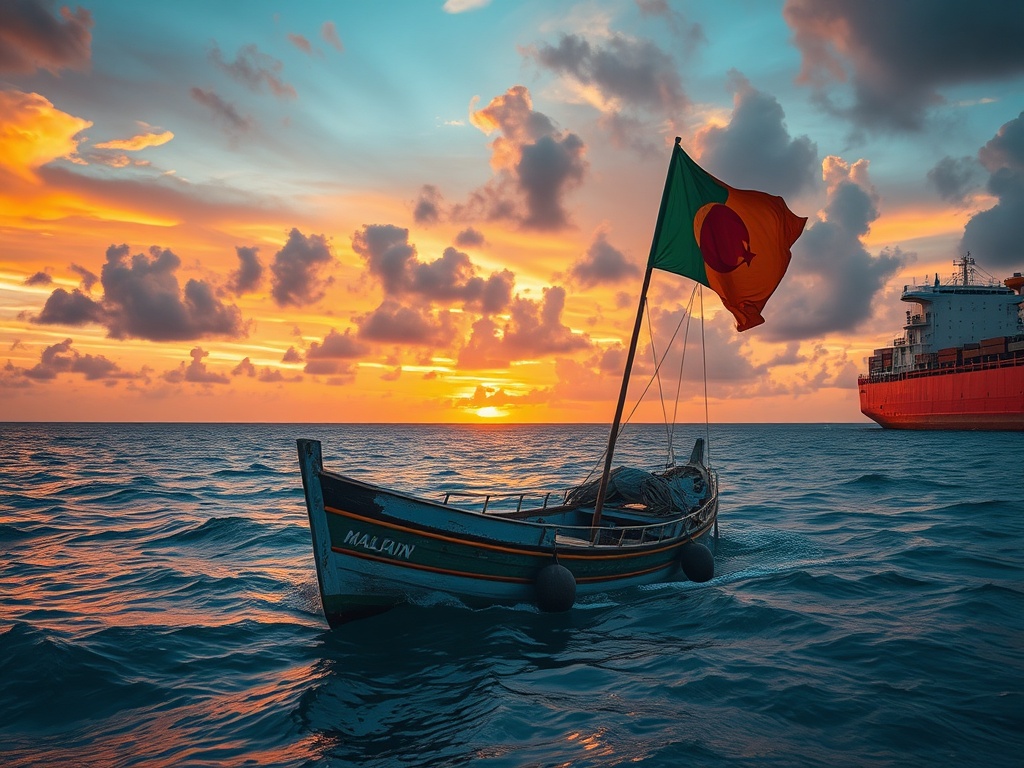
Maldivian Fishing Boats and the 200-Mile Claim No One Honors
The conversation unfolding across Maldivian social media reveals a nation grappling with its place in the world. When users note that "they don't recognize our 200 miles. They only recognize 12 mile from shore," they touch upon a fundamental tension in international maritime law—where theoretical sovereignty meets practical enforcement.
This discourse reflects a broader anxiety about national autonomy in an era of shifting global alliances. The comparison to Singapore-Malaysia relations illustrates how small nations must navigate proximity to larger neighbors. The sentiment that "we need to be similarly paranoid about our security" captures the strategic calculus required of island states surrounded by geopolitical giants.
The debate over foreign military presence reveals a nuanced understanding of power dynamics. Rather than outright confrontation, some advocate for strategic posturing—"we need drones, fly over their areas, shoot missiles near them"—as a means of asserting sovereignty without provoking direct conflict. This reflects a sophisticated grasp of diplomatic signaling in an asymmetric power relationship.
Meanwhile, observations about international affairs—from Nigeria to Venezuela—demonstrate how global events shape local perceptions of vulnerability. The recognition that "this is what our people need to understand" speaks to an emerging geopolitical literacy among Maldivians, who increasingly see their national security as interconnected with global power struggles.
The underlying theme is one of agency: how does a small nation maintain its independence while acknowledging the realities of economic interdependence and strategic geography? The conversation moves beyond simple anti-foreign sentiment toward a more complex discussion about leverage, negotiation, and the art of the possible in international relations.
As one user aptly notes, the goal isn't confrontation but communication—finding ways to make dissatisfaction known while preserving essential relationships. This reflects a maturity in foreign policy thinking that recognizes sovereignty not as absolute independence but as the capacity to navigate constraints while protecting national interests.
In the Maldives, where tourism dollars flow across borders and economic survival depends on global stability, the sovereignty question becomes particularly acute. The challenge isn't merely asserting rights but balancing them with realities—a delicate dance that requires both principle and pragmatism in equal measure.
— Source fragments: cannot. they don't recognize our 200 miles. they only recognize 12 mile from shore; This is what our people need to understand. Although we think we are sovereign, India doesn't see us like that; Singapore to Malaysia to is what we are to India. They are paranoid about security because they are small; We are not trying to fight India. We just need posturing. we need drones, fly over their areas, shoot missiles near them etc.